
Standing Seam Metal Roofing
Standing Seam Metal Roofing in Hoover, AL
Hail dents metal. That is the first thing to know about a standing seam roof in Hoover, AL. The second is that a dent is not always a leak. A standing seam roof costs more up front than a membrane and can last a long time. It sheds water by slope, hides its fasteners and handles wind well when installed right. We install and repair these roofs, and we tell you how the dent question, the cost and the storm calendar affect the choice.
This is a roof for pitched or low-slope buildings with a budget for the long term. It is not the cheapest roof. It can be the best value if you plan to hold the building.
The issue: how standing seam works
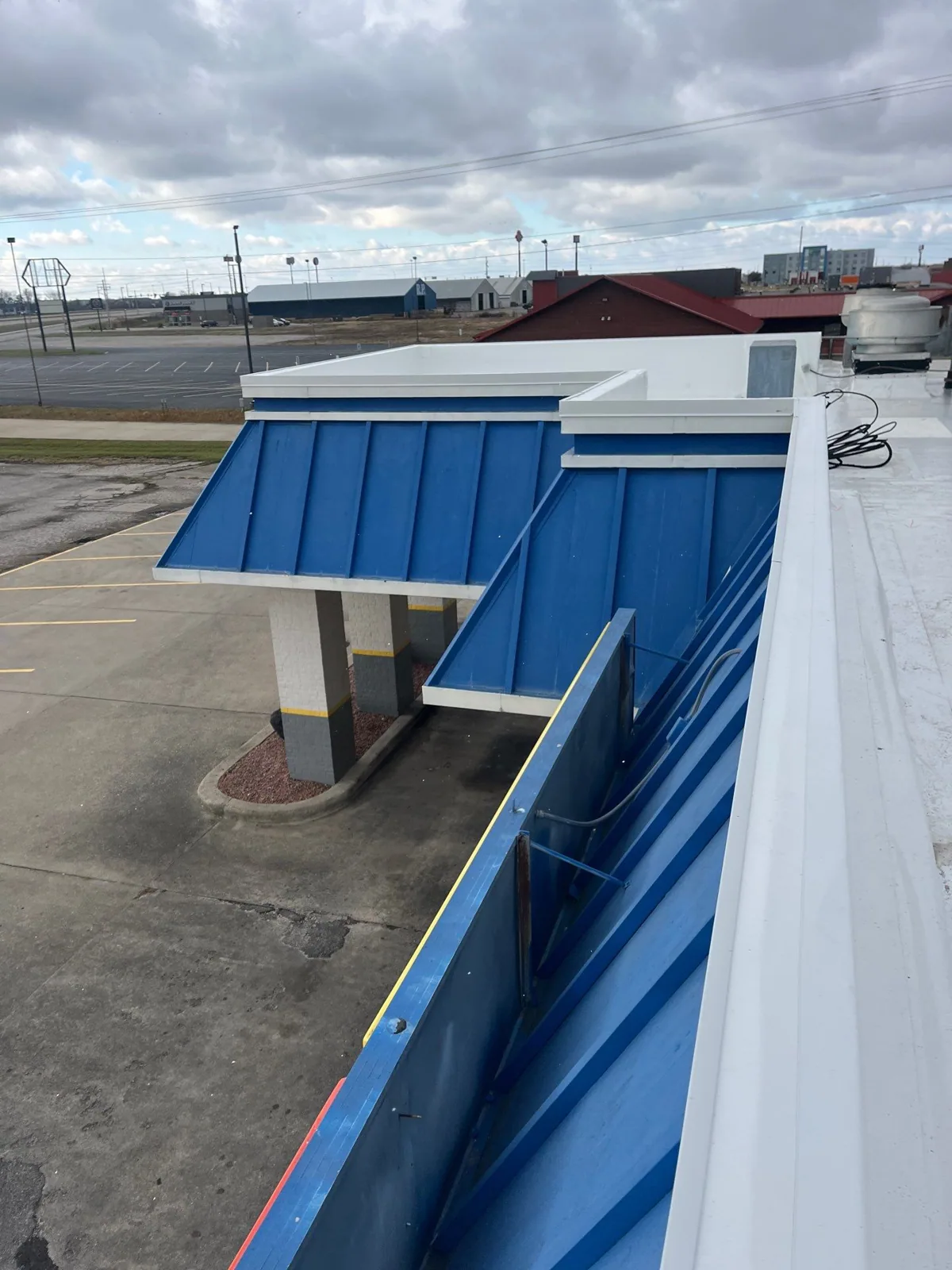
Metal panels run from eave to ridge. Their edges stand up and lock together in raised seams. Clips under the seams hold the panels to the deck while letting them slide as the metal expands and shrinks. No screws go through the face of the panel.
That design matters in Alabama. Heat makes panels grow. Cold makes them shrink. A fixed panel would tear itself loose. A clipped one floats. Where standing seam fails, the cause is usually a detail: a bad clip, a tight seam, a poorly sealed penetration, a rusted fastener at a trim piece or an uncut edge. The panel itself rarely fails.
Two panel profiles matter. Mechanically seamed panels are crimped by a machine and carry stronger wind and weather resistance on low slopes. Snap-lock panels are quicker to install and suit steeper pitches. The slope of the roof decides which profile is allowed, and a profile used below its minimum slope leaks. We confirm slope on site before we name a panel.
What it costs: a high first price and a long horizon
Standing seam costs more per square foot than most membranes. Panels, clips, trim and skilled labor all add up. Roof shape matters: many hips, valleys and curbs raise the cost fast. A simple gable or shed roof costs least.
The offset is life and upkeep. A well-installed metal roof needs little beyond checks at seams, flashing and penetrations. We lay out the price against a membrane re-roof over an equal span, so the comparison covers the replacement you would otherwise buy later. If you sell soon, a cheaper roof may serve. If you hold for decades, metal often wins.
We price the trim and flashing line separately. On metal, the trim is where cost climbs: ridge, eave, rake, valley and wall transitions are all custom-bent pieces. A roof with many transitions costs far more than the same area in a simple shape. A drawing of every trim run keeps the bid honest and the field work easy to check.
Storm season: hail dents, wind lift and debris
Hoover lies in Dixie Alley. The worst thunderstorms hit in spring, and November into early December is the second season. Hail up to softball size reached central Alabama on April 25, 2003. Hail dents metal panels. Whether the dent matters depends on the panel and the policy.
Cosmetic dents rarely leak. Insurers may treat them differently, and some policies exclude cosmetic damage. We document dents with photographs and a probe at seams and trim. Wind is the bigger functional risk, and edge zones need extra clips. Our hail damage repair team checks seams, clips and flashing after each big storm.
Debris and traffic are the quiet damage after storms. A fallen limb can scar the finish, and a crew walking panels in the wrong place can dent them. Walk on the flat of the pan near the seam, wear soft soles and stay off the ribs. We follow those rules on every inspection and train visitors on the roof to do the same.
Heat and humidity: movement, finish and fasteners
Birmingham summers reach 90 degrees or higher on about 65 days, with humidity near 70 percent. Panels move every day. Long panels move more. Clips and slotted trim allow that. Where trim is fixed rigidly, you get oil-canning, noise or torn seams.
Humidity speeds corrosion at cut edges and fastener holes. A good finish and a clean cut matter. Dissimilar metals at trim cause trouble if they touch. We choose compatible materials and seal penetrations with details made for metal. An edge metal and gutter check belongs in every yearly walk.
Where snow or ice does form, a sheet sliding off a smooth metal roof can hurt a person or tear a gutter. Snow guards at eaves above walkways and doors reduce the risk. We add them to the scope where entries sit below a slope.
By building: where standing seam fits the metro
It suits retail and office buildings that want a finished look, churches, schools and mixed-use centers. Ross Bridge broke ground in 2004, which puts its commercial and mixed-use roofs near twenty years old, an age where owners start pricing replacement. US 280 through Inverness is a corridor of restaurants and shopping centers, where owners weighing a new roof face this same metal-or-membrane choice.
On an older low-slope building, a metal roof can go over an existing roof as a retrofit. That route is the metal roof retrofit, and it saves tear-off cost where the structure allows it. Owners in Ross Bridge and Inverness can weigh that retrofit against a full membrane replacement.
More on Standing Seam Metal Roofing
Recommendation: when metal is the right call
Pick standing seam when slope, appearance and long-term value matter and the roof shape is simple. Pick a membrane when the roof is flat, crowded with equipment or budget-limited. Both prices and the care plan go in writing.
Bring us up on the roof and we will look at slope, structure, penetrations and the local code. Then we price metal next to a TPO option. The comparison fits one page. You choose with the numbers in front of you, and the storm calendar in mind.
One more point on timing. Panels and trim are often made to order, and lead times can stretch after a widespread storm when many owners order together. Ordering before the spring season gives you dates you can plan around. We confirm delivery and store panels flat and dry until they go up.
Commercial Roofing Questions
Do hail dents mean my metal roof leaks?
Usually not. Most dents are cosmetic and do not break the seam or the finish. A dent that cracks the coating, kinks a seam or shifts a panel can leak. We probe seams and clips, check the finish and photograph each affected area. The photographs help if you file a claim.
How fast can a standing seam roof go on?
Panels are often rolled to length on site, then lifted and locked. A simple roof can go down quickly. Complex roofs take longer because trim and flashing are made to fit. Lead times for panels and trim can run weeks, so ordering early matters. We confirm dates before we set a start.
What maintenance does a metal roof need?
A yearly walk to check seams, clips, trim and sealants, and to clear gutters and valleys. Fix small openings quickly. Keep trees trimmed back from the panels. Wash off debris and stains if the finish calls for it. A short routine keeps the roof near its design life.
Is a standing seam roof loud in rain or hail?
It can be, depending on the deck and insulation under the panels. Solid decking with insulation quiets it. Open framing with thin insulation can sound loud. We discuss the build-up and the use of the space under the roof before pricing, so the sound is a choice and not a surprise.
How long will a standing seam roof last in this climate?
Well-installed metal roofs are built for a long service life, and the finish and the details set the real number. Heat, humidity and storms do not shorten it much when clips, sealants and trim are right. We give no fixed year count. We tell you what the panel and finish are designed for, and what yearly care keeps them there.
Related Roofing Work
Hail Damage Roof Repair
Edge Metal, Coping and Gutters
Metal Roof Retrofit
Ross Bridge
Emergency Leak Calls
Call for a metal roof walk and a comparison price
We will walk the roof, check slope and structure, and price standing seam beside one other system. The visit pins down the cost, the timing and the budget year.