
Edge Metal, Coping and Gutters
Edge Metal, Coping and Gutters in Hoover, AL
The edge of a roof is the first thing a spring storm takes. A loose length of coping or a bent drip edge costs little to fix in February. After a March windstorm it costs a lot more, because water has already gone behind it. In Hoover, AL, where severe storms peak in spring and again in November, the perimeter is where we start every walk.
Edge metal is the metal that finishes the roof at its edges: coping on parapet walls, fascia and drip edge on open eaves, gutters and downspouts to carry water off. It looks simple. It is not. It takes wind, hail and heat every season.
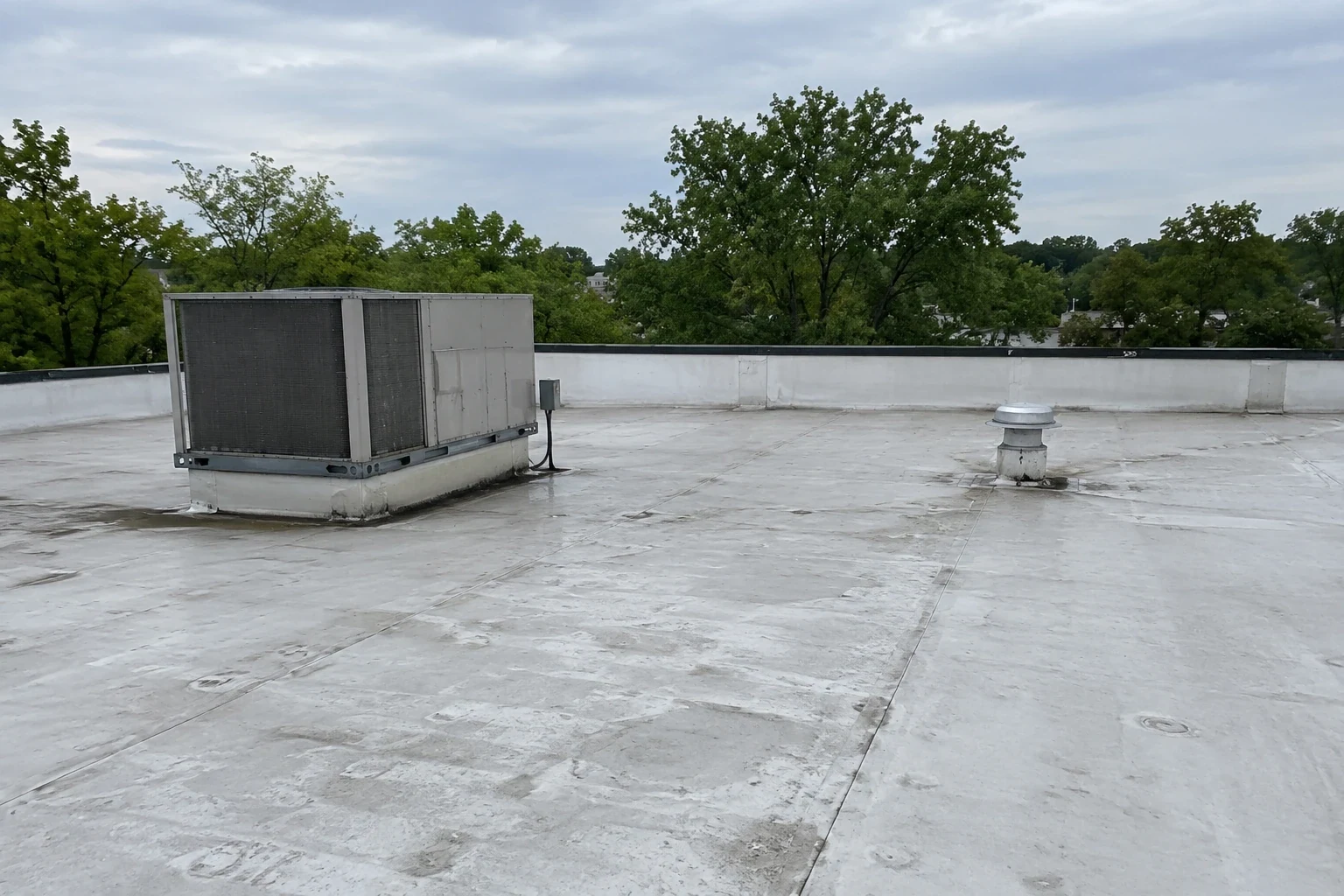
The issue: wind finds the weak length
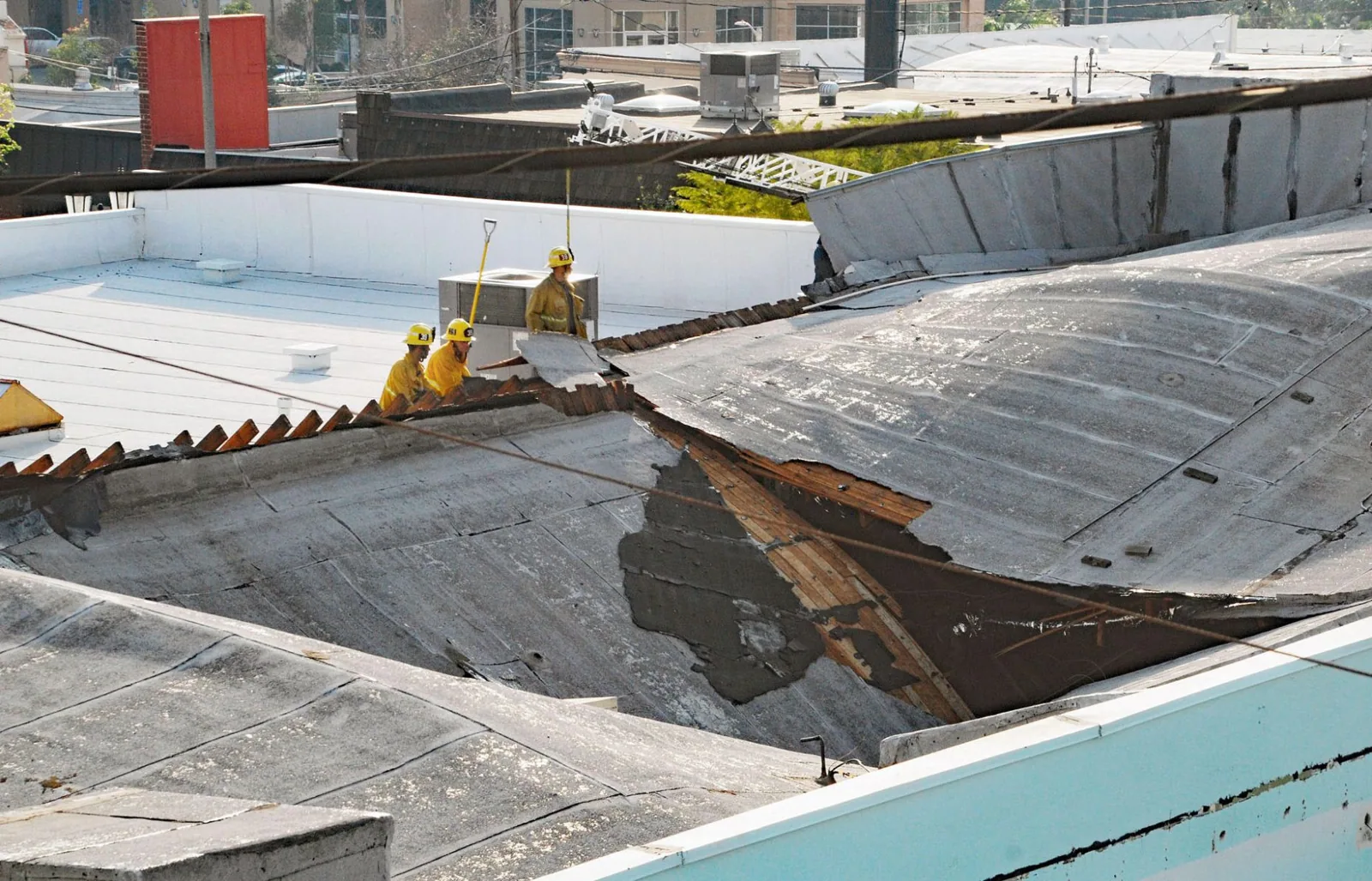
Wind pulls hardest at corners and edges. A length of coping with loose fasteners flutters, opens its joint and lets rain into the wall. A drip edge that was nailed face-first backs out and lifts. Once one length goes, the next one is pulled too.
Birmingham-area history makes the point. Tornado history is blunt here: the 1977 and 1998 F5 tornadoes, then the April 27, 2011 EF4. Gulf tropical systems sometimes bring storm-force winds as well. Most storms are far weaker, but any gust over a loose edge does damage. A regular check of the perimeter is the cheapest wind insurance there is.
We inspect by walking the full perimeter and tapping each length. Every length gets a number on the plan, so a loose one found in March can be found again in November. Loose ones rattle. Open joints show daylight. Rust at a fastener shows water has been getting in.
Coping: caps, joints and cleats
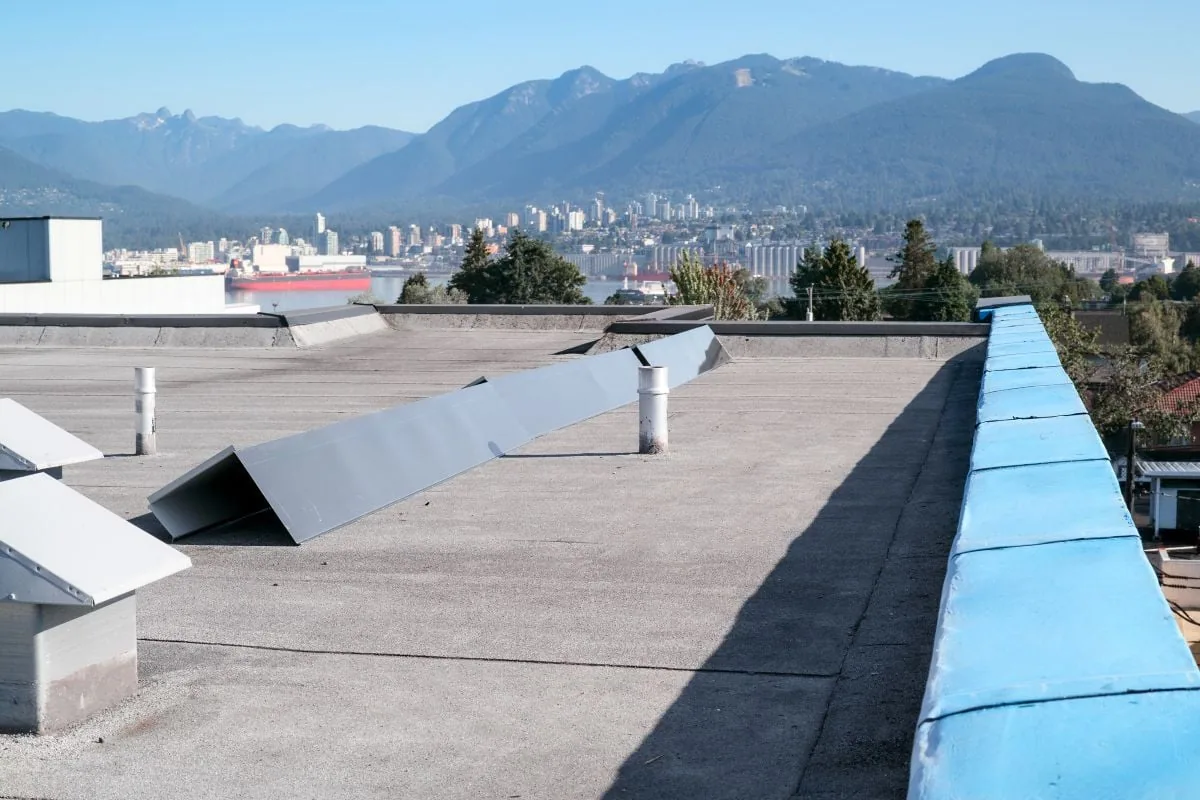
Coping covers the top of a parapet wall. It sheds water outward and protects the wall and the membrane termination below. It fails at joints, corners and at the cleats that hold its edges.
Repair starts with the substrate. Is the wall top sound? Is the membrane termination intact? Are the fasteners reaching the structure? We then re-seal joints, add splice plates, re-fasten loose lengths and replace any length that has deformed. Sealant goes on clean, dry metal, inside its temperature limits, which in Alabama means mornings are better than afternoons in July. A bent cap is replaced, not hammered flat. Reshaped metal rarely seals again.
When coping fails at many points, we compare the cost of fixing each against replacing the whole run. A continuous cleat system with new caps often costs less per foot than repeated patching. We show both prices.
Fascia and drip edge: where roof meets air
On a roof without parapets, the edge is a fascia or drip edge. It finishes the membrane and turns water into the gutter or off the building. It must be fastened through a continuous cleat or hook strip, and the membrane must end at the edge in a way that survives movement.
Heat is the quiet enemy. Summers around Birmingham log some 65 days of 90-degree heat or more. Long runs of metal expand and shrink every day. Without expansion joints, they buckle or pull fasteners. We check for joint gaps, oil-canning and sealant that has split.
Where the edge detail is part of a larger flashing failure, the repair takes in the metal and the flashing beneath as one job. Replacing a drip edge over a failed termination looks clean and leaves the opening below.
Gutters and downspouts
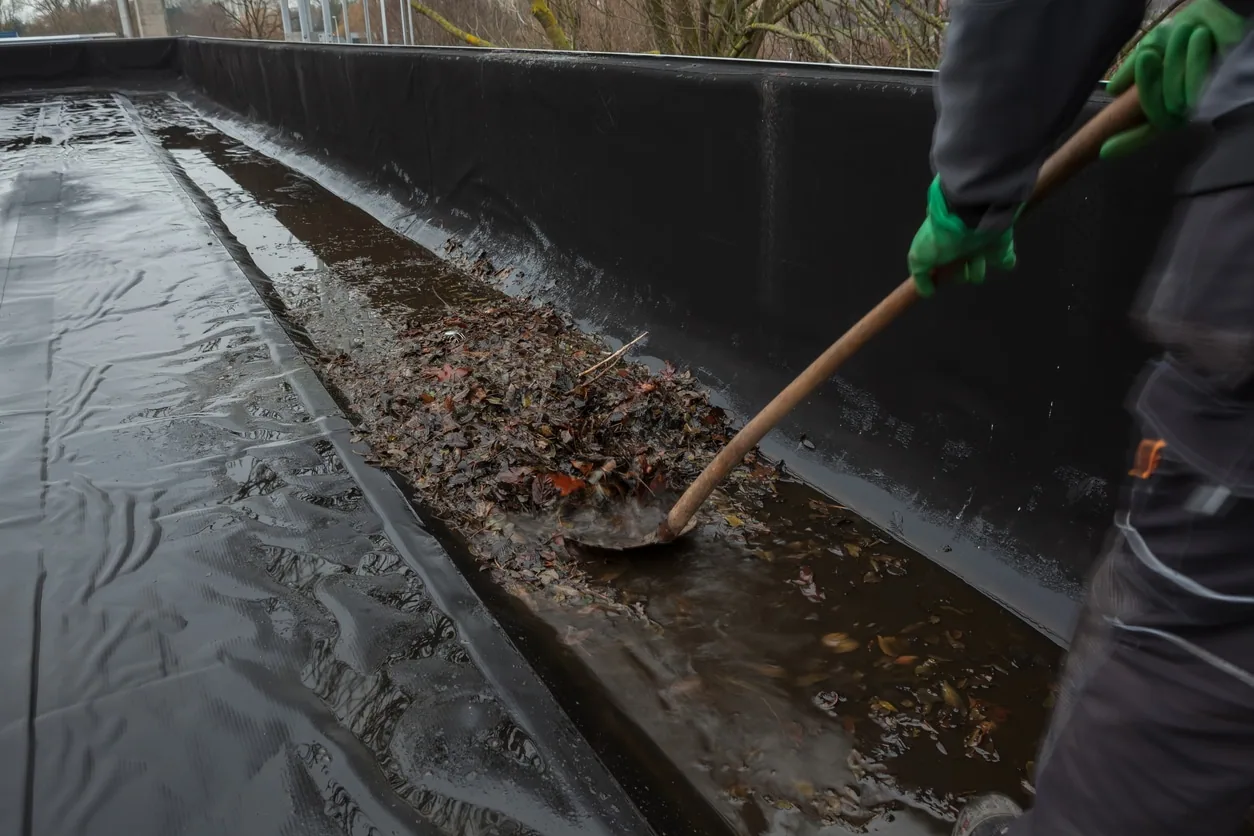
Gutters and downspouts carry water from canopies, entry roofs and small low-slope sections to the ground. They clog, sag, split at seams and fill with leaves. Alabama rain comes in bursts, so a gutter that is half-full of debris overflows against the wall in the first downpour.
We check pitch toward the downspout, bracket spacing, seam condition and discharge points. Downspouts that dump on a walkway or against a foundation get redirected. Any gutter tied to a primary drain path is reviewed with the drain and scupper layout, so one clogged outlet does not become an interior leak.
Hail: dents that matter and dents that do not
Hail dents metal. Hail has shown its size here: softball-size stones in April 2003, and a year with 29 days of hail over 0.75 inch. Not every dent is a leak. Cosmetic dents do not stop water. Dents that crack a coating, open a seam or crush a joint do.
We mark each dent type on the plan: cosmetic, functional or unknown. Functional dents get a close look at the coating, the lap and the fastener below them, since a crushed joint leaks even when the panel looks fine from the ground. That sort helps a claim. A hail damage file needs each dent photographed with a scale, and lifted metal from wind damage needs the fastener pattern recorded. Both feed the scope for storm damage repair when a claim is open.
More on Edge Metal, Coping and Gutters
What it costs and when to do it
Edge metal is priced by the foot. Price moves with the metal, the height, the access and the number of corners. A ground-level fascia costs less than coping four stories up that needs a lift. Matching an old profile adds shop time.
Do it before storm season. Late winter is the sweet spot. Fastening and sealing work needs dry weather, and metal fabricated now is ready before March. The scope sorts items into urgent securing, permanent replacement and optional upgrades such as heavier gauge or a continuous cleat retrofit, and it names the lift, scaffold or swing stage that each group needs. Owners approve the urgent group first and put the rest in the budget year.
Local: historic districts and ridge-top roofs
In Homewood, the Hollywood Historic District (listed in 2002) holds 412 contributing buildings on 815 acres, and preservation review can reach roof work. Visible coping and gutters are the items to confirm first. Southside has seven historic districts subject to neighborhood design review, and older buildings from 1890 to 1920 sit alongside new apartments, so a profile change near Southside should be checked before it is ordered.
Some Chelsea roofs sit up on the Double Oak Mountain ridge along US 280, open to wind from every side. A building in Chelsea on that ridge deserves an extra check of fastening and cleats before storm season.
Commercial Roofing Questions
How can I tell if my coping is loose?
Walk the parapet on a calm day. Push each length. Loose ones move or rattle. Look for open joints, rust streaks on the wall and sealant that has split. If you see stains below the cap, water is getting in. We recommend a full perimeter check each February.
Should I repair or replace damaged gutters?
Repair if the problem is a few loose brackets or a cracked seam. Replace if the gutter has been pulled off by debris or wind, or if it pitches away from the downspout. We give both prices when the line is close.
Do hail dents on metal mean a leak?
Not always. Cosmetic dents do not leak. Dents that crack coating or open a seam do. We mark each dent as cosmetic or functional and photograph it for the claim.
Does replacement coping need approval in a historic district?
It can. Preservation review applies in places such as Homewood's Hollywood Historic District and Southside's design review districts. Confirm the path first and attach the approval to the scope.
What fasteners and cleats hold best in wind?
A continuous cleat or closely spaced clips that reach the structure, with laps facing away from the weather. Fasteners that reach only thin sheathing back out in the first storm. The repair note lists the spacing and type used.
Related Roofing Work
Flashing Failure Repair
Roof Drains and Scuppers

Hail Damage Roof Repair
Wind Damage Roof Repair
Emergency Leak Calls
Call for a storm walk or budget review
Call and we will walk the full perimeter before storm season. The visit pins down how many feet of edge metal need work and the price per foot, in writing.