
Manufacturers
Roofing for Manufacturers in Hoover, AL
A plant manager gets one or two shutdown windows a year, and the roof has to fit inside them. That is the cost and timing fact behind every manufacturing roof job in the Hoover, AL area. Miss the window and the work waits twelve months, through another storm season. Manufacturers get low-slope and metal roofs repaired, recovered or replaced, with findings written so a plant engineer can plan around production.
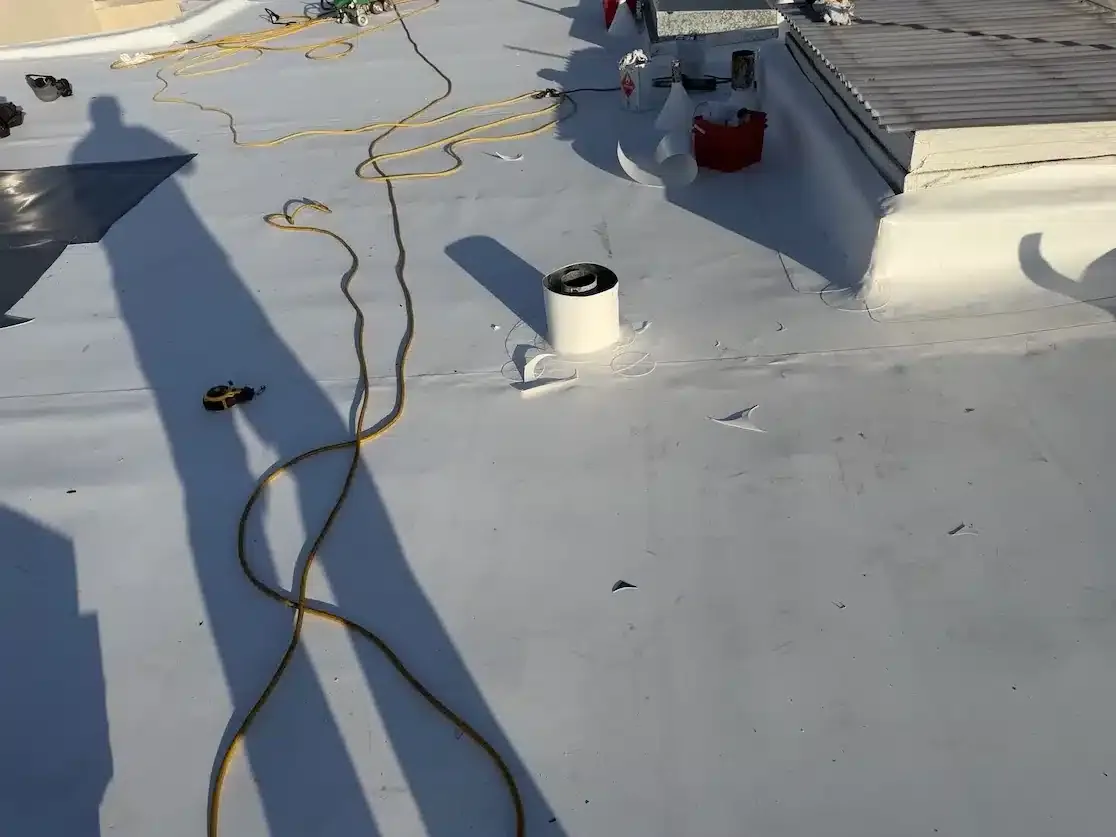
The issue: a roof that works as hard as the line
A plant roof is not a quiet roof. Process exhaust discharges onto it. Dust collectors, fans and cooling equipment sit on it. Pipes and conduit cross it. Heat from the floor rises under it. Vibration travels up through the structure.
All of that wears on membrane, flashing and fasteners. A plant roof ages faster than an office roof of the same material and the same year.
Birmingham carries a long industrial record. Its steel and iron heritage remains, with ACIPCO, McWane, CMC Steel, U.S. Steel and Nucor present, and in Hueytown roughly 1,200 acres of the former Woodward Iron site now serve lighter industrial users. Industrial roofing is ordinary work here, and every plant roof deserves its own survey.
Insurance and safety teams care too. A plant's insurer may want a roof survey on file. A safety manager may worry about fall protection and skylights. Keep a short list of what each stack puts out, because that list decides the membrane. Oil mist calls for a sheet that resists oils, fine dust can clog drains and scuppers within a season, and hot exhaust pushes the surface well above the air temperature. A roof that sits beside a stack for years reads like a map of the process, and the survey reads that map before a material is named. We write the report so each reader can find their part: a rating for the engineer, a hazard list for safety and a dated photo set for the carrier.
What we find: exhaust, heat and vibration
Exhaust is the first suspect. Oil mist, solvent vapor and fine dust settle on the sheet near a discharge. Some membranes soften. Some stain. We check the surface near every stack and recommend a better material or a containment pan where needed.
Vibration loosens fasteners and cracks sealant at supports. We pull-test fasteners at a few spots. We look at raised plates and cracked boots.
Heat and damp work on everything. Seams get probed, drains cleared and wet insulation scanned for, with a core cut to confirm, and photos and readings go on the plan.
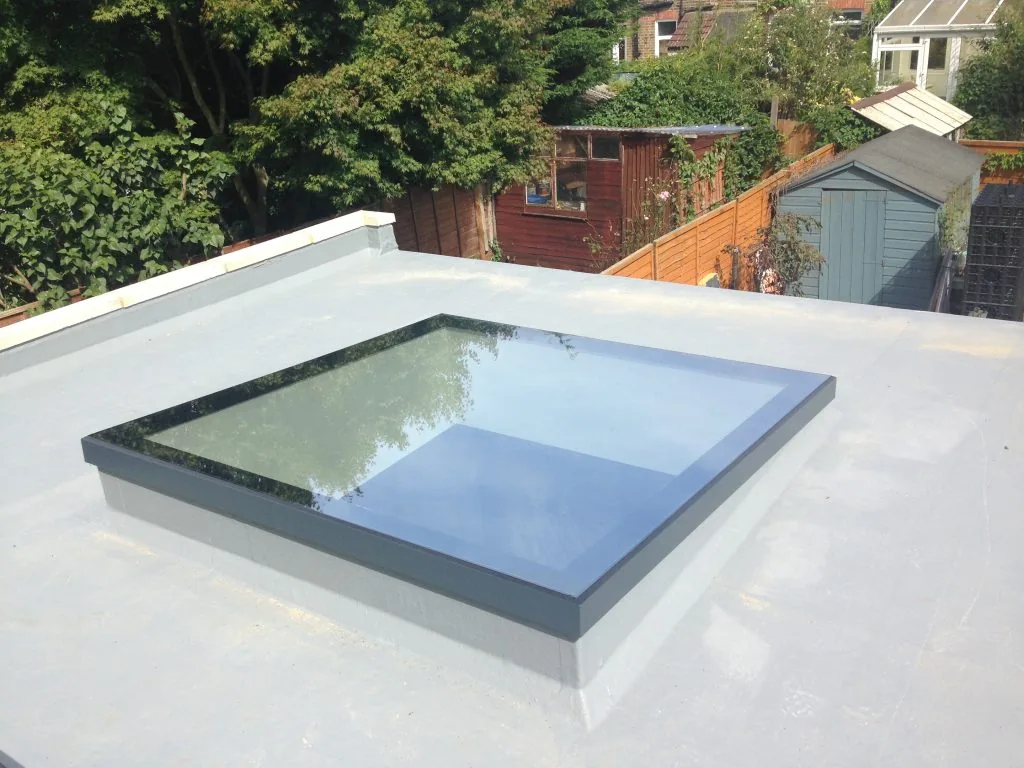
Skylights and roof hatches deserve a check. Old skylights crack and yellow, and a fall through one is a serious injury. We note the condition of every skylight and every hatch, recommend guards or replacement where needed and flag any unprotected opening. A skylight and penetration flashing fix often doubles as a safety fix.
Drains clog with dust, lint and debris. A half-clogged drain turns a short storm into a ponding event. We clear and test every outlet and set a cleaning interval in the plan.
Storm season: wind on a big flat roof
A plant in this part of the metro lives with the Dixie Alley record: the 1977 and 1998 F5 tornadoes, the EF4 of April 27, 2011 (the 1998 and 2011 storms both struck Hueytown and Oak Grove) and the softball-size hail of central Alabama's April 25, 2003 storm. Weather peaks in March and April and again in November.
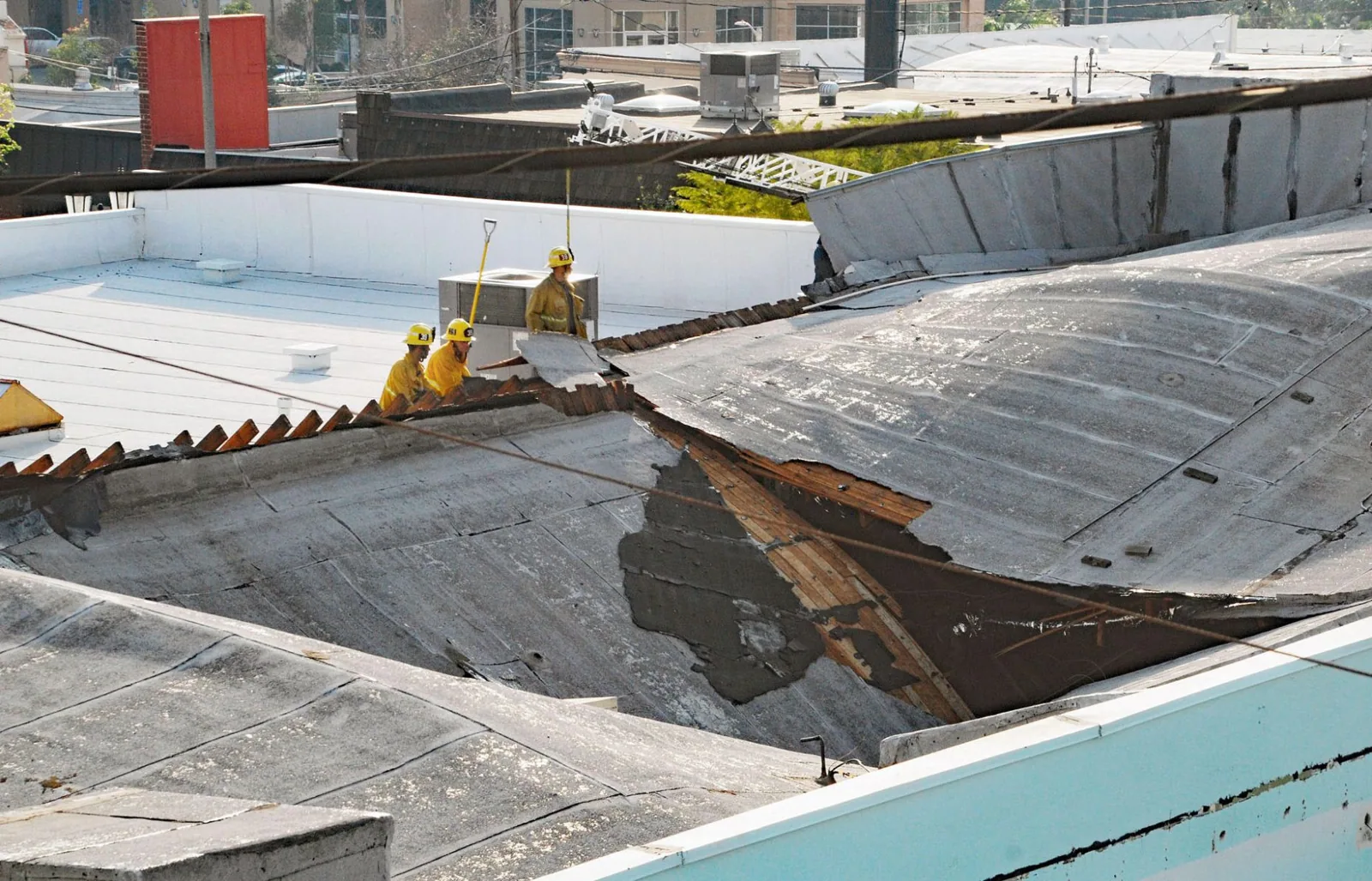
Plant roofs are wide and exposed, and wind pressure is highest at the corners and edges. Each section's edge metal, caps and attachment are checked and logged with a wind-uplift note, and the post-storm walk compares against it before wind damage roof repair begins.
The engineer's closeout set after a storm repair is a punch list, the warranty walk and photos of the finished details, a record of what was repaired, when and with what that the next insurer can read.
When to do it: shutdown windows and sections
Start with the plant's calendar. Annual shutdowns. Model changeovers. Inventory weeks. Those are the natural windows for the loudest and most disruptive tasks.
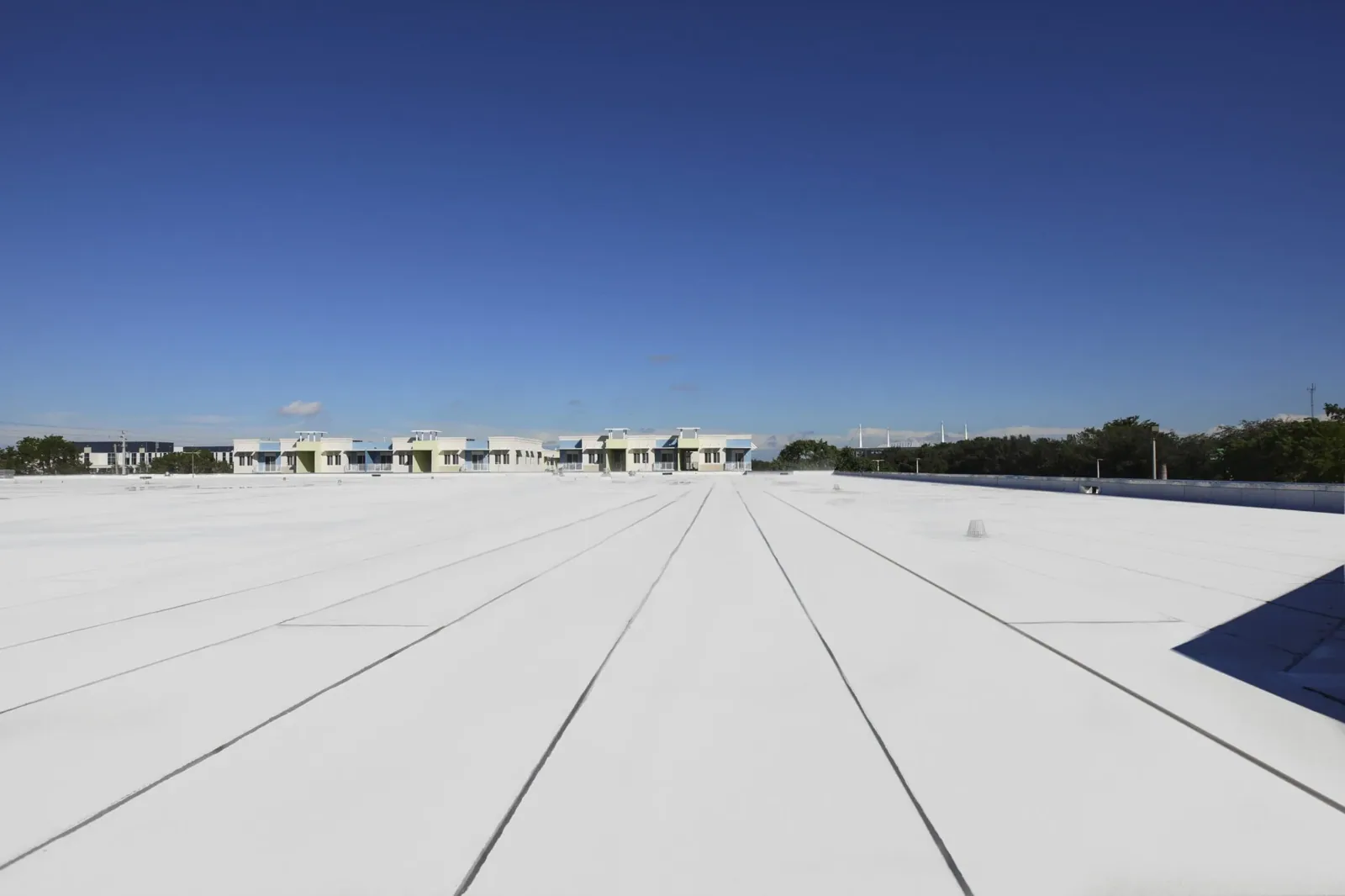
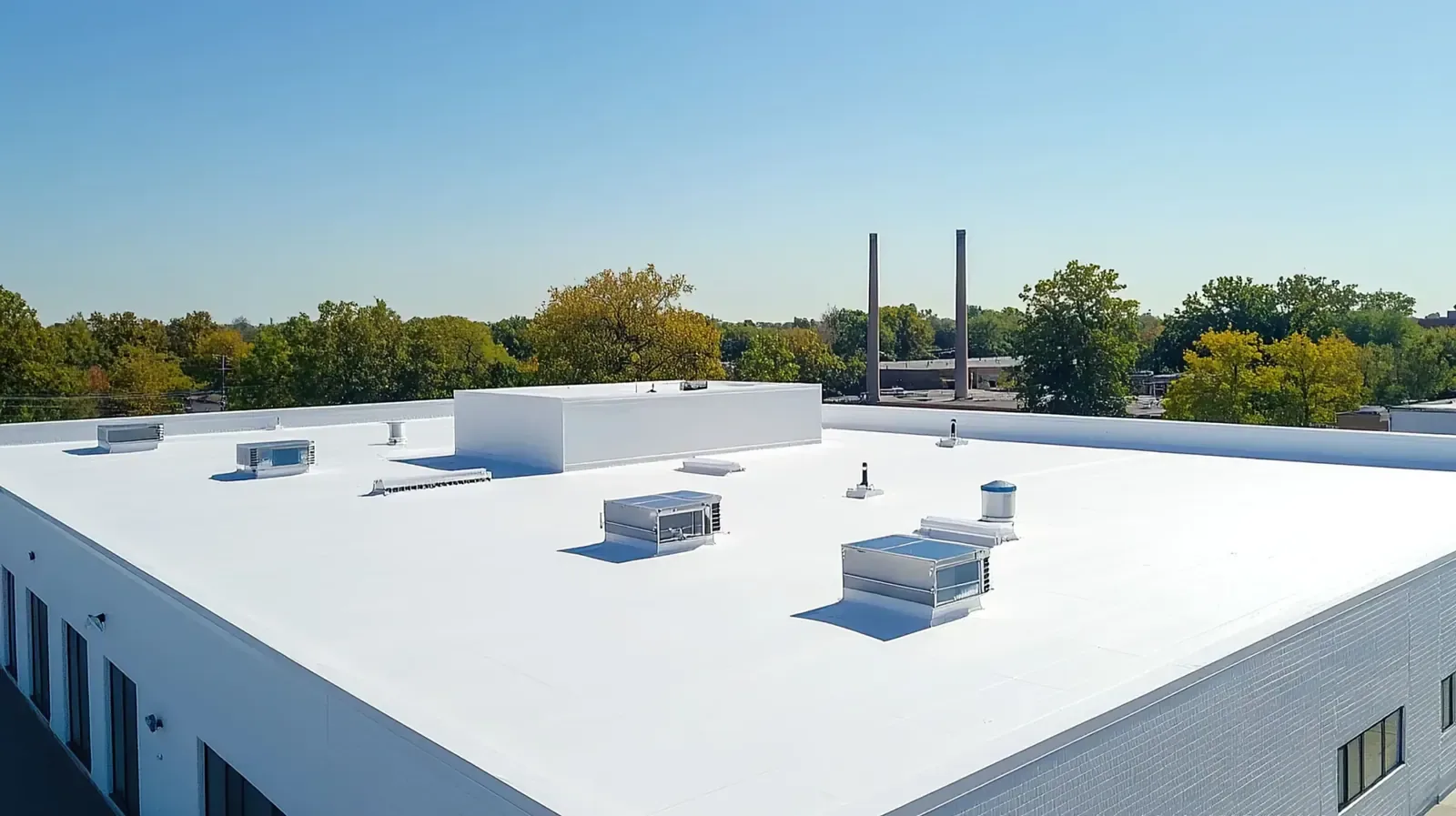
If no window is long enough, split the roof into sections. Each is finished and dried in before the crew leaves. Production keeps running below. We agree on dust control, hot work permits, crane position and truck routes up front. Our occupied building reroofing plan lists each limit.
Weeks of 90-degree heat push crews to early starts, spring storms cut open sections short and late autumn through winter gives the best working window.
Staging matters inside a shutdown. Panels, board and special flashing sit on site before the window opens, so the days inside it go to installation and not to waiting on a truck. Lead times on long panels, special trim and insulation boards run to weeks, so an autumn order lines up with a winter shutdown and the roof closes ahead of March.
What it costs: roof, curbs and downtime
The price follows roof area, curbs and penetrations, wet insulation, deck condition, access and phasing. Plant roofs carry many curbs, which makes flashing a large line, and hot work permits and fire watch add hours.
Repairs cost least, a section replacement more with fewer repeat calls, and a full replacement most with a fresh service life. A downtime line sits next to them: if a leak stops a line, one hour of lost output can outweigh a week of roof work. The repair-or-replace line gets a written price on each side.
The ASHRAE 90.1-2013 energy standard can require thicker insulation on a replacement, and the building authority confirms the number.
Waits stretch after a big storm, winter bookings meet a quieter schedule, and a March repair undercuts the May repair after another damp season.
More on Manufacturers
Local: where the plants are
U.S. Pipe runs a ductile pipe plant on Bessemer's north side, and Helena's developed industrial park brings in many different manufacturers, with a Vulcan Materials quarry as well. A plant in Bessemer or Helena gets its own roof survey, and in Helena the Plantation Pipeline depot and tank farm sit in the same town, so the survey notes what neighboring operations put in the air.
For a multi-plant company, multi-site roof programs keep each roof in one register. Logistics and 3PL operators share the big-roof problem, and general contractors often manage plant additions.
Commercial Roofing Questions
When should a plant schedule a roof replacement?
Plan it for a shutdown window, ahead of the March through April storm season. Start from the plant's calendar and work back from the shutdown. If no window is long enough, we split the work into sections.
Can the roof be replaced while the line runs?
Yes, with planning. We agree on dust control, hot work rules, crane position and truck routes, and we close sections each day. Interiors are protected below any opening.
How does process exhaust affect the membrane?
Oil mist, solvent vapor and heat can soften or stain some materials near a discharge. We check the sheet around each stack and recommend a compatible membrane or a containment pan.
What does a downtime line mean on an estimate?
It shows the cost of lost production against the cost of the repair. If a leak can stop a line, the fastest fix may be the cheapest. We put both numbers side by side.
What if the roof opens during a storm?
Phone us at once, day or night. The crew stops the water, protects equipment and logs the opening.
Related Roofing Work
Skylight and Penetration Flashing
Wind Damage Roof Repair
Occupied Building Reroofing
Bessemer
Emergency Leak Calls
Call for a storm walk or budget review
Call before the shutdown calendar is set or after a storm. The visit pins down which sections come first, what each fix costs and which shutdown window it fits.