
Commercial Roof Leak Repair
Commercial Roof Leak Repair in Hoover, AL
Monday's drip often began on a Friday three weeks ago. Alabama rain does not hurry. Alabaster alone logs about 56 inches of precipitation a year across roughly 125 rainy days, so a pinhole gets plenty of chances to grow. By the time a ceiling tile turns brown, the insulation above it has usually been soaking for a while.
Hoover, AL buildings run from office parks to retail strips to distribution space, and every one of them leaks the same way. Water finds a gap, travels along the deck and shows up somewhere else. Our job is to follow it back, stop it at the source and tell you what it will cost to fix for good.
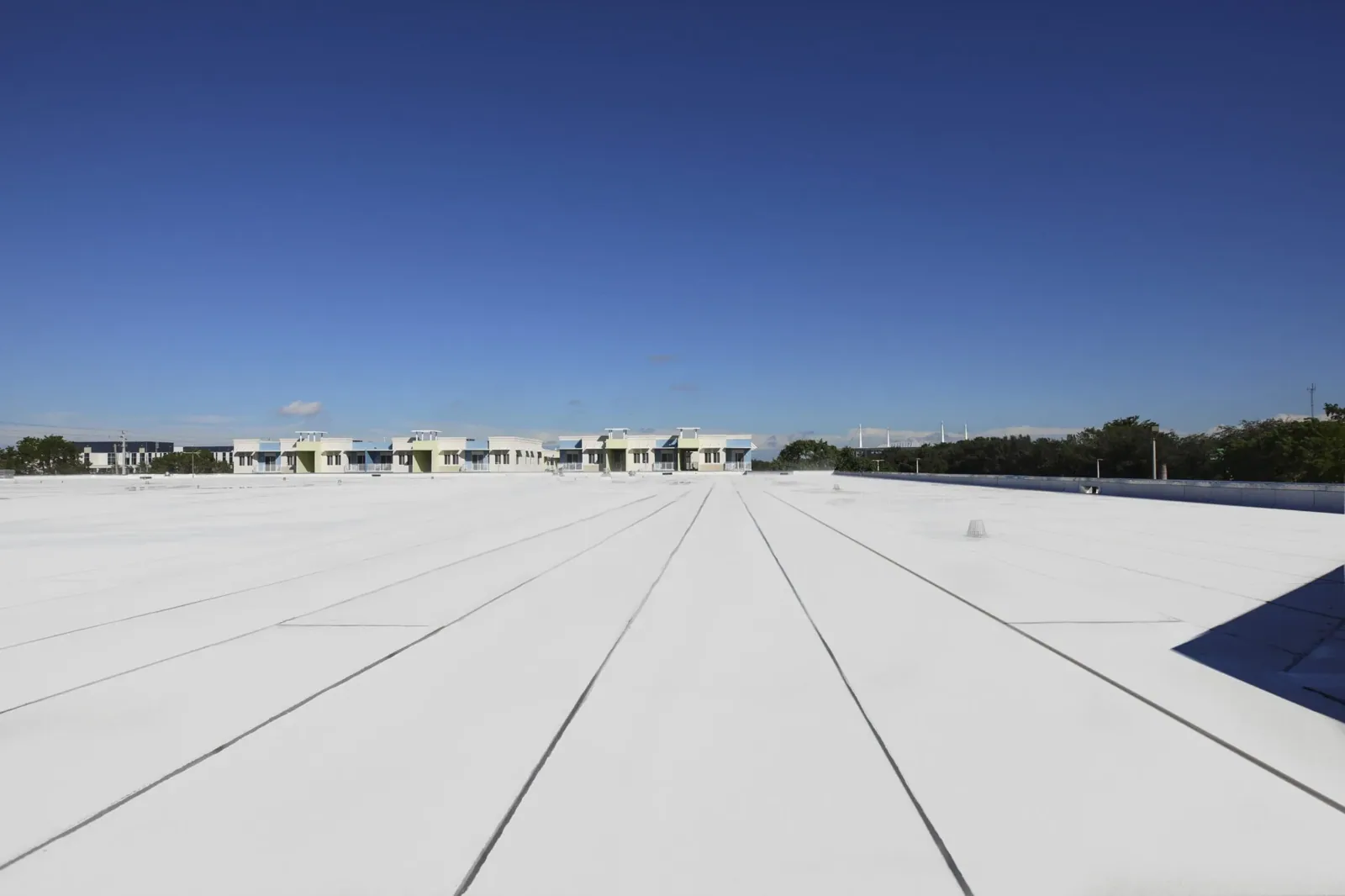
Tracing: how we find the real entry point
We start inside, not on the roof. Where is the stain? How big? Does it grow after rain or after a hot day? Those answers narrow the search. Then we go up and work the roof upslope from the stain, because water enters higher than it drips.
On the roof we check the usual suspects in order: penetrations, flashing, seams, drains and edges. We use a moisture meter and, when the cause is not obvious, an infrared moisture survey to map where the insulation is wet. On a stubborn leak we run a controlled water test, wetting one section at a time while someone watches inside. It takes patience, but it ends the guessing.
Common culprits: where leaks start
Most leaks begin at a detail, not in the middle of a membrane. These are the details where a flat roof opens first.
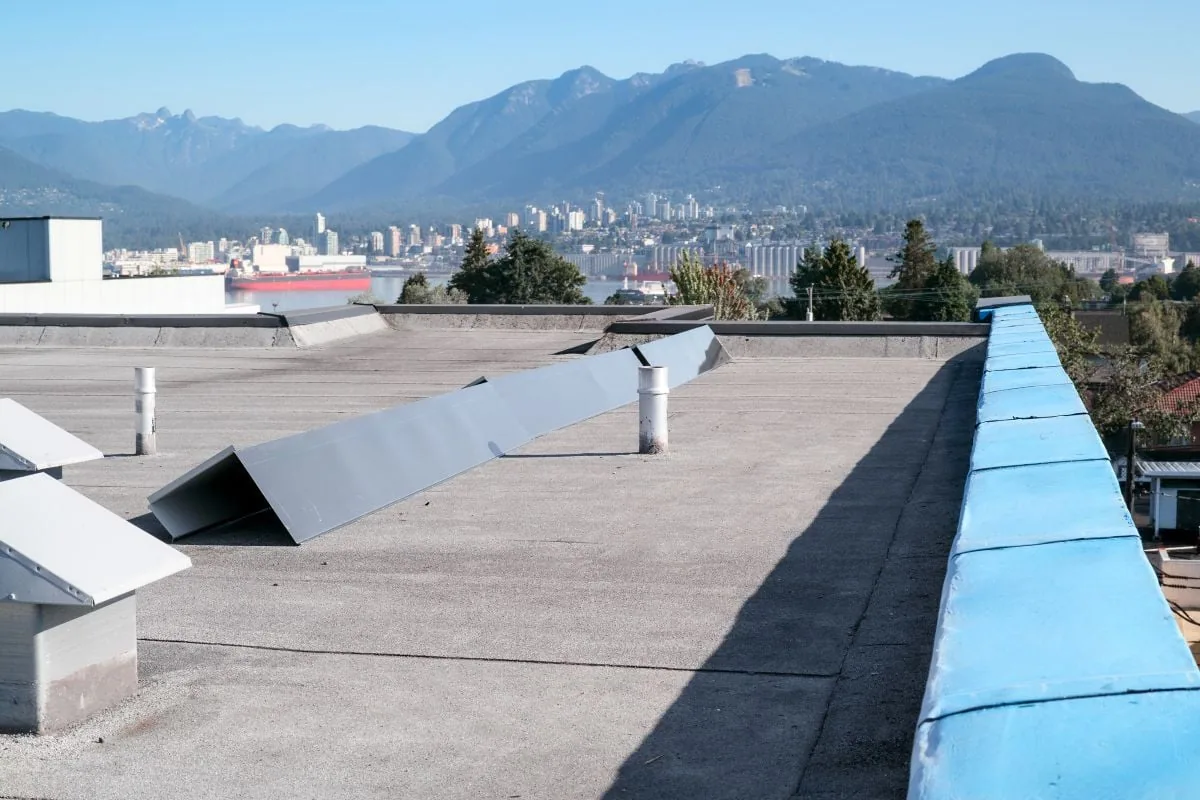
- Flashing at walls and curbs: loose, cracked or pulled away from the surface.
- Pipe boots and conduit penetrations: split rubber and dried sealant.
- Seams: open laps, cold-weld failures, adhesive that never fully bonded.
- Drains: clamped rings that loosened, clogged strainers, wrong drain height.
- Skylights and hatches: failing curb flashing and gasket wear.
- Edge metal: lifted coping that lets wind-driven rain behind the wall.
A leak at a wall can be a flashing failure. A leak near a pond is often a drainage problem first. We fix the cause and not just the symptom.
Stopping it: temporary now, permanent next
Sometimes the fix is a quick one. A new boot, a rebuilt corner, a patched seam. Other times the leak is a sign of wider trouble, and the first job is simply to keep water out until a full repair can be done.
We tell you which case you have. A temporary seal is priced as temporary and marked as such. A permanent repair comes with a clear description of what was done and why it should hold. If the leak is active and heavy, our emergency roof repair crew can tarp and dry in the building first. Then the permanent fix is scheduled with the weather in mind.
Wet insulation: the cost nobody sees
A roof can stop dripping and still be wet inside. Insulation soaks up water and holds it. Wet insulation loses its R-value, adds weight, supports mold and feeds the next leak. If we only patch the membrane, the water inside the roof has nowhere to go.
So we check. Where the insulation is wet in a small area, we cut it out and replace it with the patch. Where it is wet across large sections, we say so in numbers and show you the moisture map. At that point repair and replacement costs start to meet, and you can decide with the facts in hand.
Weather window: when a repair can and cannot cure
Adhesives, primers and sealants need a dry surface and a cure time. In humid central Alabama, a morning with heavy dew or a pop-up afternoon storm can cut a repair window short. We watch the forecast and plan the permanent fix for a day when it can set, then protect the area in the meantime.
That is why a temporary seal and a permanent repair are two different line items. The first keeps the building dry tonight. The second has to survive next summer, which brings about 65 days at 90 degrees or higher in the Birmingham metro, with a roof surface running well above the air temperature.
More on Commercial Roof Leak Repair
By building: where leaks show up differently
Office roofs near the Galleria and the Riverchase office parks often carry rooftop units, and each unit sits on a curb with lines going through the roof. When a leak shows up there, the equipment is the first place we look. On retail strips, wall flashing takes the weather. A distribution building, like the fulfillment center Amazon announced in Bessemer, keeps inventory under the roof, so a drain or seam problem there moves to the top of the list.
Medical buildings add a layer of urgency. Near UAB in Southside Birmingham, a ceiling leak can interrupt care, so we plan the repair around the tenant, protect equipment and coordinate with the facilities team. The leak and the building both shape the plan.
After the fix: records and follow-up
When the leak is stopped, we send photos of the entry point, a description of the repair and a note on anything else we saw. If the leak damaged interior finishes, those photos help with your insurance or tenant discussions. We also recommend a return visit after the next heavy rain, to confirm the fix held and the insulation is not holding more water than we found.
For roofs with repeat trouble, a preventive maintenance program catches the next failure before it reaches the ceiling.
Commercial Roofing Questions
Why does my roof leak only when it rains hard?
Heavy rain tests parts of the roof that light rain misses. Water ponds deeper, runs through small openings and gets pushed sideways by wind. A split pipe boot, an open lap or a cracked sealant line may stay dry in a drizzle and fail in a storm. We find these by walking the roof, checking drains and, if needed, testing sections with water while someone watches below.
Is it a roof leak or a condensation problem?
Both happen in humid places like central Alabama, and they look alike. Condensation tends to show up on cold surfaces, such as ducts or metal decks, in warm humid weather and does not follow rainfall. A leak follows rain. We check both. If the cause is condensation, patching the roof wastes money, and we recommend ventilation or insulation changes instead.
Can a leak be fixed without replacing the whole roof?
In most cases, yes, when the damage is local and the insulation is mostly dry. The test is how much of the roof is wet and how many repairs it has already taken. We map both. If the map shows the problem is limited, a repair is the right call and we give you a realistic life for it. If not, we show you where replacement begins to make more sense.
Who pays for ceiling and interior damage?
That depends on your lease, your policy and the cause of the leak, and we cannot decide it for you. What we can do is document the entry point, the condition of the roof and the repair, with dated photos. That record gives your insurer, landlord or tenant what they need to sort out responsibility.
How fast can you get someone out for an active leak?
Call us and we will give you a window the same day. For a heavy leak, the first visit is about stopping the water: tarp, temporary seal or drain clearing. We work around the weather, because some repairs cannot cure in wet conditions. You will know what happens next before the crew leaves the roof.
Related Roofing Work

Infrared Moisture Survey
Flashing Failure Repair
Emergency Roof Repair
Commercial Roof Replacement
Emergency Leak Calls
Call about the leak, and we will trace it
Tell us where the water shows up and when. We will go up, follow it back to the source and give you a written repair with a price.