
Commercial Roof Replacement
Commercial Roof Replacement in Hoover, AL
A new roof costs less when you pick the month. Wait for the leak and the month picks you. In Hoover, AL, that usually means a spring storm window. The Birmingham area sits in Dixie Alley, and severe thunderstorms run hard through spring, then again in November and early December. A tear-off started in the wrong week can sit open under a warning. So we plan replacements around the weather calendar and your budget year, in that order.
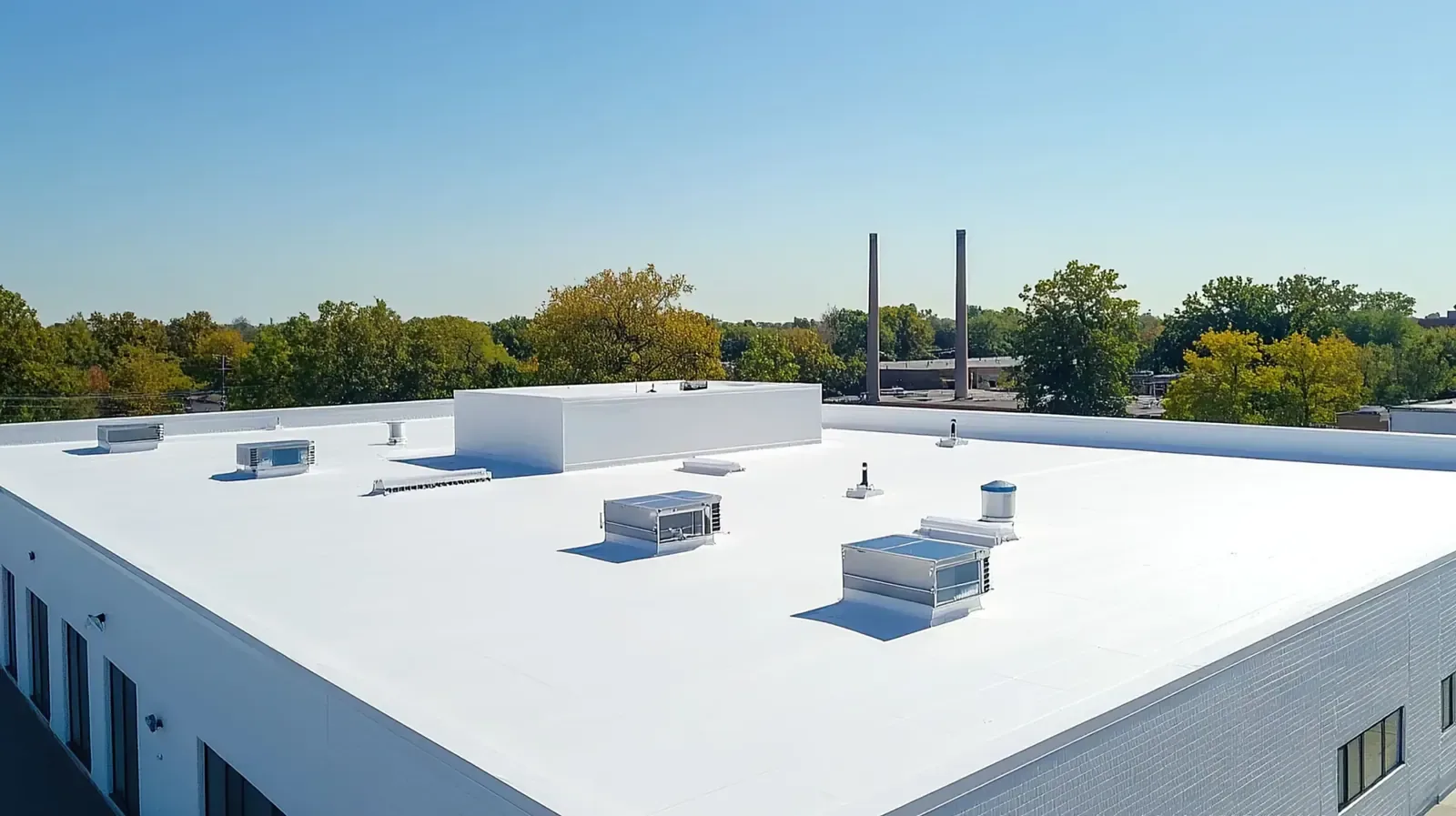
This is the full job: old membrane off, wet insulation out, new insulation and cover board down, new membrane on, and every edge and curb rebuilt. It is the biggest roof decision a building owner makes, and it deserves a straight number and a straight date.
Repair or replace: where the line sits
Repairs make sense while the membrane is sound and the damage is local. Replacement makes sense when the damage is everywhere. Here is how we draw the line on a roof along Highway 31 or Highway 150.
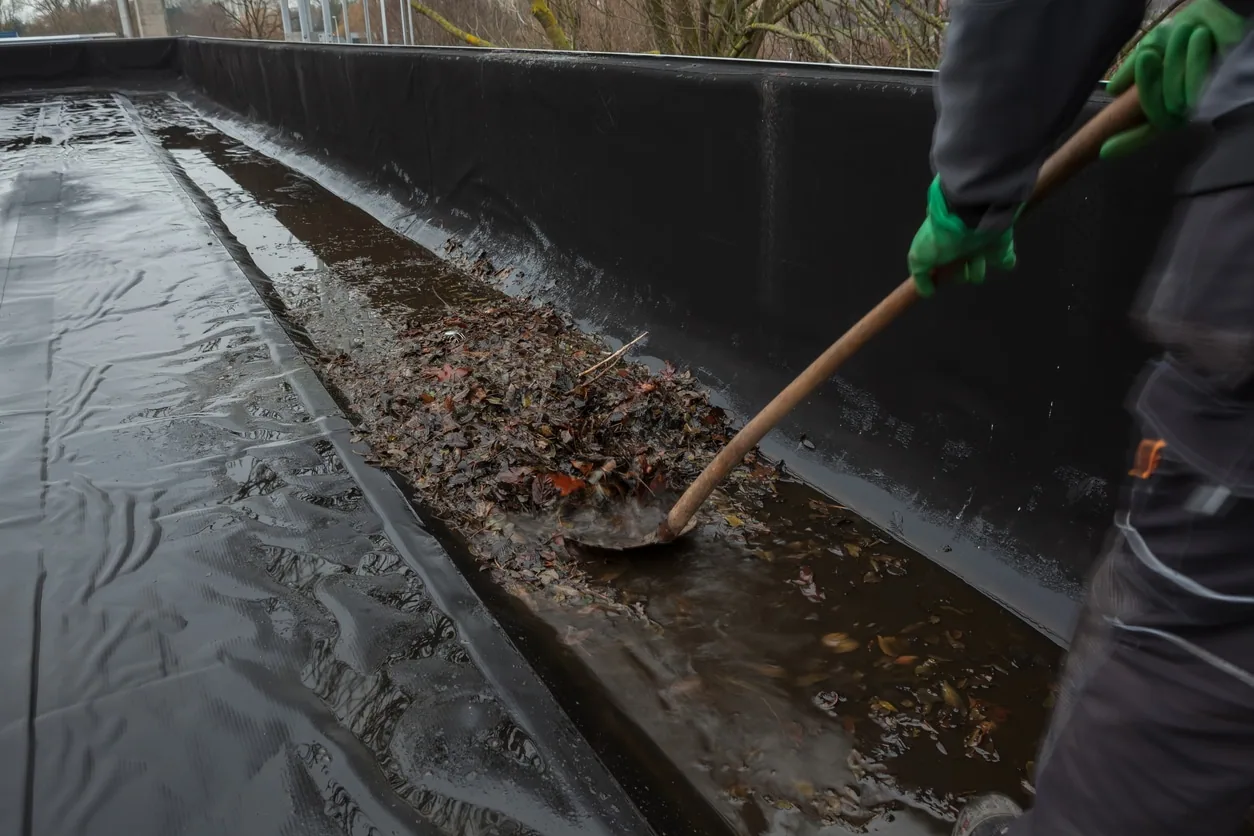
First, we look at how much insulation is wet. A few small wet patches get cut out and patched. Wet insulation across a big share of the deck does not. It holds water, loses its insulating value and keeps feeding the leak. Second, we look at seams and flashing. If they are opening across the whole roof, patching turns into a yearly bill. Third, we count the repairs already made. A roof with a dozen old patches usually costs more to keep than to replace.
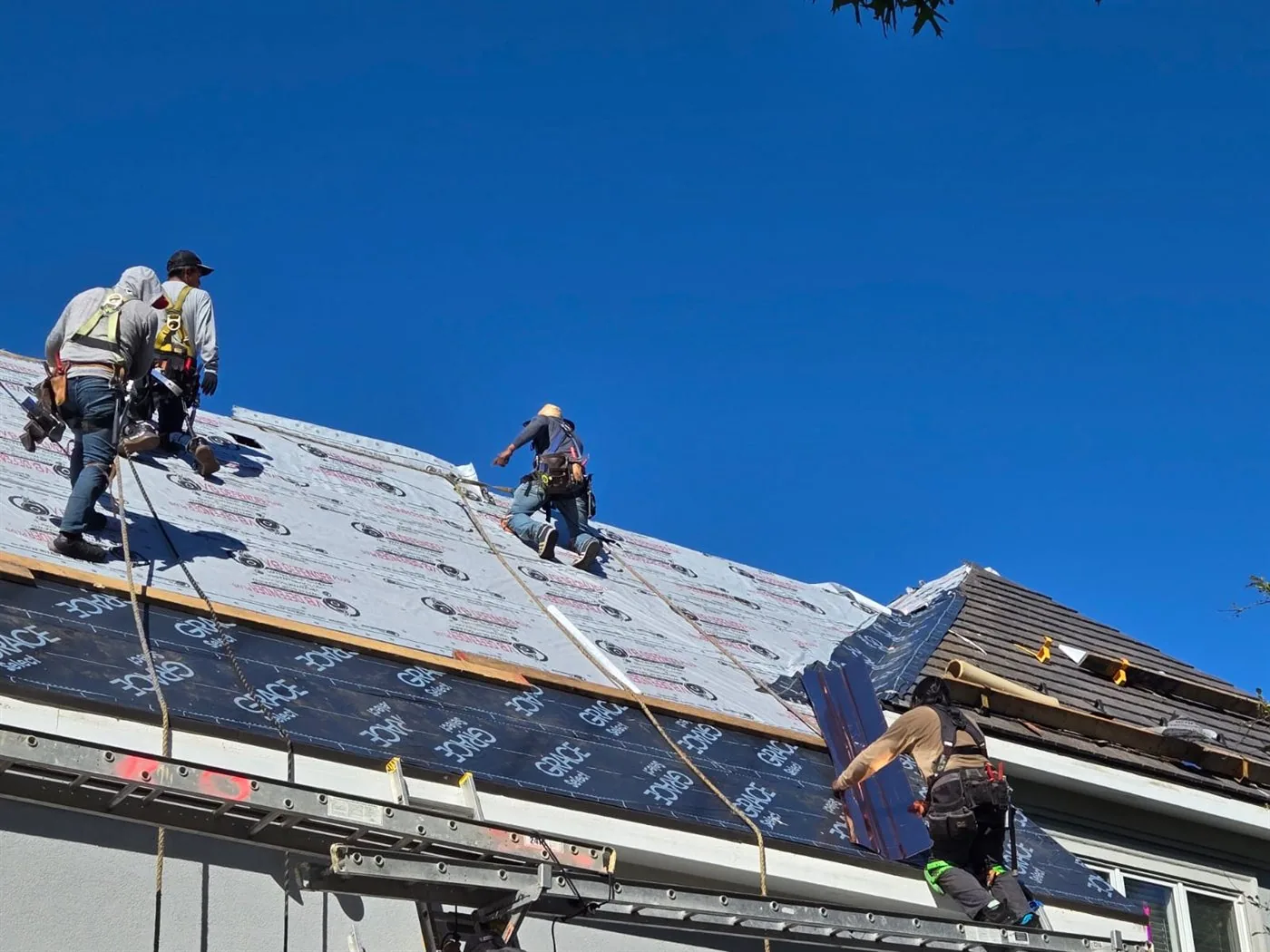
A hands-on roof inspection gives you that count in writing, with photos, so the decision rests on what is on the deck.
Storm season: why timing matters here
Birmingham averages about 56 inches of rain a year, with relative humidity near 70 percent. Spring thunderstorms add wind and hail. Tornado history adds weight to the calendar, with F5 storms in 1977 and 1998 and an EF4 in April 2011. We do not plan around the worst day. We plan around the ordinary bad week.
That changes how we phase a tear-off. We open only the area we can dry in by the end of the work day. The old membrane comes up in sections, and each section gets new insulation, cover board and a temporary tie-in before we leave. If the forecast turns, the building is already sealed. A late-fall or winter start is worth pricing for a flat roof near the Galleria, because the new roof is then finished before March.
When damage comes from one storm, the work may overlap with a tornado damage repair scope. We keep that paperwork separate so a claim stays clean.
What goes on: choosing the new system
The tear-off is half the cost story. The new system is the other half.
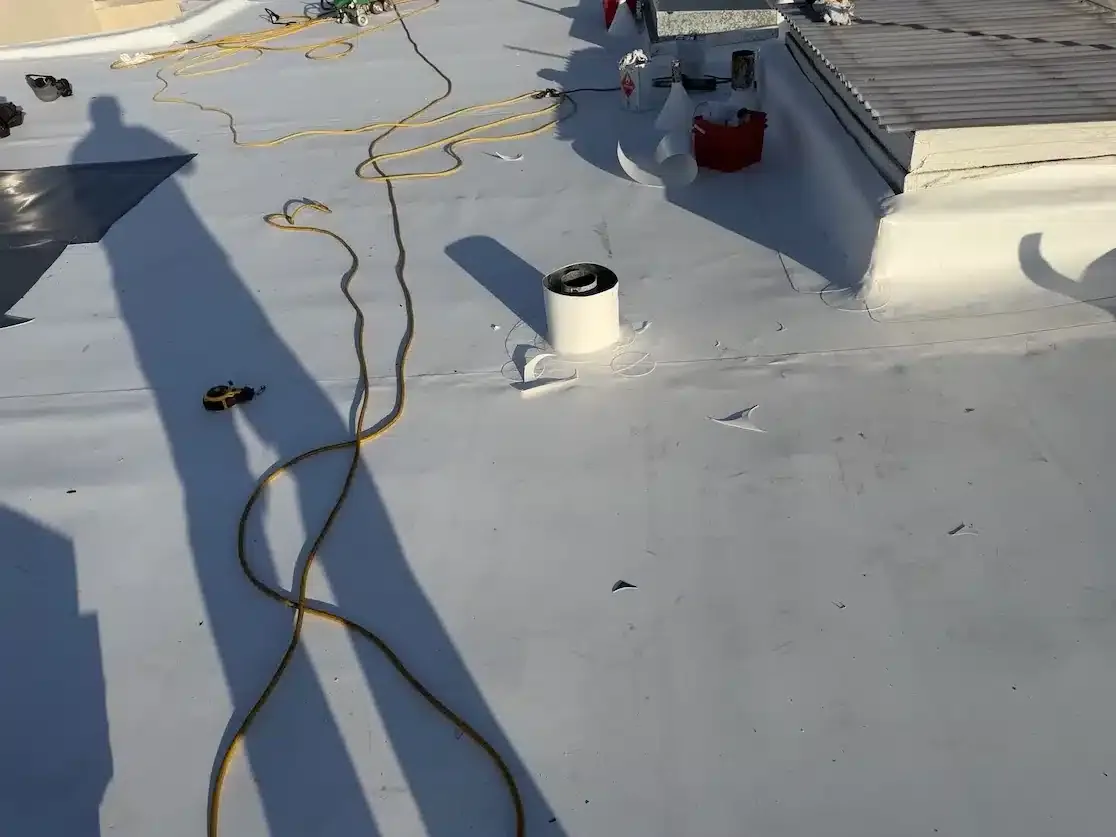
TPO and PVC are the common single-ply choices for flat office and retail roofs. Both weld their seams with hot air and both throw back sun, a real help in a metro with close to two months of 90-degree days every year. EPDM suits large simple roofs with few penetrations. Modified bitumen and built-up roofs still make sense where foot traffic and rooftop equipment are heavy. Metal retrofit works when the frame can carry it.
We match the system to the building. A Riverchase office roof needs different detailing than a Bessemer fulfillment building. A TPO sheet with welded seams copes with that heat well. Cover board over the insulation protects against hail bruising and foot traffic, and it costs little next to a second tear-off.
Budget year: what drives the price
We do not quote from a chart. The price follows the building. These items move it most.
- Tear-off depth: one layer comes up faster than two or three.
- Wet insulation: more wet material means more removal and more new insulation.
- Deck condition: rusted or rotted deck gets replaced before insulation goes down.
- Rooftop equipment: every curb and unit adds flashing work and often crane time.
- Access: tight lots, tenant parking and loading docks add staging cost.
- Edge metal and drains: new coping, scuppers and drains belong in a proper replacement.
Tell us when your budget year opens and closes. A building with more than one roof section can be replaced in phases across fiscal years. We write each phase into the scope with its own price, so you approve one at a time.
Tenants and operations: working over an open building
Most roofs sit over people. Offices keep working, stores keep selling, clinics keep seeing patients.
Noisy work goes early or off hours where the lease calls for it. Crews get a defined access path so they do not cut through tenant space. For a retail center, we stage materials away from customer lanes. Our occupied-building reroofing plan sets dust control, interior protection and a notice schedule.
More on Commercial Roof Replacement
Code: what the state requires
Plan review on a replacement runs through the 2021 International Building Code, which the state's Division of Construction Management made effective July 1, 2022, and which took in parts of the 2024 edition in March 2025. The energy side is ASHRAE 90.1-2013, and the power to adopt the commercial energy code passed to the Alabama Licensing Board for General Contractors on October 1, 2024.
For a replacement, that means insulation levels that meet the energy standard once the roof is opened.
Next step: a roof walk and a written scope
Start with a walk. We check the membrane, the insulation, the drains and every penetration, and we take photos. Then we write the scope: what comes off, what goes on, what it costs and when we can start. If a lighter fix will carry you another few years, we say so and price that too. A recover over the existing roof is sometimes possible when the insulation is dry and the code allows another layer.
For a building in Pelham or Vestavia Hills the first budget question is when the roof goes on the schedule. A written condition report answers it.
Commercial Roofing Questions
How do I know a replacement is cheaper than another round of repairs?
Add up the last three years of repair invoices and the interior damage that came with them. Compare that total to the replacement price spread across the years a new roof lasts. If leaks keep coming from different spots, replacement usually wins. We put the comparison in writing after the walk, with the wet-insulation findings that drive it. When the roof is mostly dry and the trouble is local, we recommend repair and tell you how long it should hold.
Can you start in late fall and finish before spring storms?
For most roofs, yes. A fall or winter start puts the finished roof in place ahead of the spring thunderstorm season. We watch the forecast daily and phase the tear-off so the building is sealed each evening. The limit is wet or very cold days when adhesives will not bond. We schedule around those days and keep you posted on where the calendar stands.
What happens to the old roof when it comes off?
Old membrane, insulation and fasteners are hauled off as construction debris. Older buildings can contain asbestos in roofing materials, so we recommend testing before any tear-off starts on an older roof. That result decides how the material is handled and what the schedule looks like. We raise it at the first walk so it does not stall the job later.
Will a new roof hold up better against hail?
A system with cover board resists hail bruising better than a bare membrane over soft insulation. Hail up to softball size came down across central Alabama on April 25, 2003, which is why impact resistance belongs in the design here. Insurers set their own terms, and some give credit for impact-rated systems. Send us the carrier's question and we will supply the product data.
Do the drains and edge metal get replaced too?
Usually. Old drains and coping were set for the old roof height. Once new insulation raises the surface, they need to be raised or replaced so water still leaves the roof. Edge metal also carries wind load at the perimeter, and loose metal is where storms start peeling a roof. We price both into the scope so the new membrane never ties into worn details.
Related Roofing Work
Commercial Roof Inspection

Tornado Damage Roof Repair
TPO Roofing
Occupied Building Reroofing
Emergency Leak Calls
Call for a roof walk and a written scope
Tell us when your budget year opens and which tenants need protecting. We will walk the roof, count the wet insulation and give you a price and a start date in writing.