
Data Center Roofing
Data Center Roofing in Hoover, AL
A single leak over a server hall costs far more than the repair that would have prevented it. A data center roof does not get a second chance. For a facility in Hoover, AL, the roof plan has to be finished before the spring storm season, not during it. March, April and November are the months to plan around.
That changes how we work. We walk the roof early. We test it for moisture before it leaks. We write a plan you can hand to your risk team. Then we do the work on a schedule that never leaves the white space exposed.
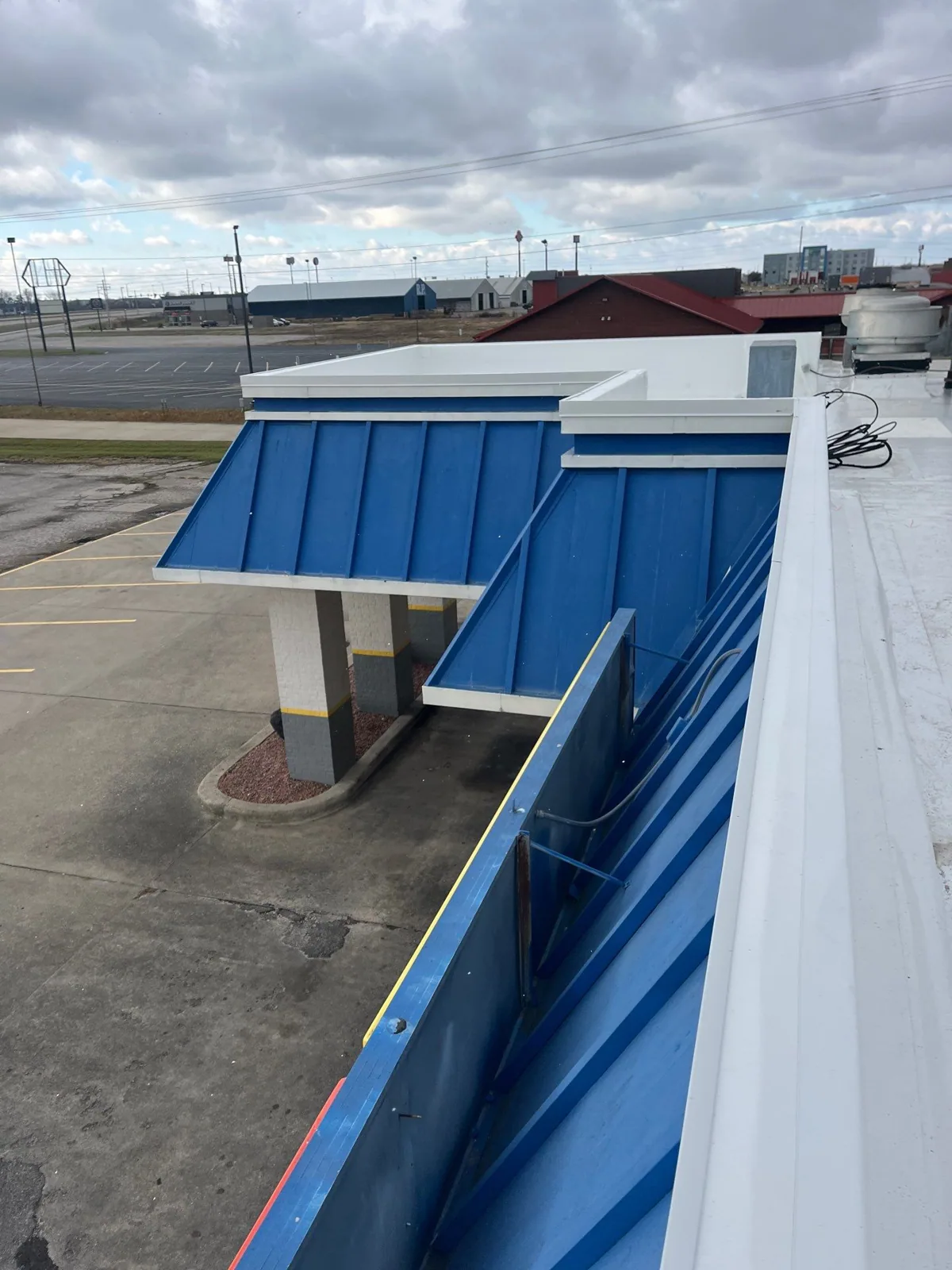
The issue: zero tolerance for water
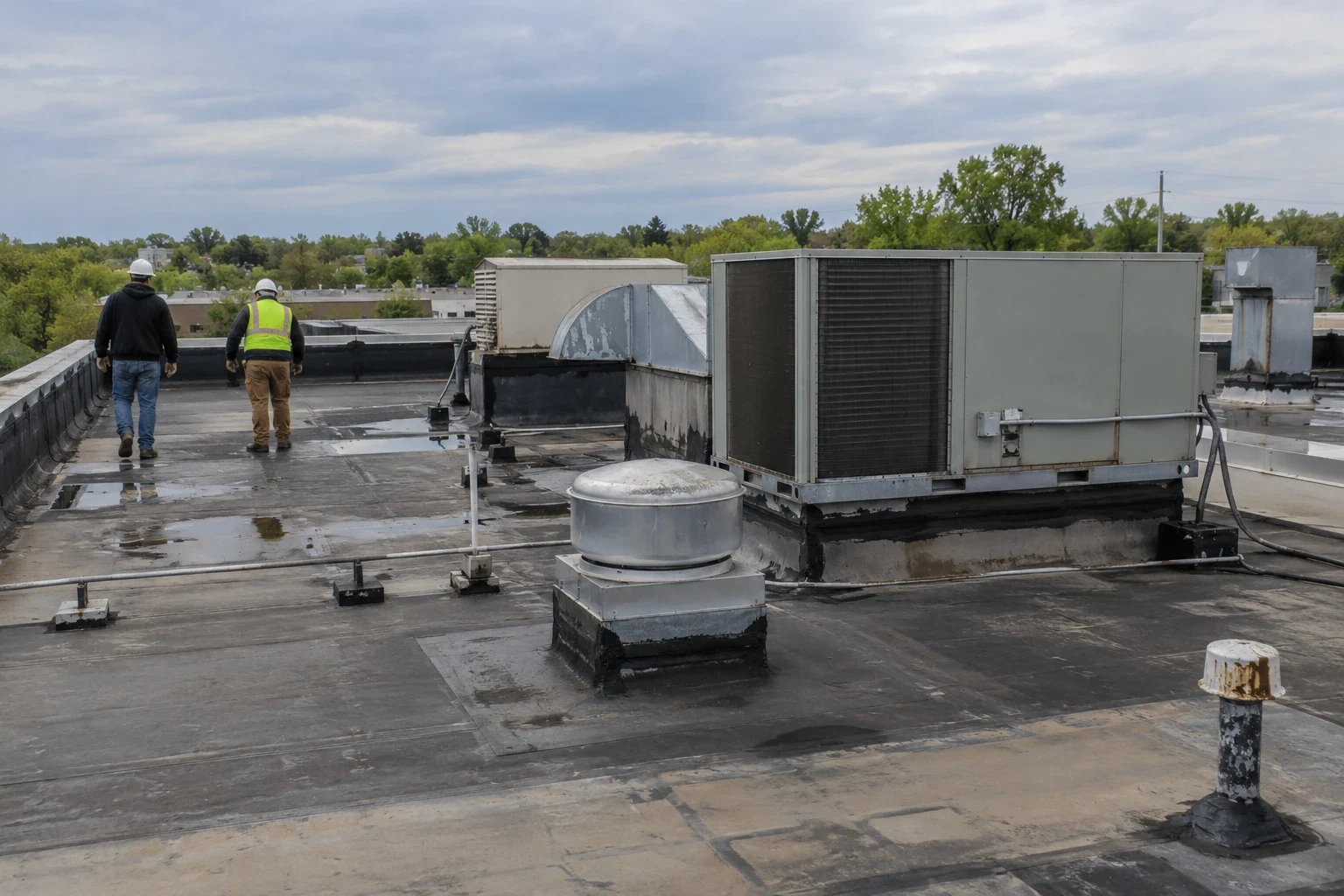
A data center roof carries chillers, generators, dry coolers and exhaust. Each one sits on a curb or rail with lines running across the surface. Each line and curb is a place for a leak to start. The roof also covers the most expensive floor space in the building.
A zero-leak standard is the right standard. It means we cannot wait for a stain to tell us something is wrong. We read the roof with moisture meters, infrared scans and cores. We find wet insulation before water reaches a ceiling. That is the point of the survey: a finding on paper in March, not a stain in a server hall in April.
AT&T keeps a tower and data center downtown. The same discipline applies to any building with a server room, in an office park or a suburban center.
What it costs: a leak against the whole floor
Count it this way. The roof repair is a small number. The cost of a wet server hall is a very large one: equipment, downtime, customers and the incident report. Insurance may cover some of it. It will not cover the lost trust.
So we price two things. The roof work, and the risk of not doing it. On the roof, price follows area, layers, how much insulation is wet, the units to be lifted and the building's access rules. An infrared moisture survey costs little compared with one incident, and it shows exactly where to spend.
We list each item with a price and a priority, so your risk team can approve the high-risk sections first.
Storm season: tornadoes, hail and heat
The Birmingham area sits in Dixie Alley. Dixie Alley's list for the area includes F5 storms in 1977 and 1998, plus the EF4 that arrived April 27, 2011. Spring brings the most severe thunderstorms, November and early December a second round, and April 25, 2003 brought softball-size hail to central Alabama.
For a data center, the roof must hold equipment in wind and keep water out in hail. We check curb fastening, equipment restraints and edge metal before March. Once a severe report lands we do a storm walk plus a hail check. We photograph each item with a date, so your insurer and your risk team see the same record.
Heat matters too. Cooling equipment works hardest through the two months or so of 90-degree days. Hot lines and rails run across the roof surface on those days, and a seam under a rail takes the heat first. We lift a few rails in the survey to read what sits beneath.
When to do it: ahead of the load
Plan roof work for the months when cooling load is lightest. Late winter works well. Do the cheap fixes first: seal curbs, reflash penetrations, clear drains. Then core the roof and read moisture. If a section has to be replaced, schedule it between storm rounds, and dry in each piece the day it opens.
Many data centers run on a change-freeze calendar. We build the roof schedule around it. Access rules matter too: badges, escorts, hoisting limits and quiet hours. We submit our crew list and plan early. An occupied building reroof plan lists work zones, dates and contacts.
Generators and chillers run tests on a schedule, and roof crews stay clear of those windows so no test day is interrupted by a lift.
Budget year: roof and mechanical on one calendar
Chillers, generators and coolers get replaced on their own cycle. The roof has to move with them. A new unit set on an old curb is a repeat leak. We read your mechanical plan and tie the roof schedule to it.
A good plan has three layers. Year one: moisture survey, penetrations and drains. Year two: the sections that failed. Year three: the rest. Every year carries a price and a risk rating. The condition report keeps the whole story in one place, so a new facilities lead can pick it up without a long handoff.
More on Data Center Roofing
Recommendation: find the water before it finds the floor
Do three things this year. Run a moisture survey on every roof over critical space. Reflash every curb and line support on the equipment platforms. Clear and test every drain and overflow.
Your designer confirms what applies; the state's adopted building code and the ASHRAE 90.1-2013 energy standard are the starting point. A roof condition report gives the risk team the evidence. For comparable critical-space roofs, hospital roofing and office building roofing follow similar rules, and Downtown Birmingham buildings use the same plan.
What to ask us: access, proof and timing
Call with the building address and your access rules. Then ask these.
- Which curbs, lines and drains carry the most risk?
- What does the moisture map show over the white space?
- How many days is any section open, and how is it dried in?
- What can be done inside a change freeze?
- What does the plan cost by year?
We answer with photos, readings and a schedule. A server room inside an office park near Riverchase, at the I-65 and I-459 interchange, follows the same plan as a stand-alone facility: the roof over critical space moves to the front of the list, and every curb above it gets a second look.
We also ask about your insurer's roof requirements. Some policies set inspection intervals or documentation rules. We build those into the schedule so the paperwork is ready when someone asks for it.
Commercial Roofing Questions
How can you check a roof without opening it?
We use a moisture meter, an infrared scan and a small number of core cuts. The meter and scan show where insulation may be wet, and the core confirms it. We recommend scanning in the cool of the day for the clearest picture. The scan costs little and finds the problem before water reaches the ceiling.
Can roof work happen near live equipment?
Yes, with a plan. We keep clear of intakes and exhaust, protect lines and use quiet methods near sensitive areas. Your team sets the rules. We recommend a pre-work walk with facilities and security, a written method statement and a daily sign-off before the crew leaves.
What roof system suits a data center?
A durable membrane over dry, well-attached insulation with strong flashing at every curb. The right one depends on the building. We recommend adding redundancy at the details: double flashing at penetrations, overflow drains and walk pads on the service routes.
How do we document the roof for our risk team?
With a condition report: photos, moisture readings, core results and a ranked list of sections. It gets updated at every visit. We recommend filing it with your insurance paperwork. After a storm, the dated photos show what changed.
When should a data center roof be replaced?
When moisture has spread, leaks repeat or the membrane is splitting. Do not wait for a failure over critical space. We recommend replacing the worst section first and phasing the rest. We give you a price for each phase and a date that avoids storm rounds.
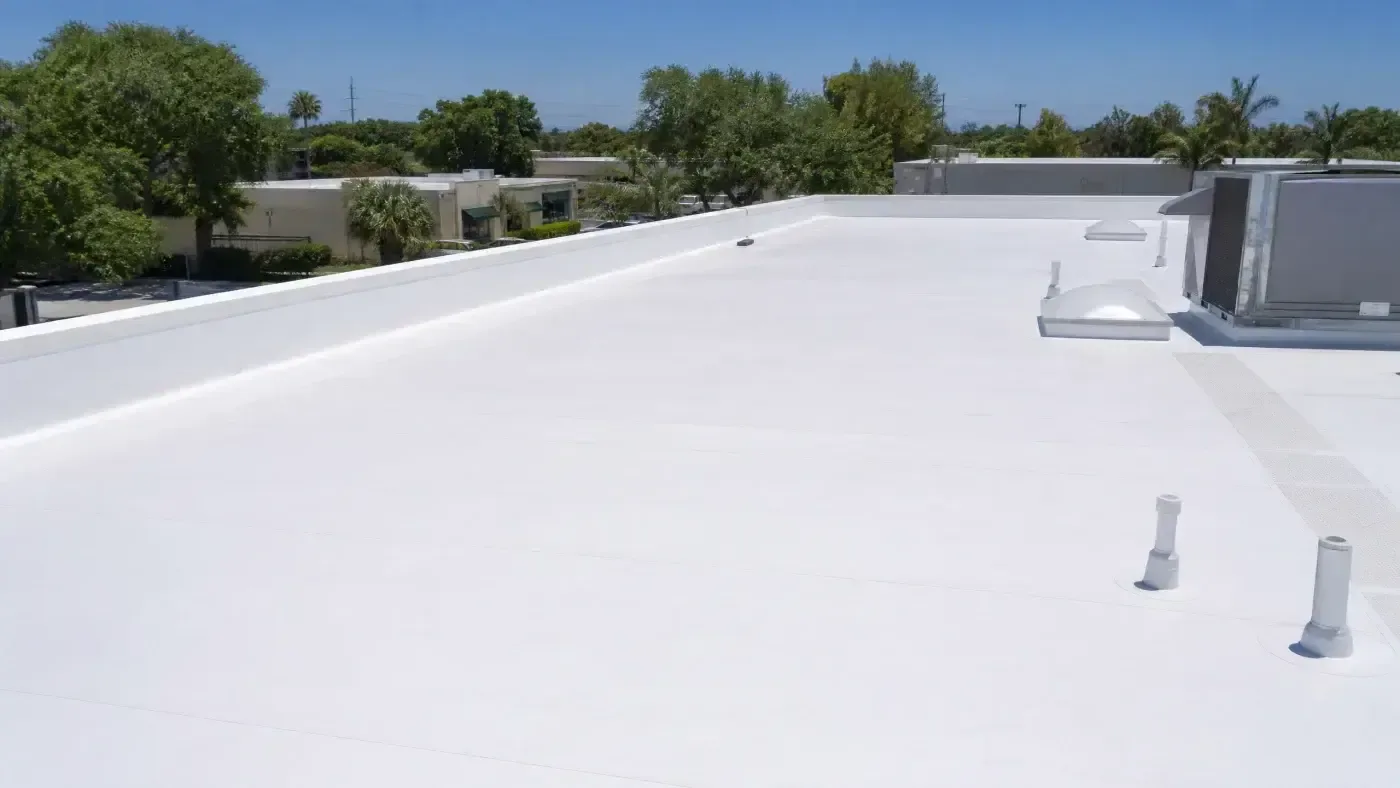
Related Roofing Work
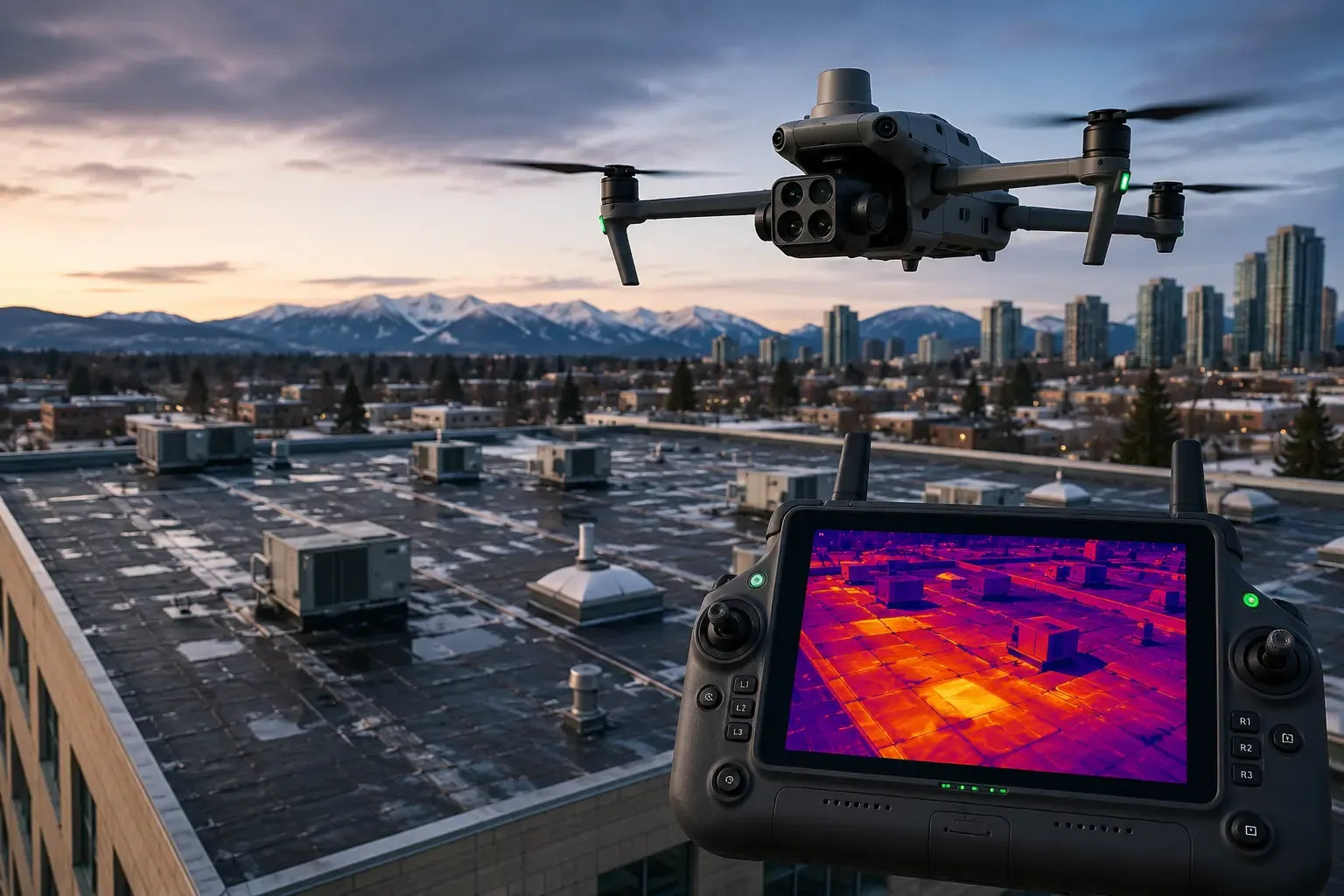
Infrared Moisture Survey
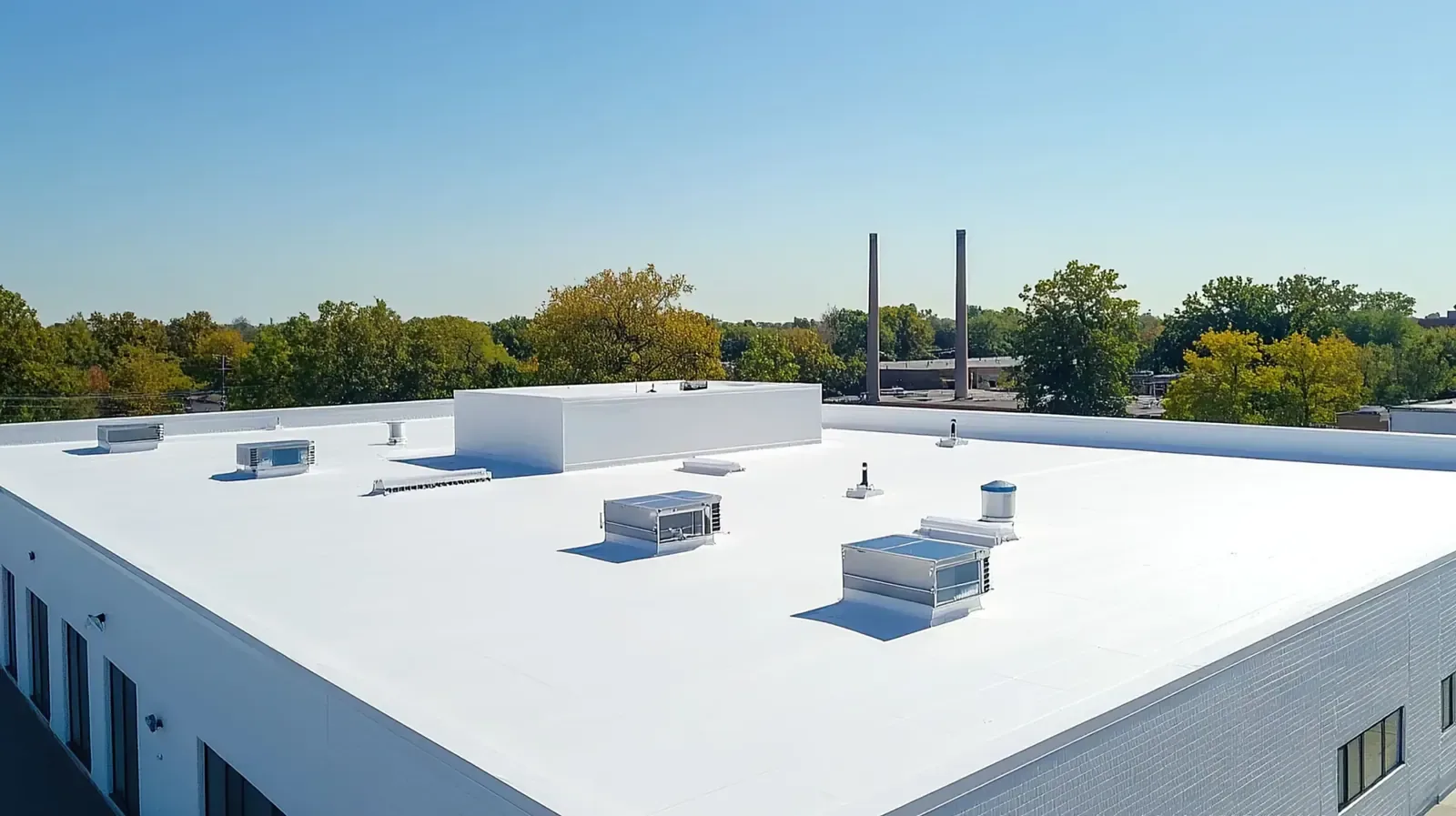
Occupied Building Reroofing
Roof Condition Reports
Hospital Roofing
Emergency Leak Calls
Call for a storm walk or budget review
Call before spring or after a severe report. The visit pins down which sections carry the most risk and what each fix costs. You get it in writing, ready for your risk team.