
Warehouse Roofing
Warehouse Roofing in Hoover, AL
A warehouse roof repair in February costs a fraction of the same repair in May. Spring storms in Hoover, AL arrive on a schedule. Plan around March, April and November. A warehouse has a big roof, a few drains and a lot of stock underneath. One blocked scupper can put water on a pallet row within hours.
Two questions drive the budget: what does it cost to fix this year, and what does it cost to wait? Both get a written answer, with a price on each side of the line.
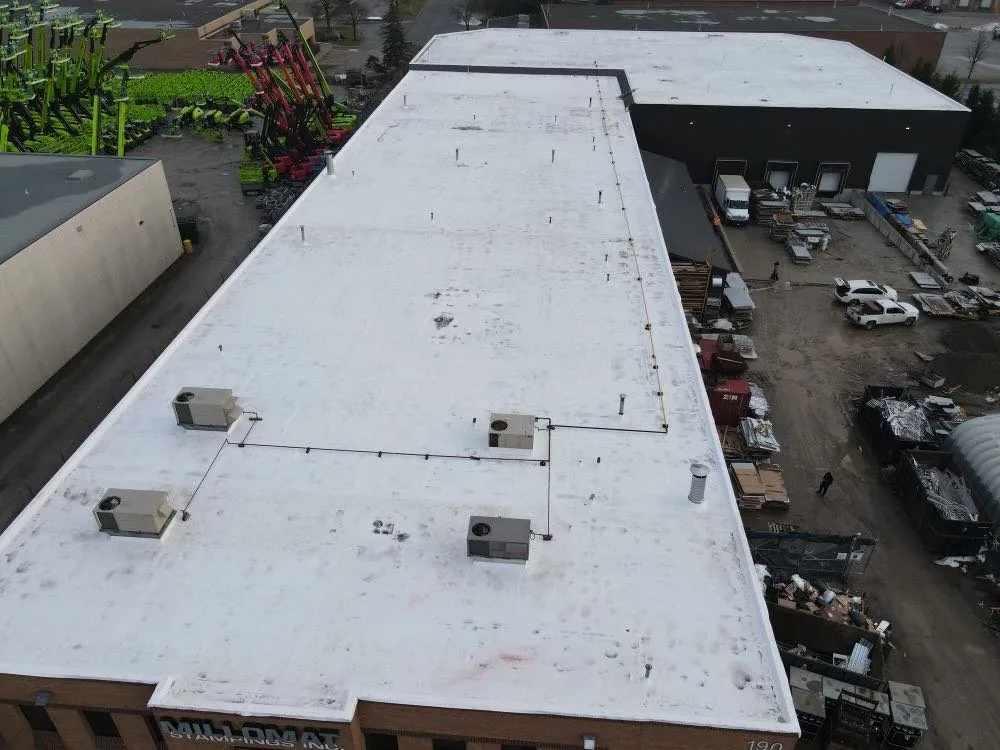
The issue: big roofs, few details
A warehouse roof is mostly open field. That is the good news. The trouble sits at the edges. Wall tie-ins, scuppers, rooftop units and pipe penetrations carry most of the leaks.
Long seams run for hundreds of feet. One open lap can feed water along a joist and drop it three bays away. Staff see the stain, not the source. We walk the whole roof and mark every tie-in, because the stain is a poor guide.
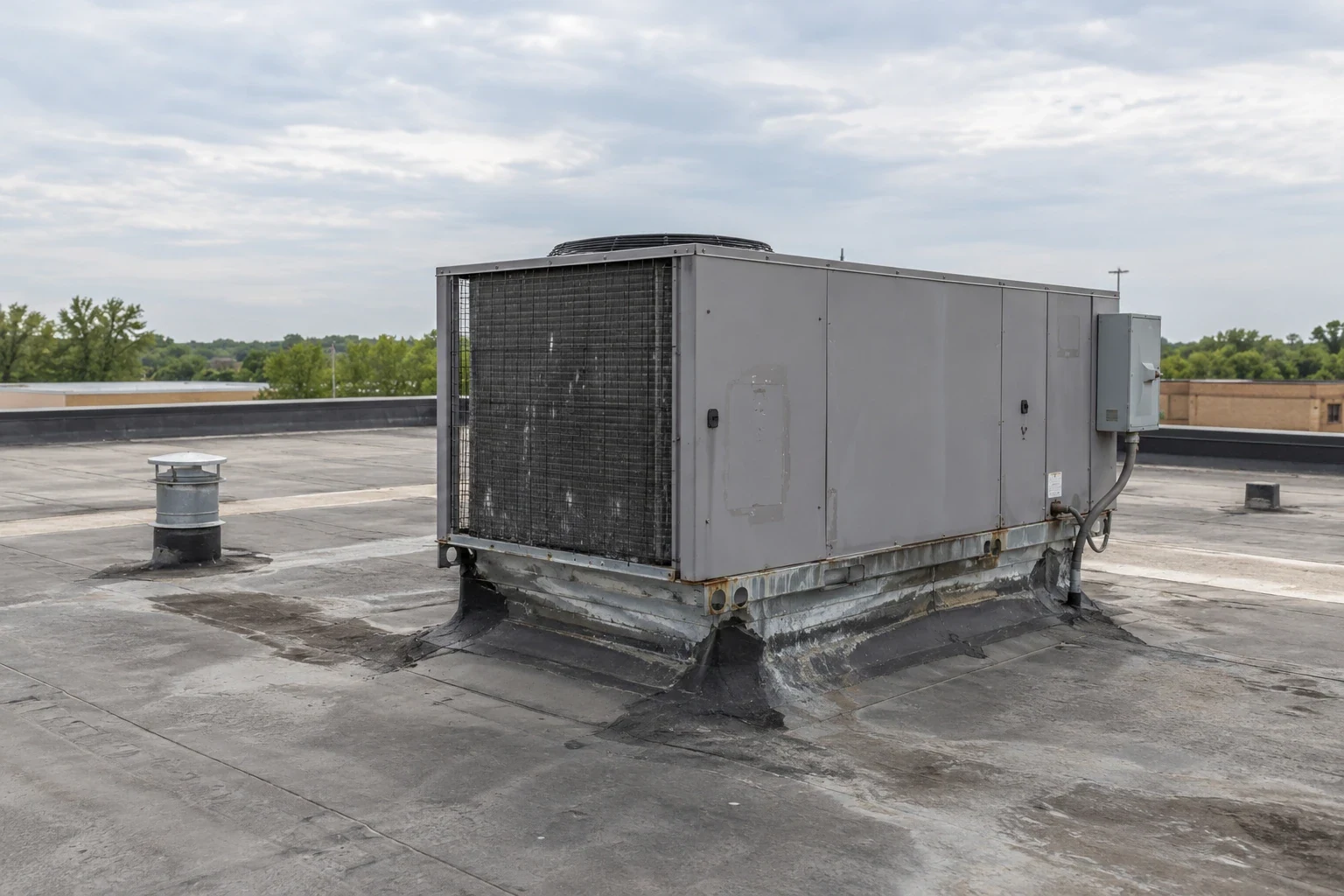
Rooftop units are the other trouble spot. They shake their curbs loose over time. Technicians wear a path to them. Check both before the spring season.
Dock doors add another path for water. A door seal that has worn lets wind-driven rain into the dock, and that can look like a roof leak, so checking the seals during the roof walk rules it out before a repair is priced.
What it costs: patch now or pay later
A small repair on a dry roof is a short visit and a modest invoice. The same leak left through a wet spring soaks insulation. Wet insulation is the expensive part. It has to come out, and it weighs on the deck.
Here is how it plays out. A seam repair in winter is a line item. A seam left open through April storms becomes a section replacement. A section replacement left to the next budget year becomes a full reroof.
Cost moves with layers, wet insulation, equipment to be lifted and access around stock. We price each building on what its roof shows. A commercial roof repair scope lists each item separately.
Storm season: hail and wind
The Birmingham area sits in Dixie Alley. Spring is the main storm season, with November into early December the second. Hail is the quiet cost. Central Alabama took softball-size stones on April 25, 2003, within a year that logged 29 hail days above three-quarters of an inch.
Hail bruises membrane you cannot see from the ground. A warehouse owner needs a hail check after any severe report. We walk the field, mark bruises and dents, and photograph each. A hail damage repair record helps if a claim follows.
Wind goes after edges first. Loose coping and open laps lift in a strong gust. Fix them before March, not after.
When to do it: the Bessemer and Highway 31 calendar
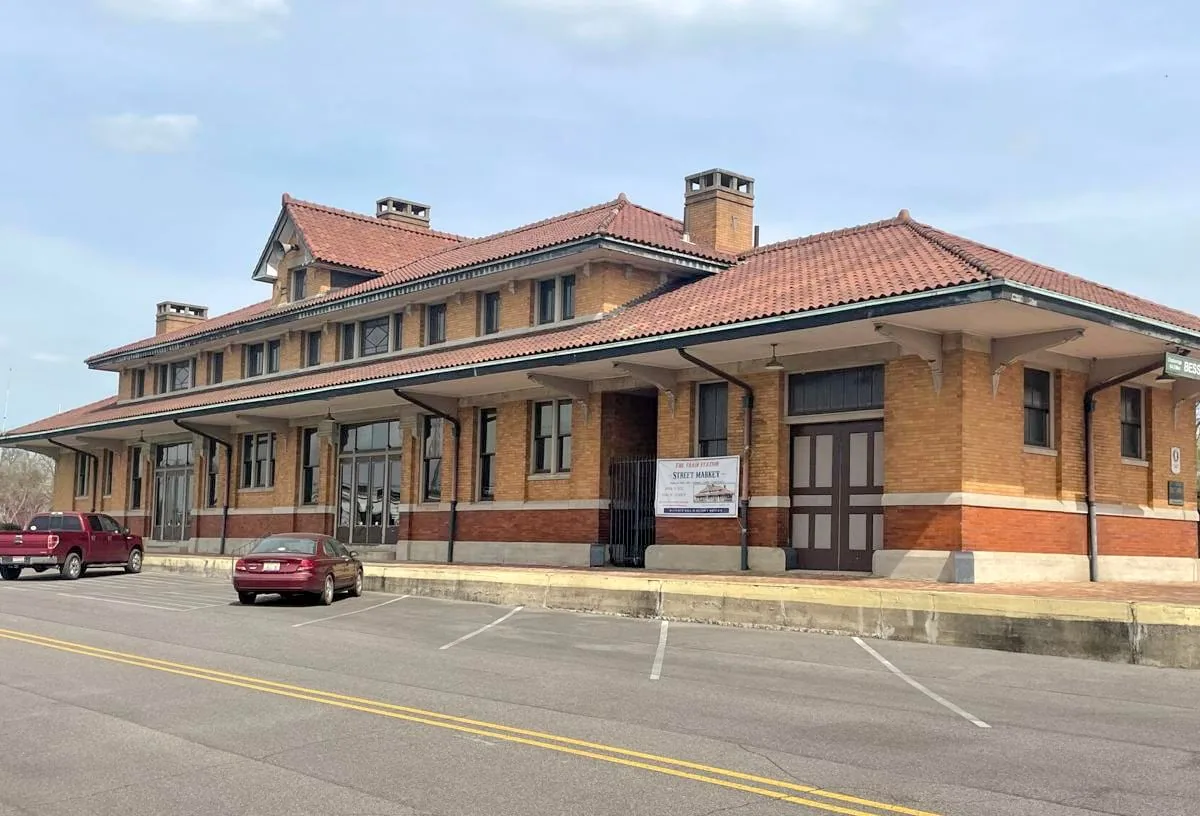
Warehouses cluster where trucks can reach them. Bessemer is served by I-20/59 and I-459, and Amazon announced its fulfillment center there at 800,000 square feet, next to the U.S. Pipe ductile pipe plant. Pelham and Alabaster run along US 31 and I-65.
Plan your walk for late winter. Fix open seams and clear drains in February. Do a second check in early fall, before the November round. If you can pick only one visit, pick late winter.
Heat matters too. Heat and humidity both wear on seams and sealants. A preventive roof maintenance plan puts both visits on the calendar.
Budget year: spread the cost on purpose
Most owners set the roof budget once a year. That is the right moment to decide what gets fixed and what waits. A roof walked in January can be priced in February and scheduled before the first storm.
Here is a simple split. Year one: fix open seams, flashing and drains, and tighten the edge metal. Year two: restore dry sections with a coating. Year three: replace the sections that failed the core test. Each year has a price, and the total is lower than one emergency replacement.
Warehouses with several roof sections can phase the work. The worst section goes first. The others follow as money allows. Each phase is dried in before the crew leaves, so stock stays protected. Ask for the phase plan in writing.
More on Warehouse Roofing
Recommendation: repair, restore or replace
Repair when the insulation is dry and the damage is local. Restore with a coating when insulation is dry and the surface is worn. Replace when moisture has spread, leaks repeat or the membrane splits.
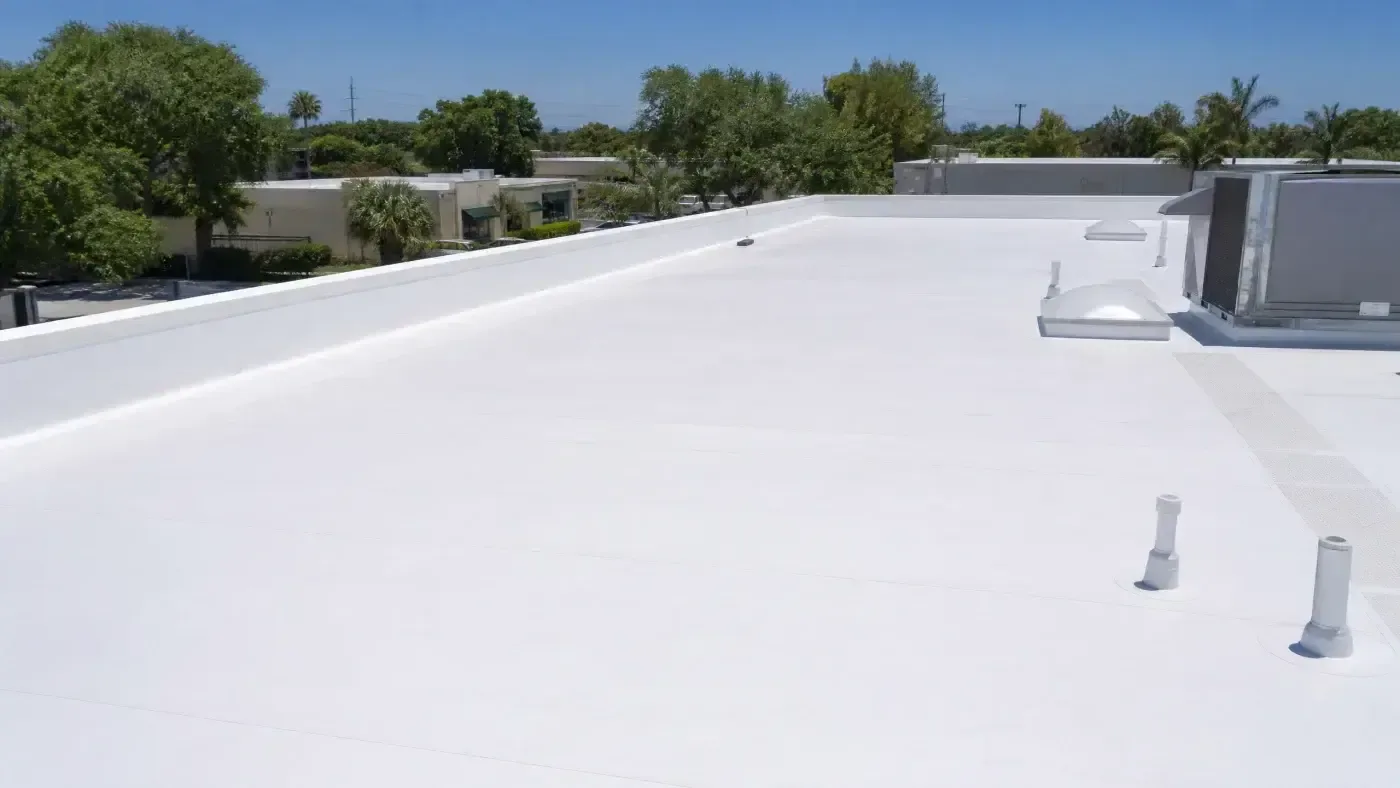
The line between repair and replace is a number, not a feeling. We core the roof, read moisture and tell you where the line sits. A roof coating restoration can buy years on a dry roof. A commercial roof replacement makes sense when it cannot. A replacement is scoped to the building code the state has adopted.
Distribution buildings follow the same logic as do distribution center roofing and cold storage roofing jobs.
What to ask us: five questions that pin down cost
Bring the building list and the last roof report, if one exists. Then ask these.
- Where is the ponding line, and does it come back after rain?
- Which tie-ins and rooftop unit curbs are open?
- Is the insulation dry, and how do you know?
- Which section fails first, and what does it cost to wait?
- What is the repair-or-replace line for each section?
Good answers come with photos and moisture readings. If a roofer gives you a number with no core cut behind it, ask how he got it. We show you the core, the reading and the price together, so the budget meeting takes ten minutes.
Commercial Roofing Questions
How often should a warehouse roof be walked?
Twice a year. Make one walk in late winter, ahead of spring storms, and a second in early fall, ahead of November. Add a hail check after any severe storm report. We recommend booking both visits in January so the budget year carries them. The cost is small next to one wet pallet row, and the photos make a later claim easier.
Should I replace the roof or keep patching it?
Core it first. If the insulation is dry and leaks are local, patch and plan the replacement for a later budget year. If three repairs have been made at different spots in two years, stop patching. Get a replacement price and a restoration price, then compare them. We give you both numbers on one page.
What does hail do to a warehouse roof?
It bruises the membrane and cracks the surface layer, often without a visible leak. The leak shows weeks later. After any severe hail report, We recommend a hail check within two weeks. Photos taken early support a claim, and a repair made early costs less than the section replacement that follows a missed bruise.
Can the roof be worked while stock stays in the building?
Yes. We tear off and dry in by section, and we keep trucks and dock doors clear. Tell us which bays hold the most sensitive stock and we start elsewhere. A tarp-and-dry team stands by if rain comes early. Plan the sequence with your warehouse manager before the first day.
Is a coating a good choice for an older warehouse?
It can be, if the insulation is dry and the seams are tight. A coating adds years at lower cost than a tear-off. We recommend moisture readings and core cuts before you buy one, because a coating over wet insulation traps the water. If the cores come back wet, replace that section.
Related Roofing Work
Commercial Roof Repair
Hail Damage Roof Repair
Bessemer
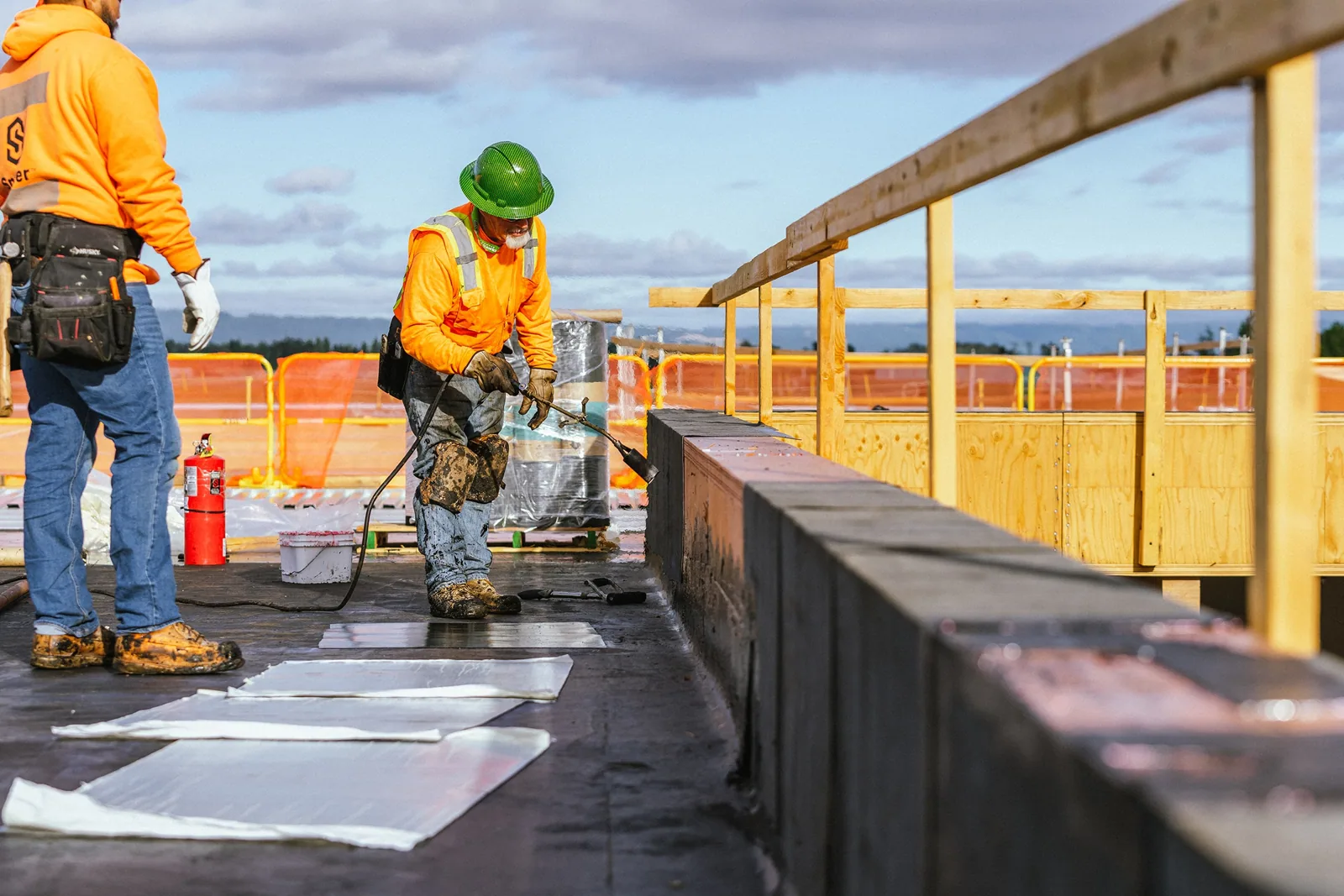
Preventive Roof Maintenance
Emergency Leak Calls
Call for a storm walk or budget review
Call before the spring season or right after a storm. The walk pins down which items to fix this winter and which can wait a year. You get that list in writing, with a price on each.