
Logistics and 3PL Operators
Roofing for Logistics and 3PL Operators in Hoover, AL
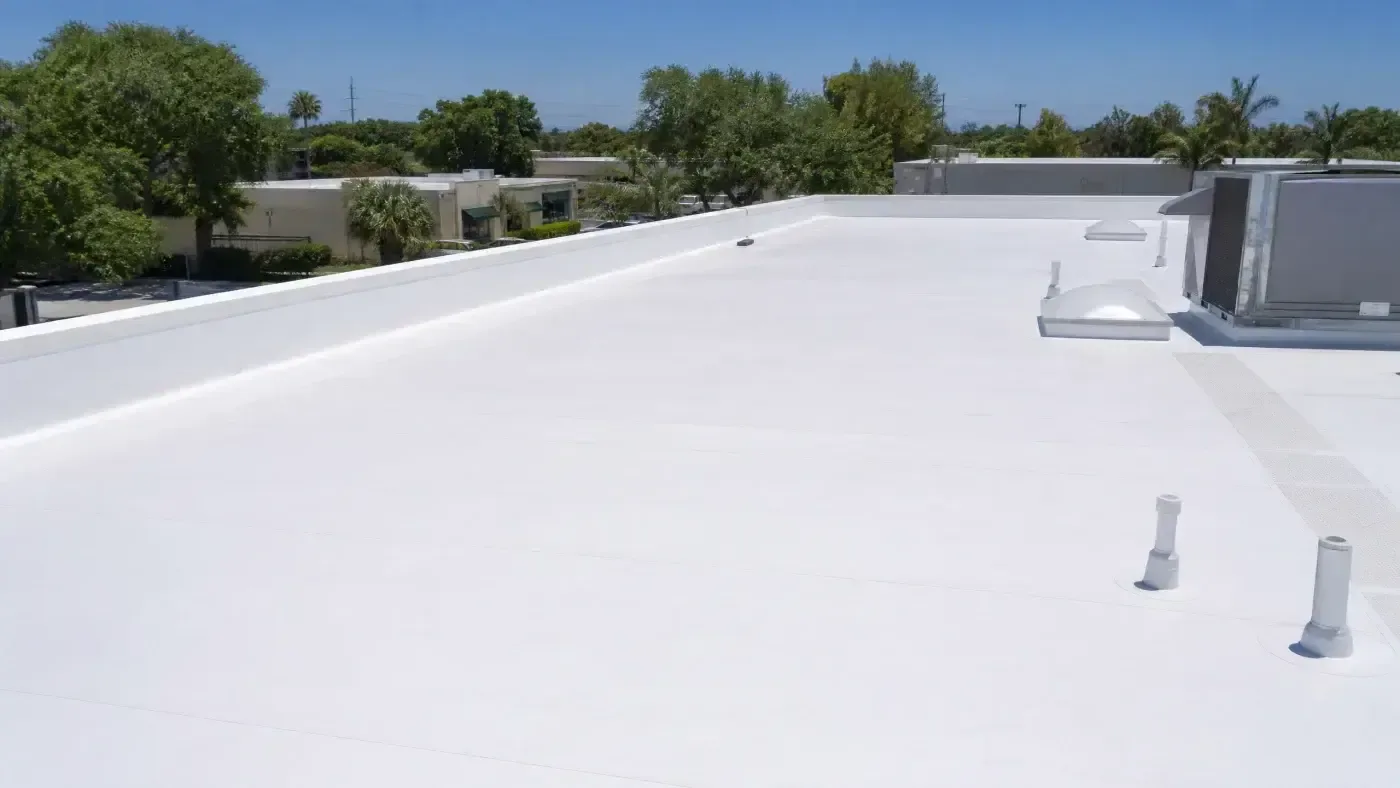
A fulfillment building has a very large roof and a blackout calendar that starts in the fall. That is the timing fact behind every logistics roof job around Hoover, AL. Work has to finish before peak season opens, and storm season in March and April has to pass first. Low-slope and metal roofs for logistics and 3PL operators get repaired, recovered or replaced, and the findings are written so a site manager can plan around volume.
The issue: a big roof, a tight calendar and a lease
Many logistics operators lease their buildings, and the landlord owns the roof. The lease decides who fixes what. A leak that wets inventory is the operator's problem and the landlord's repair.
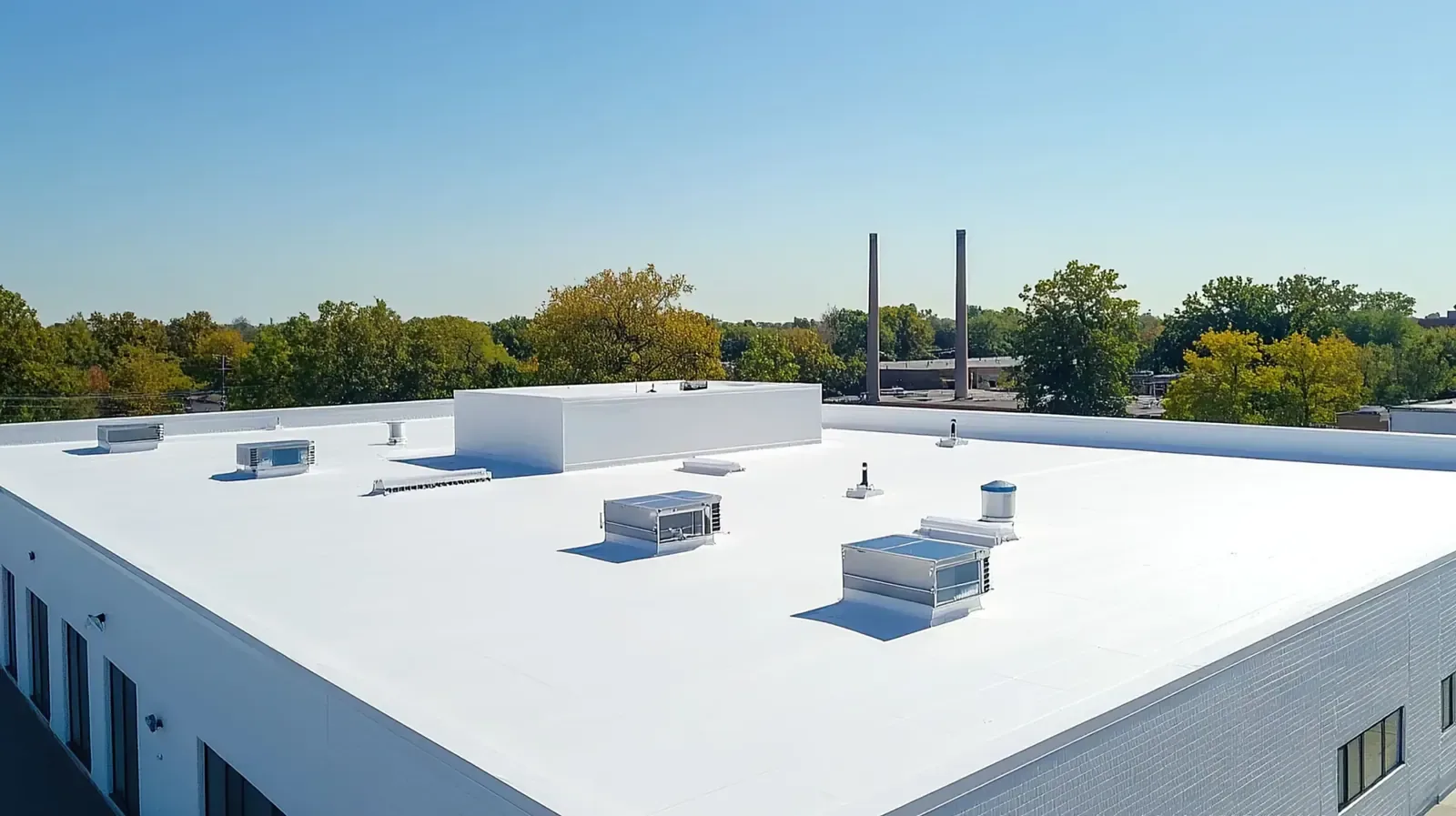
The roof is also big. Long seams. Many drains. Dock-end canopies. Rooftop units. Solar racks on some buildings. A small defect can spread far under the sheet before a stain shows.
So we map the roof in sections. We tie each to the dock doors and the racks below. We give the operator and the landlord the same report, so there is one set of facts when the lease question comes up.
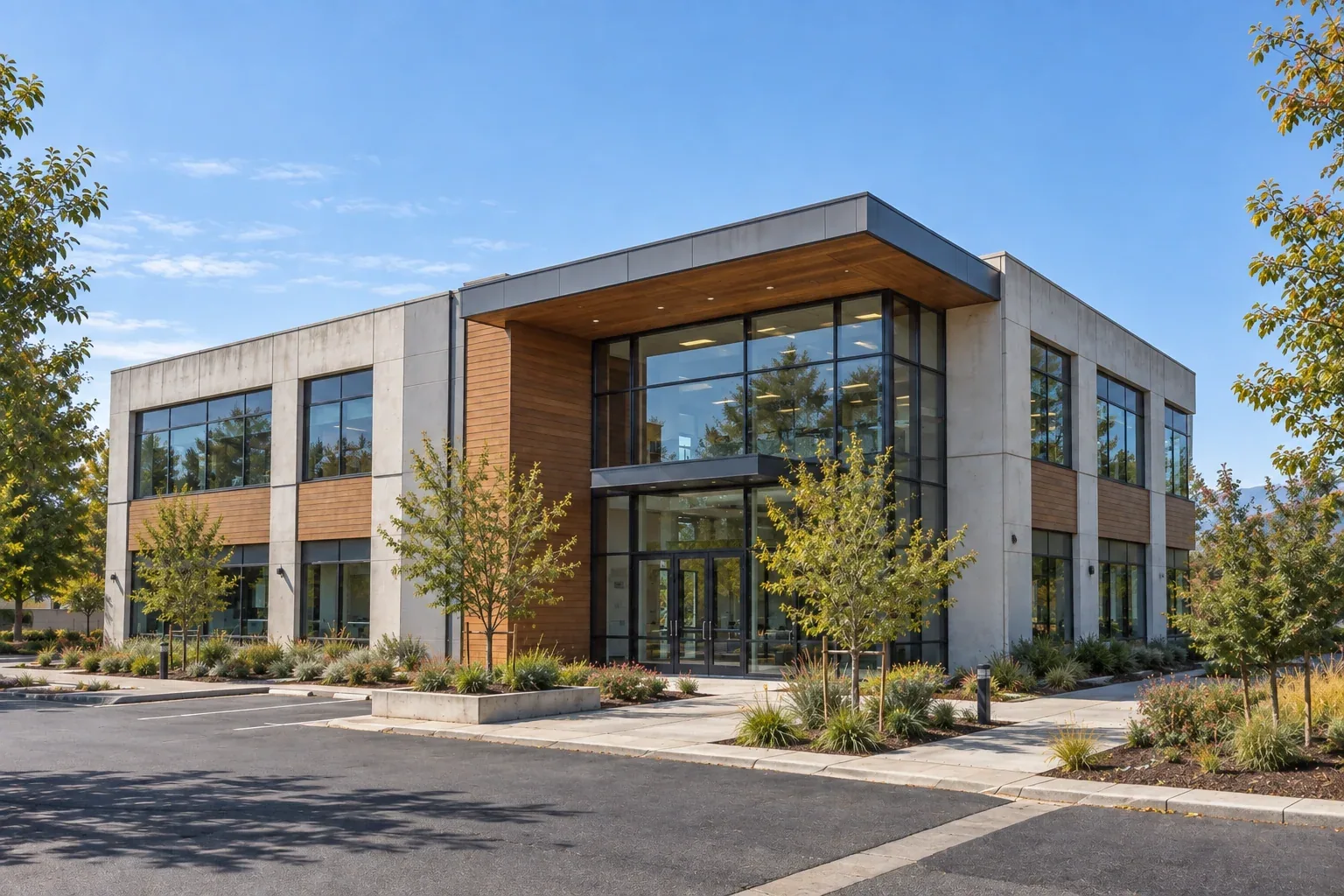
A landlord holding several logistics buildings looks at the same questions from the owner side, the way investors and REITs do. The operator wants a dry building this week. The owner wants a roof plan that fits the hold period. A shared report serves both.
What we find: dock ends, seams and drains
The dock end wears first. Trucks, vibration and canopies work on the joint between roof and wall. Flashing cracks there. We rebuild it with a proper termination instead of adding more sealant.
Seams run for hundreds of feet. A seam probe along the length finds the open ones. On mechanically attached roofs, we look for raised fastener plates. On ballasted roofs, we measure stone depth at edges and corners.
Drains and scuppers take a lot of water off a roof this size. We clear them and test the flow. Seams and sealant work through every season of rain, humidity and summer heat. Infrared scanning marks the wet insulation, and cores confirm it.
Solar racks and conduit add risk. Racks are fastened through or onto the roof, and each fastener is a leak point. We check flashing at every mount, look for crushed insulation under ballast blocks and flag any rack that rests on bare membrane. Conduit runs that lie across the sheet wear a groove over time. A pad under each run costs little.
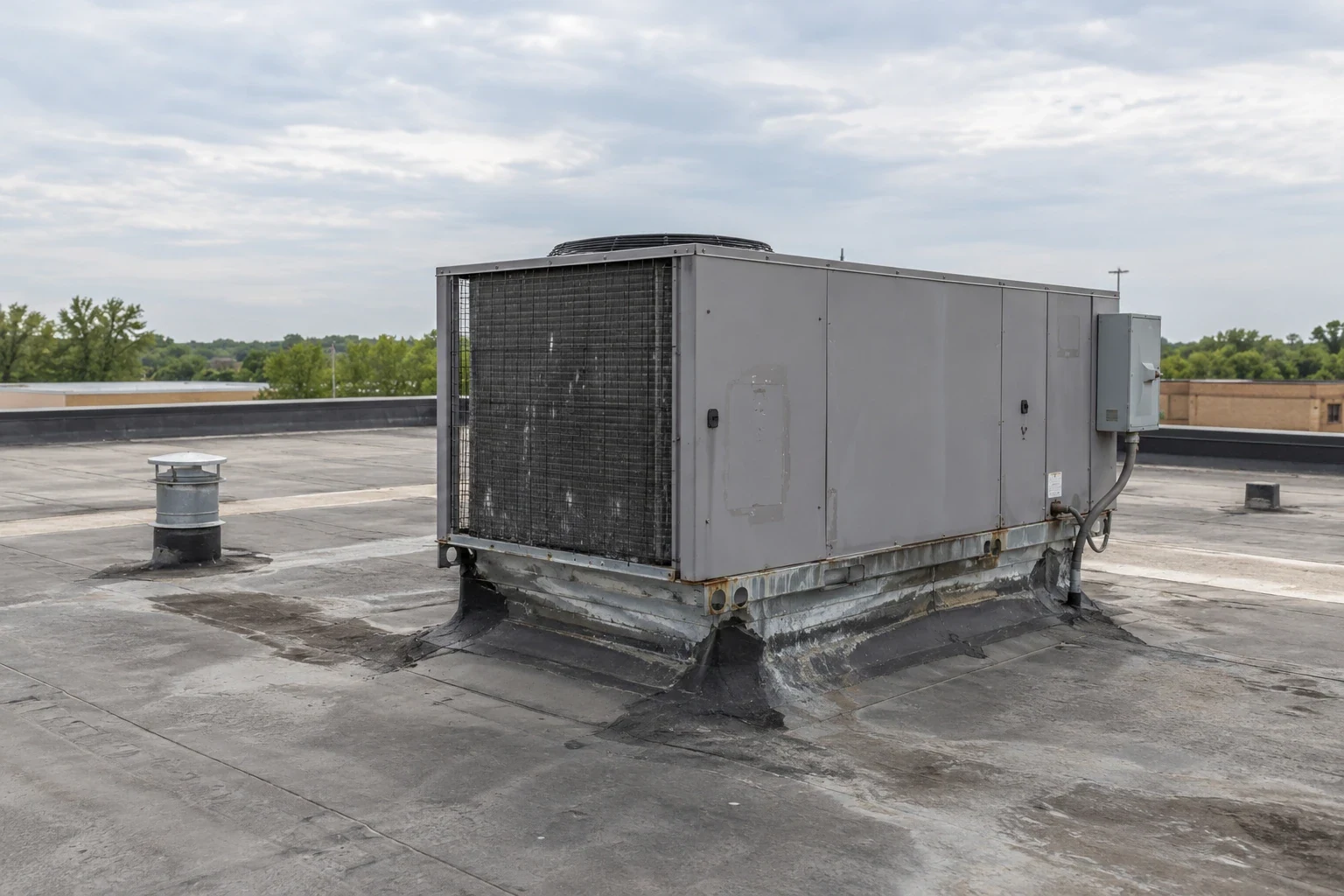
Roof hatches and ladders get a note in the report too, because a site manager needs to know where the safe route to each section runs and which hatch has a latch that no longer closes. Rooftop units on a logistics building serve offices, break rooms and sometimes cooled zones. Their curbs and condensate lines get the same check. A unit that drips onto the sheet stains it and feeds algae.
Storm season: wind and the big flat roof
A logistics building here sits in Dixie Alley. Its tornado record includes the 1977 and 1998 F5 storms plus the April 27, 2011 EF4, the heaviest weather comes in March and April with a second peak in November, and on April 25, 2003 central Alabama took hail the size of softballs.
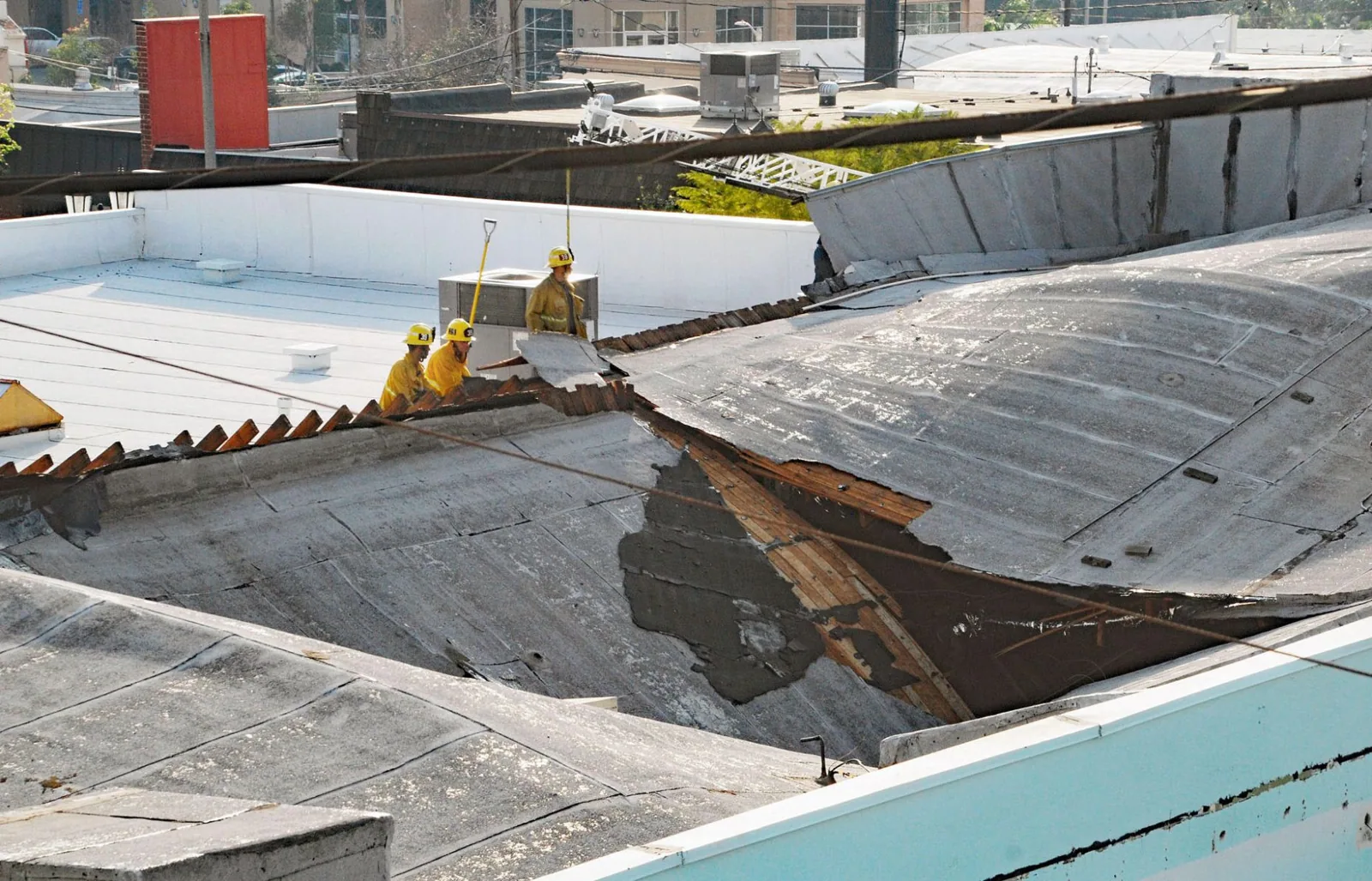
A distribution building acts like a big sail, with wind pressure highest at corners and edges. Edge metal, caps and attachment get checked on each section, along with a wind-uplift note, and a post-storm walk compares against that record. Wind damage roof repair then separates storm damage from older wear.
After a storm repair, both the site manager and the landlord get a punch list, a warranty walk and detail photos, which leaves the next claim question facing a file that names every fix, its date and its materials.
When to do it: before peak season
Work backward from the fall. Peak season opens, and the roof cannot be a worry. So big replacements run in late winter through summer. Smaller repairs fit between storm events. November is a second severe weather season, so autumn work stays in small sections.
We plan dock traffic, fire lanes, crane position and truck routes with the site manager. We close sections each day. Each limit is listed in the occupied building reroofing plan. When a leak opens during peak, a crew can be dispatched at any hour, and stopping the water comes first. The permanent repair waits for a quiet window.
Summer heat can pass 90 degrees for weeks. Crews start early and avoid midday adhesive work.
Parking and trailer yards limit access. Cranes and trucks need room. We ask for a staging plan at the first walk and mark it on the roof plan. A job that starts without one loses days to trucks waiting at the gate and a crane parked in the wrong lane.
What it costs: roof, racks and downtime
Cost follows roof area, curb and penetration counts, wet insulation, deck condition, edge length and phasing. A recover over a dry roof costs less than a tear-off and disrupts less. We confirm eligibility with a moisture scan and cores.
Repair is cheapest, a section replacement costs more and stops repeat calls, and a full replacement is the largest line and starts the roof over. Downtime gets a line of its own beside them. A leak over racked inventory can cost more than the repair. We put both numbers side by side, in writing.
The lease splits the cost, and we leave its reading to you. We write the scope in lines that match common splits: repair, replacement, insulation upgrade and access.
Timing shifts the price too. Crews and materials run thin after a big storm, a winter booking sees a calmer market and the same repair costs less in March than in May, once another damp season has soaked the insulation.
More on Logistics and 3PL Operators
Local: the I-65 and I-20 distribution belt
Amazon announced its Bessemer fulfillment center in 2018 at 800,000 square feet, a $325 million project with 1,500 initial jobs. Interstates 20/59 and 459, US 11 and SR 150 all reach Bessemer. Near Fultondale and Tarrant, I-65 at Walkers Chapel Road and the Boyles Yard rail lines shape distribution and retail.
A large building in Bessemer or Fultondale gets surveyed for its actual roof area, age and layers. A distribution center raises these questions on every roof, and manufacturers on the same corridors share the big-roof problems.
Commercial Roofing Questions
When should a 3PL operator schedule a roof replacement?
Late winter through summer, well before peak season. We work back from the fall blackout, avoid the March through April storm peak for open sections and plan sections that close each day.
Who pays for the roof in a leased distribution building?
The lease decides. We give the operator and the landlord the same report, with the scope in lines that match common splits, so each side has one set of facts.
Can the building stay in operation during a reroof?
Yes. We agree on dock traffic, fire lanes, crane position and truck routes with the site manager. Sections close each day and interiors are protected below any opening.
What does a leak over racking cost?
More than the repair, in many cases. Wet inventory, a closed aisle and a safety review add up. Roof sections are ranked by what sits below them for that reason.
What if the roof opens during peak season?
Call right away, at any hour. The crew stops the water and protects inventory, then schedules the permanent repair for a quiet window.
Related Roofing Work
Real Estate Investors and REITs
Wind Damage Roof Repair
Occupied Building Reroofing
Bessemer
Emergency Leak Calls
Call for a storm walk or budget review
Call before the fall blackout starts or after a storm. The visit pins down which sections come first, what each fix costs and which window it fits.