
Cold Storage Roofing
Cold Storage Roofing in Hoover, AL
Ice on the underside of a freezer roof is a bill that keeps growing. Every week it stays, the insulation gets wetter and the compressors work harder. A cold storage building in Hoover, AL fights the climate from both sides: a freezing interior and a hot, humid exterior.
That gap is the problem. Warm, wet air wants to move toward the cold side. The roof has to stop it. When it does not, you pay in energy first and in roof replacement second.
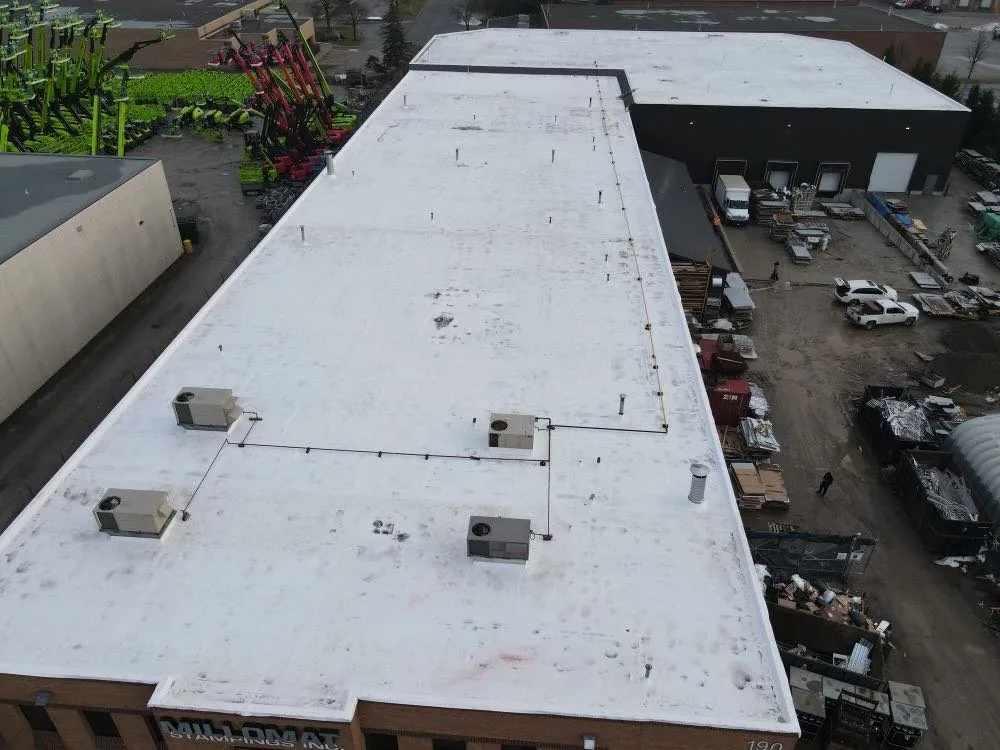
The issue: vapor moves toward the cold
Relative humidity near Birmingham averages about 70 percent, and summer adds about eight weeks of 90-degree days. That is a lot of moisture pushing against a cold roof. If the vapor retarder fails, or a penetration leaks air, moisture enters the insulation and freezes.
Frozen insulation loses its value fast. It also swells, lifts the membrane and tears seals. You see frost on the ceiling, drip at defrost and a rising power bill. The roof may look fine from above. The top can look sound while the layers below are soaked. We open it with a core cut, read the layers and tell you what the frost is telling you.
So we read the roof from both sides. We check the membrane, the penetrations and the vapor path. Then we take moisture readings and cores to see how far the damage runs.
Penetrations deserve a second pass because every conduit, pipe and sprinkler riser that crosses the vapor layer is a path for warm air. We seal each one at the vapor layer and again at the membrane, so a repair at the surface does not open the layer below it.
What it costs: energy first, then the roof
The first cost is energy. Wet insulation does not insulate, so refrigeration runs longer. The second cost is repair: wet boards have to come out, and the deck below may need work. The third cost is product. A drip onto frozen stock is a loss, and the claim paperwork takes longer than the repair. Keep a short log: date, room, what you saw. It speeds up every step that follows.
Cost on the roof moves with area, layers, how much insulation is wet, penetrations and how long the cold room can be warmed. We price the work in sections, so a single cold room can be isolated. An infrared moisture survey shows the wet area before any tear-off, which keeps the replacement to the size of the problem.
We show the cost of repair, the cost of replace and the cost of waiting on one page.
Storm season: wind, hail and open sections
Spring is storm season here. Thunderstorms run hot in spring, and a secondary season follows from November into early December. Softball-size stones hit central Alabama on April 25, 2003. An open cold-room roof in a storm is a bad day.
We plan around it. Work is sequenced by room, and each section is dried in with the full vapor-control layer before we leave. We watch the forecast and hold tear-off when storms are near. After a hail report, we run a hail check on the membrane, because a bruise over a freezer can let in warm air.
When to do it: when the room can be warmed
Cold room roofs are hard to schedule. The room under the work may need to be warmed or emptied. Product moves. Compressors cycle. Plan the work with your operations lead early, and pick the lightest stretch of your year.
Cold storage depends on truck access. Highway corridors such as Bessemer, on I-20/59 and I-459, and Pelham, on US 31 and I-65, are where that access sits. Walk the roof in late winter. Fix tie-ins and penetrations before the spring round.
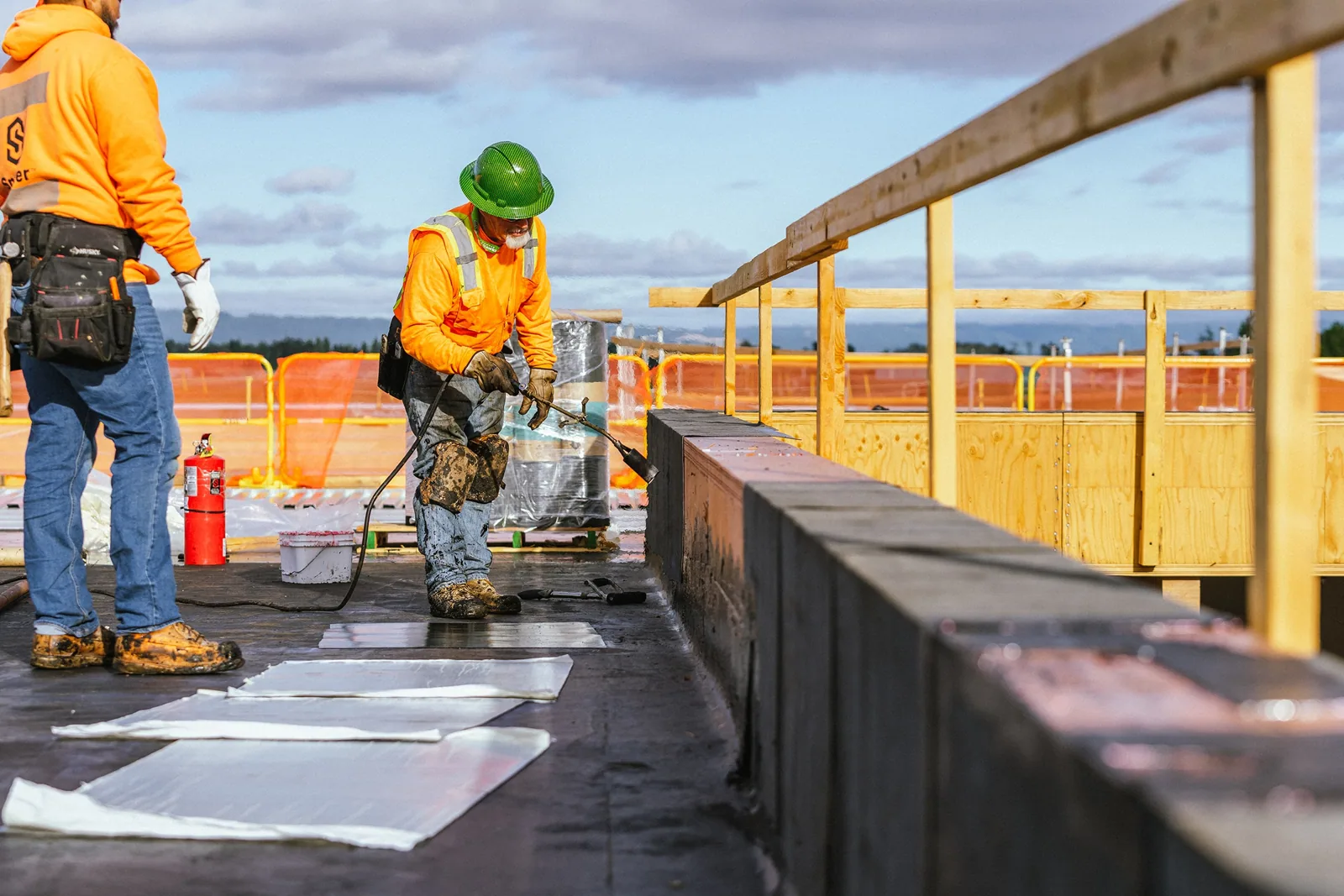
A preventive roof maintenance visit each spring and fall keeps the penetrations sealed and the vapor path intact.
Budget year: put the roof next to the refrigeration plan
Roofs and refrigeration age together. If a compressor line is coming out, the roof penetrations move too. Plan them in one budget year. A new penetration through an old vapor retarder is a leak waiting to happen.
We read your equipment plan and build the roof schedule around it. Year one: seal penetrations and fix tie-ins. Year two: replace the wet sections. Year three: restore or replace the rest. Between phases, a spring and fall walk keeps the sealed penetrations sealed and shows early whether any frost has returned. Each year has a price, and the energy savings from dry insulation help offset it.
More on Cold Storage Roofing
Recommendation: replace wet sections, not the whole roof
If only part of the insulation is wet, replace that part. A full tear-off is rarely needed on the first pass. Core the roof, map the moisture and cut out the wet boards. Restore the vapor retarder. Reflash every penetration.
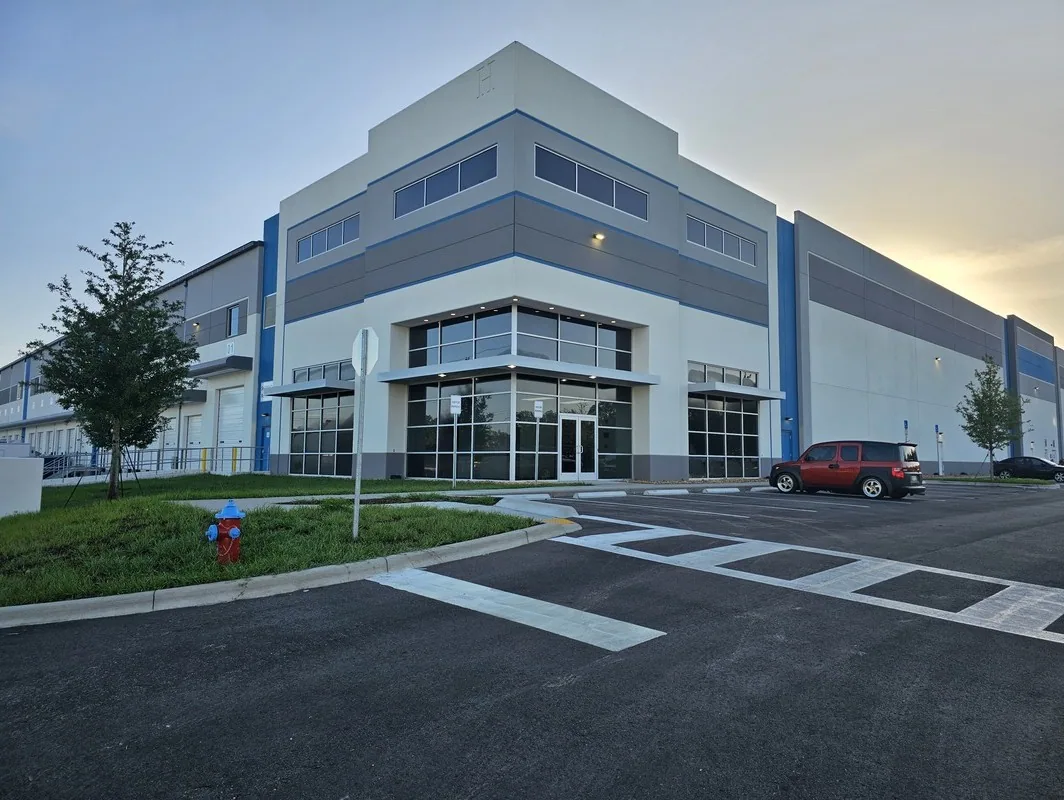
Choose a membrane and insulation that suit the cold side. The designer sets the vapor layer. Permit review follows the building code Alabama has adopted, plus the 2013 ASHRAE 90.1 energy standard. For comparison with dry storage, warehouse roofing and distribution center roofing follow simpler rules, and a building in Pelham or Bessemer uses the same planning.
What to ask us: five questions about frost and cost
Call with the building address and your last energy bills, if you have them. Then ask these.
- Where is the vapor path leaking, and how do you know?
- How much insulation is wet, in square feet?
- Can one room be isolated, or does the whole roof have to open?
- What does repair cost, and what does replace cost?
- What does one more year of waiting cost in power and product?
We answer with a moisture map, core photos and a price for each option. For a building that holds food, pharmaceuticals or other sensitive product, we also write down the warm-up window each room can take. That number often decides the schedule more than the weather does. We plan the dry-in around it and keep the cold side sealed between visits.
Commercial Roofing Questions
How do I know the insulation is wet?
We use a meter, an infrared scan and core cuts. The meter and scan show where to look, and the core confirms it. Frost on the ceiling and rising power use are the warning signs. We recommend a moisture survey before you set any budget, because the wet area decides the price. The map comes in square feet, with the core locations marked, so the owner can see where the water sits and where it does not.
Can the roof be worked while the freezer runs?
Sometimes. If the work is limited to the roof surface and the vapor layer stays intact, the room can stay cold. Deeper work needs the room warmed or emptied. We recommend a plan with your operations lead that names the room, the dates and the product move.
Why does condensation form on a cold roof?
Warm, humid air reaches the cold side and turns to water or ice. Hot, damp summers keep the vapor pressure on the roof for months. A tight vapor retarder and sealed penetrations stop it. We recommend checking penetrations first.
Should we replace the whole roof at once?
Not always. Core it and map the wet area. If insulation is wet in one part, replace that part and restore the rest. We recommend a phased plan with a price per section, so the owner chooses how much to do this year.
What does a hail check involve?
We walk the membrane, mark bruises and dents and photograph each one. Hail can break the surface without an immediate leak. We recommend a check within two weeks of a severe report. Photos taken early help a claim and cost little.
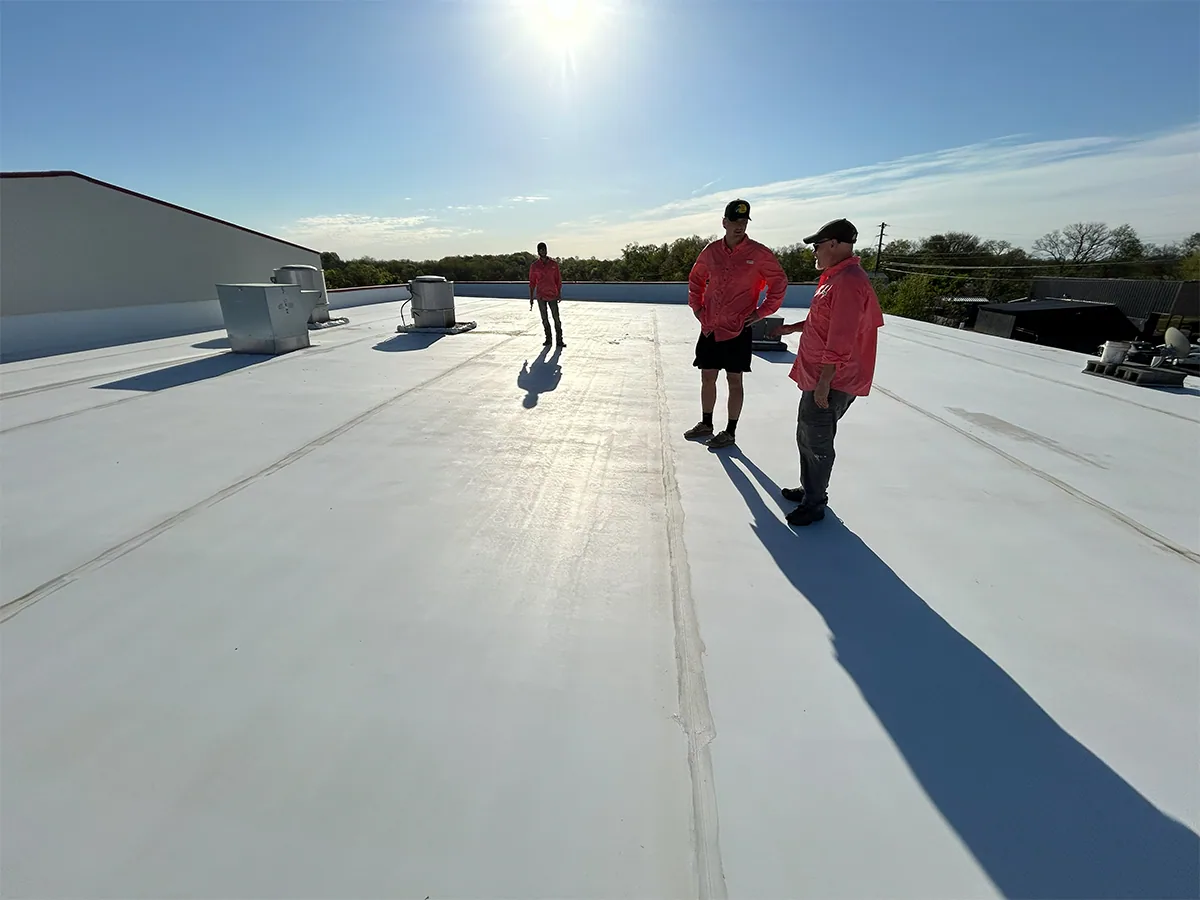
Related Roofing Work
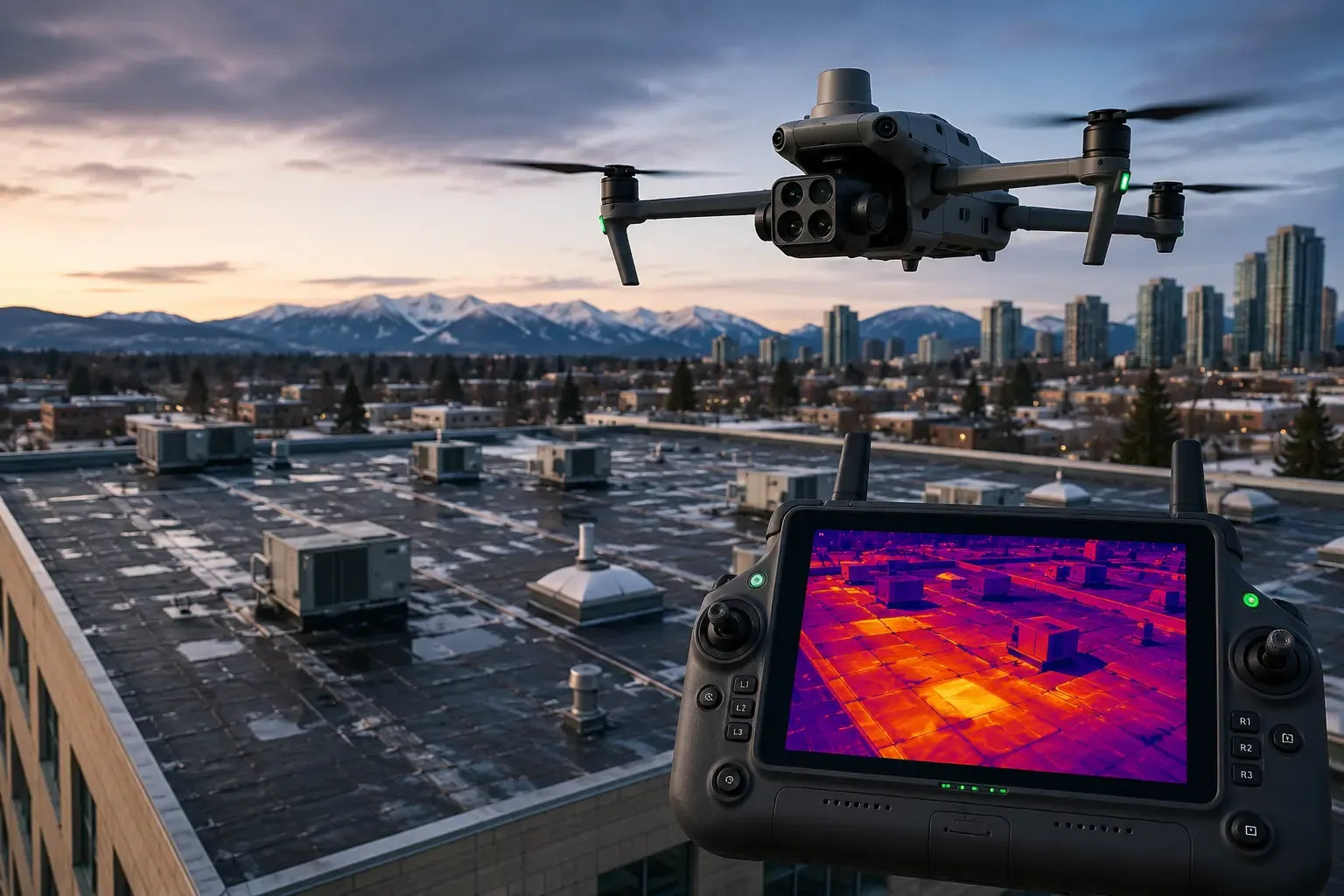
Infrared Moisture Survey
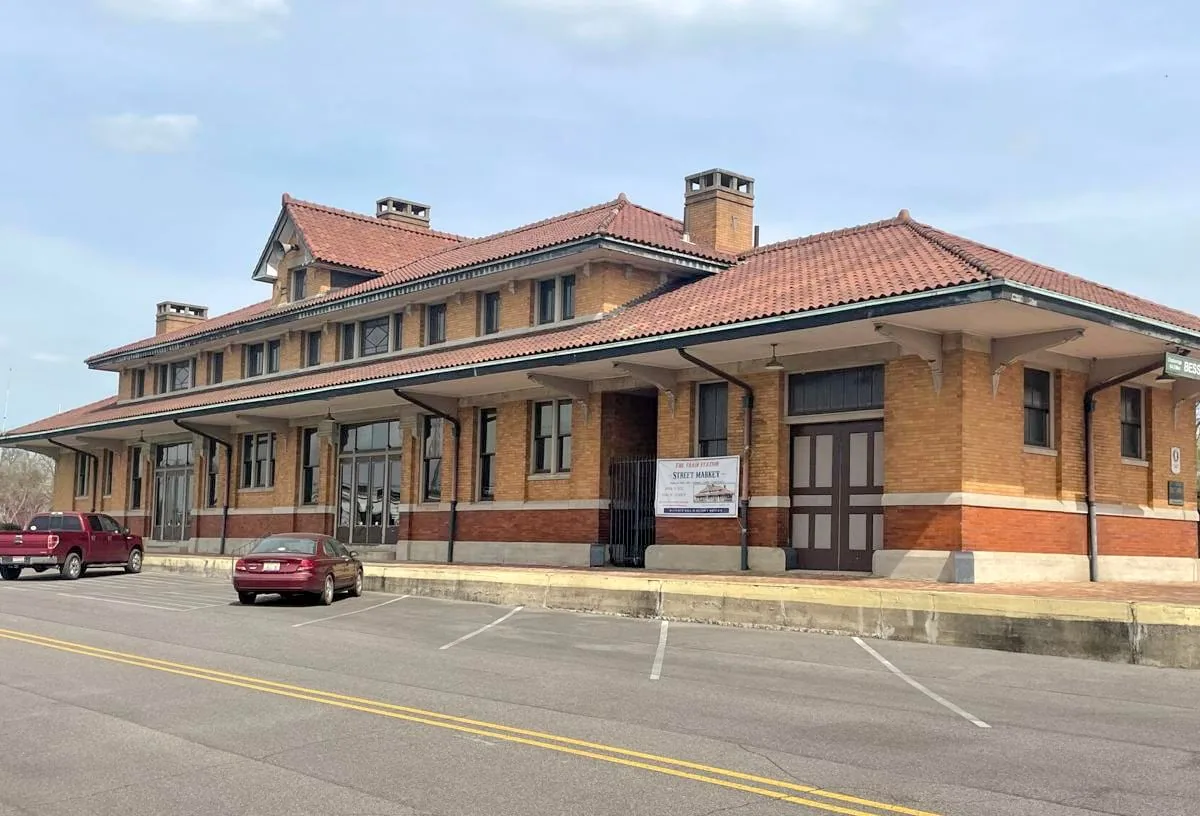
Bessemer
Preventive Roof Maintenance
Warehouse Roofing
Emergency Leak Calls
Call for a storm walk or budget review
Call before the spring season or when frost shows on the ceiling. The visit pins down where the moisture sits and what a phased fix costs. You get it in writing.