
Acrylic Roof Coatings
Acrylic Roof Coatings in Hoover, AL
Acrylic is the budget coating, and it works only on a roof that drains. That is the decision in two lines. A water-based acrylic costs less than silicone, goes on easily, reflects sun and is simple to recoat. It fails where water sits. In Hoover, AL we use it on sound, sloped or well-drained roofs and steer ponding roofs to something else. We also tell you the weather limits up front, since Alabama rain is the real enemy of a fresh acrylic coat.
If your roof sheds water and the membrane is dry underneath, acrylic can add years for a modest price. If not, a different answer saves money.
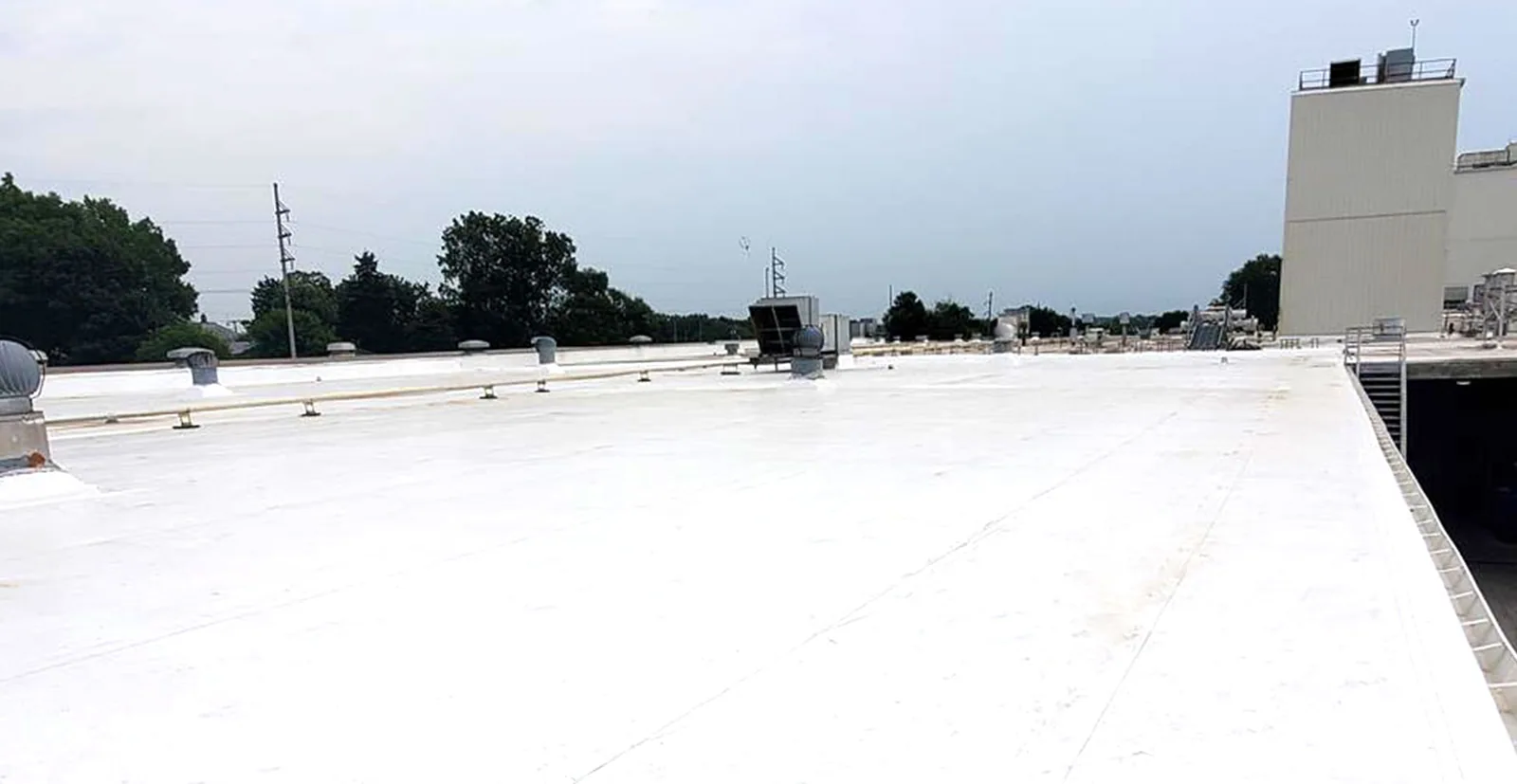
The issue: how acrylic works and where it stops
Acrylic coatings are water-based. They cure as the water leaves, leaving a flexible, reflective film. They bond to many surfaces with the right primer: metal, mod bit, BUR, single-ply and foam.
Where acrylic stops:
- Standing water softens it and the film can fail over time.
- Rain before cure can wash it off.
- Cold, damp or humid weather slows curing.
- It does not stop leaks from wet insulation or open seams.
Acrylic is a surface treatment. It protects a sound roof. It does not rescue a failing one.
Algae and mildew are the humid-climate wrinkle. A white acrylic surface in damp weather can grow dark streaks, especially on the north side and under trees. They look bad and hold moisture. A wash with the right cleaner removes them, and a coating with a mildewcide helps. We specify the product with that in mind.
What it costs: low material cost, careful prep
Acrylic costs less per gallon than silicone and far less than replacement. Prep still takes time: washing, repairing seams and flashing, priming where needed and sealing penetrations. Thickness sets the price and the life, since the coat is sold by the mil.
Recoating is cheap. Acrylic bonds well to itself, so a future coat is straightforward and does not need a special surface. That is a real budget advantage. We price the first coat and a recoat interval, so you see the cost of ownership over ten years. The comparison with silicone and with replacement fits on one page.
We price by roof section, not just the total. A clean field of metal costs less per square foot than a detailed area around units. Seeing the sections lets you coat the best parts now and hold the rest for another year, if the budget calls for it, and it keeps the bid honest on the details.
Cure and weather: the rain problem
Birmingham logs about 56.6 inches of precipitation a year, with humidity near 70 percent and about 65 days at 90 degrees or higher. Acrylic needs a dry surface, a mild temperature and no rain until it sets. That is a tall order in a wet climate.
We watch the forecast closely. Early starts, a clear afternoon and a calm, dry next day are the target. If a storm builds, we stop and protect what is down. Late winter and early spring, and early fall, offer the most reliable windows. Midsummer is possible in the morning. Weather days are built into the schedule, so a rain delay moves the finish and not the price.
Wind matters at application too. Spray coating drifts, and fresh film attracts dust. We use rollers and low-pressure spray near edges and cars, and we mask walls and units. A calm morning with a dry afternoon is the target, and we ask the property manager to move cars out of the lot below when we spray.
Storm season: hail, wind and fresh coats
Birmingham is in Dixie Alley. Severe thunderstorms are most common in spring, with another season in November and early December. Central Alabama saw hail up to softball size on April 25, 2003.
An acrylic coat adds a layer, not armor. Hail can crack the film and bruise what lies below. We walk the roof after any severe storm, probe for soft spots and patch cracks with matching product. Our hail damage repair work documents the damage for your insurer. Finish a coating job before spring storms so the film is fully cured by the time they come.
Debris after a storm is the next worry. Leaves, limbs and trash settle on a fresh film and stain it. A quick sweep after severe weather keeps the surface clean and keeps drains open. We include that sweep in the first year of the care plan.
By building: where acrylic fits the metro
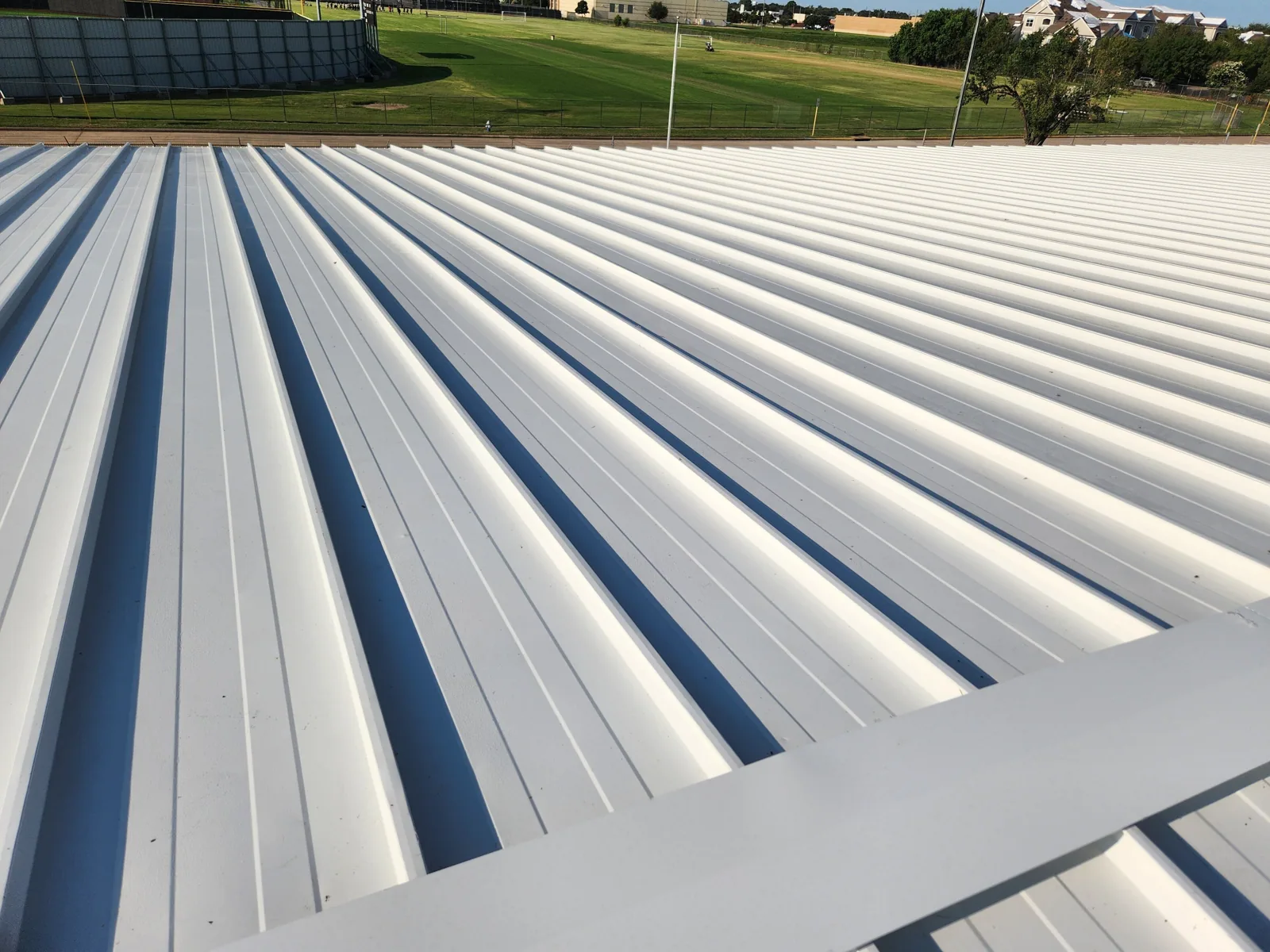
Acrylic suits sloped metal roofs, well-drained low-slope roofs and roofs where reflectivity matters. In the metro, think of shops and light industrial buildings in Helena, strip centers in Alabaster and Pelham along Highway 31 and older sloped sections of school and church roofs.
For ponding roofs, silicone coatings are the usual choice. A roof too far gone for a coat needs commercial roof replacement. A white coating cuts heat the same way a cool roof installation does. The commercial energy standard, ASHRAE 90.1-2013, may enter the review when a coated roof is part of a larger scope.
More on Acrylic Roof Coatings
Recommendation: when we pick acrylic
We pick acrylic when the roof is dry, sloped or well-drained, and the owner wants a low-cost way to add reflectivity and seal small flaws. We pick silicone for ponding. We pick replacement for wet or failing roofs.
The moisture scan comes first. Then a prep list, a price per section and a recoat plan, with a one-year check on the calendar. A short routine of washing, patching and watching the film keeps an acrylic roof working for years at a low annual cost.
One more step helps: a thickness record. We measure wet film thickness while we work and note the readings by section. The record shows the owner and any manufacturer that the coat meets its spec, and it settles questions in later years.
If the roof is near the end, a new white TPO sheet may beat a coat that only delays the bill. We price both and show which one costs less per year of service. A coating that buys only a season or two is rarely worth the mobilization.
Commercial Roofing Questions
Can acrylic go on a roof that ponds?
Not as a long-term fix. Standing water softens acrylic and shortens its life. If drainage can be improved with added drains or tapered insulation, acrylic may then be a fit. If the ponding stays, silicone is the better coating. We measure how long water sits and show you the results.
How long must the weather stay dry after coating?
The film needs a dry period to cure, often a day or more depending on temperature, humidity and thickness. Rain too soon can wash it off. We pick starts with a clear forecast and carry covers for surprise showers. If a storm hits, we inspect the area, repair any damaged film and recoat the spot.
What does an acrylic roof need after it is coated?
A wash every year or two, a quick check of seams and flashing, and a patch where hail or traffic cracks the film. Algae and mildew grow in humid weather and may need a cleaner. These steps are cheap. Skipping them lets small damage grow into a recoat or a repair far sooner than planned.
How is acrylic different from a white roof membrane?
A coating is a liquid applied over an existing roof. A white membrane such as TPO is a new sheet. The coating costs less and avoids tear-off, but it relies on the old roof being sound. The membrane resets the roof. We price both and show what each does for your budget year.
Related Roofing Work
Hail Damage Roof Repair
Helena
Alabaster
Silicone Roof Coatings
Emergency Leak Calls
Call for a moisture scan and an acrylic price
We will walk the roof, scan for wet insulation and price acrylic beside silicone and replacement. The visit pins down which sections qualify and the budget year.