
Leeds
Commercial Roofing in Leeds, AL
Leeds, AL was founded in 1877 to house workers at Lehigh, a Portland cement plant. That is an industrial start, but the roofs we look at today are judged on their condition, not their history. I-20 runs north of town with access at exits 140 and 144. Downtown Birmingham is about 18 miles west. Buildings along that route take the same weather as the rest of the Birmingham area. We repair, replace and maintain commercial roofs in Leeds. Start with a storm walk. It costs far less than a wet ceiling.
Here is how we approach a roof in Leeds. We check the roof first. We price the repair second. We give you a repair-or-replace line in writing.
The issue: older buildings, new weather
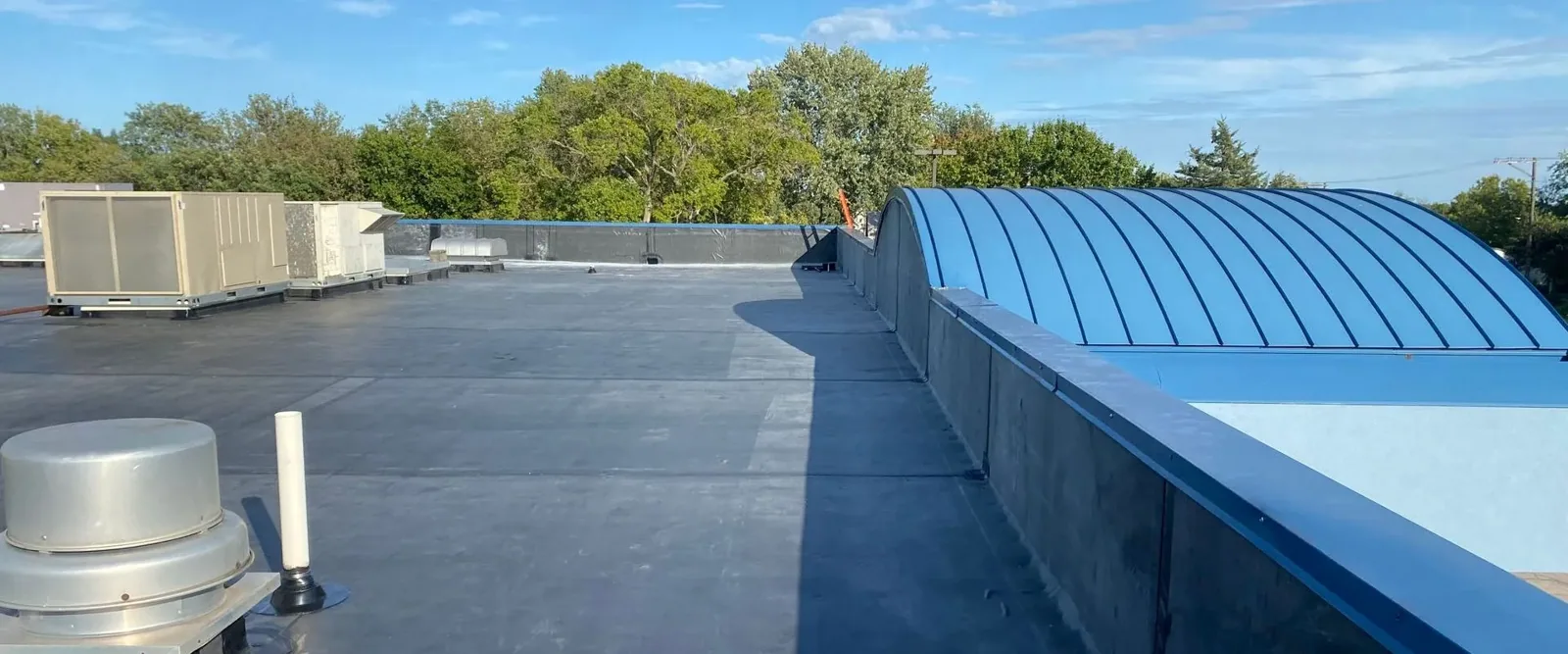
Some Leeds buildings are old and some are new. Their roofs are different ages, and the first visit sorts out which is which by checking the surface, the seams and the drains.
Weather in the Birmingham area is hard on membranes. Humid subtropical conditions bring roughly 56.6 inches of precipitation a year and close to 65 days at 90 degrees or higher, so seams and sealants wear steadily. Rain finds every weak tie-in, and a small crack in March becomes a leak by May. The rule is plain: find the small problem before the season does.
On a Leeds roof we look at the surface for cracks, blisters and chalking, at the seams for lifted, open or pulled edges, and at the drains to see whether they are clear, partly blocked or full of leaves. We check whether the edges are tight and look over every pipe, vent and rooftop unit. Each item gets a photo and a note, and the file comes to you.
Downtown: sidewalks, lighting and access
The 2023 Downtown Leeds Revitalization Project, with ALDOT, adds sidewalks and lighting downtown. Streetscape work brings crews, lifts and dust to the block. If you own a downtown building, plan roof work around it.
Here is what that means for your budget year. Schedule roof access before the streetscape crews close a lane. Keep a clear spot for a lift. Tell us about shared walls. A shared wall means a tie-in, and tie-ins fail first. We check every one.
Downtown buildings with parapets and rooftop equipment get a tie-in check, and the first visit confirms what each roof actually has. A downtown roof also has neighbors. A leak from the building next door can look like yours. We trace the water to its source before we price a fix. That saves you from paying for the wrong repair.
Interstate side: US 411, I-20 and fast storms
US 411 starts in Leeds where it meets US 78, and I-20 passes to the north. Wind goes for the edges of a roof first, and loose edge metal and torn flashing are the early signs.
After any wind event, walk the roof. Check the edges, the corners and the lap lines, then look for stains inside. A wet spot means a call to us. We cover and dry the building, and the repair price follows.
Do not wait for another storm. Spring storm season is a poor time to learn that edge metal is loose, and edge metal costs little to fix before a storm and plenty after one. A loose coping cap on a windy night can peel back a whole row of membrane. Fasteners also back out with age, so we pull a few to test the grip and report what we find.
Storm season: March, April and November
Leeds shares the Birmingham area's Dixie Alley exposure. Thunderstorms are common in spring, a secondary season arrives in November and early December, and Gulf tropical systems occasionally push storm-force winds inland. Hail is part of the mix, and the April 25, 2003 storm over central Alabama brought stones as large as softballs.
Hail bruises a membrane in ways the ground view hides, so run a hail check after each big storm. We look for dimples, cracked granules and split seams, and photograph each one, since photos carry weight in a claim.
Storm claims cluster in March, April and November, when contractors book up fast, so call early. Ponding is the other thing to watch. After a hard rain, mark the edge of any pool that stays more than a day or two. Standing water ages a membrane, and heat on top of it makes seams give. We record the spot and say whether it needs more drains or a tapered fix.
Budget year: what to fix now, what can wait
At budget time the question is what to fix this winter and what can wait a year. We answer in writing, with a price on each side of the line.
Fix now: active leaks, loose edge metal, clogged scuppers and open seams. Watch: an aging surface, minor ponding and old patches that still hold. Replace: insulation that has taken on water, repeated leaks at one spot and membrane that no longer accepts a patch.
On code, a Leeds replacement answers to the International Building Code as the state enforces it and to ASHRAE/IES 90.1-2013 for energy, which can change insulation depth and cost, and we price that before you commit. Timing matters as much as price: drain cleaning and small repairs in fall, hail check and replacement planning in late winter. Spring is when claims bunch up. If you plan to replace, book the bid in winter, when schedules and pricing are better than they are in April.
More on Leeds
What to ask us: the first call
For the first call, have the address, the roof age if you know it and past repair invoices. Say where leaks show inside and when the scuppers were last cleaned. We will say what the storm walk can settle.
If your building is near I-20, tell us about the neighbors and any shared walls. For a downtown property, tell us about lift access. We bring the ladder, and red-clay mud on it is part of the job.
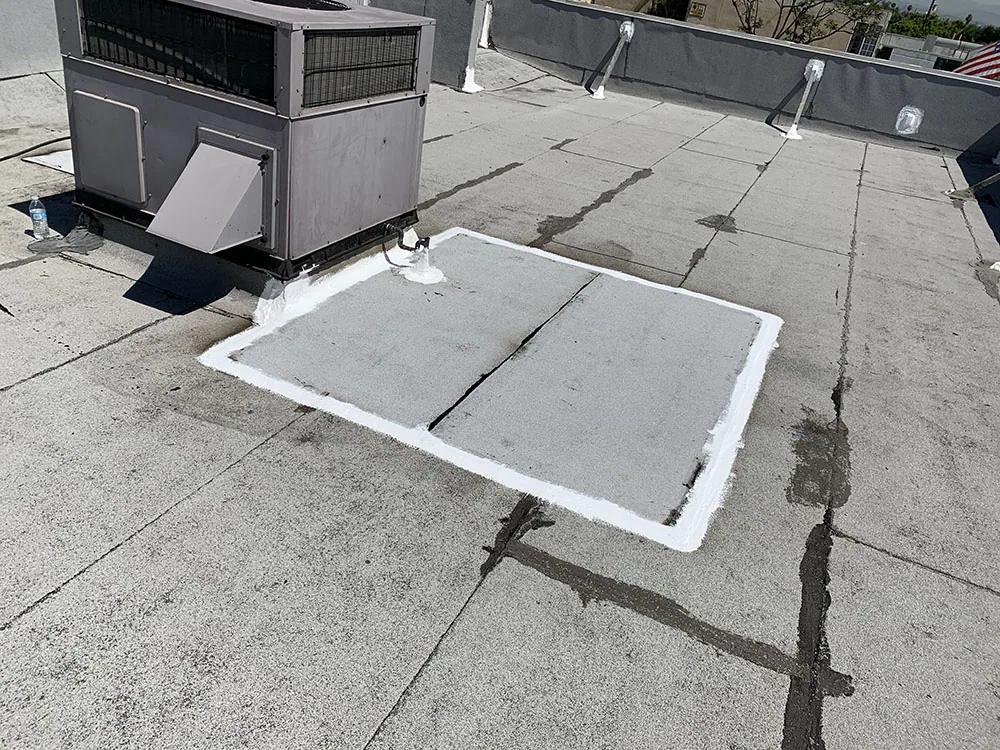
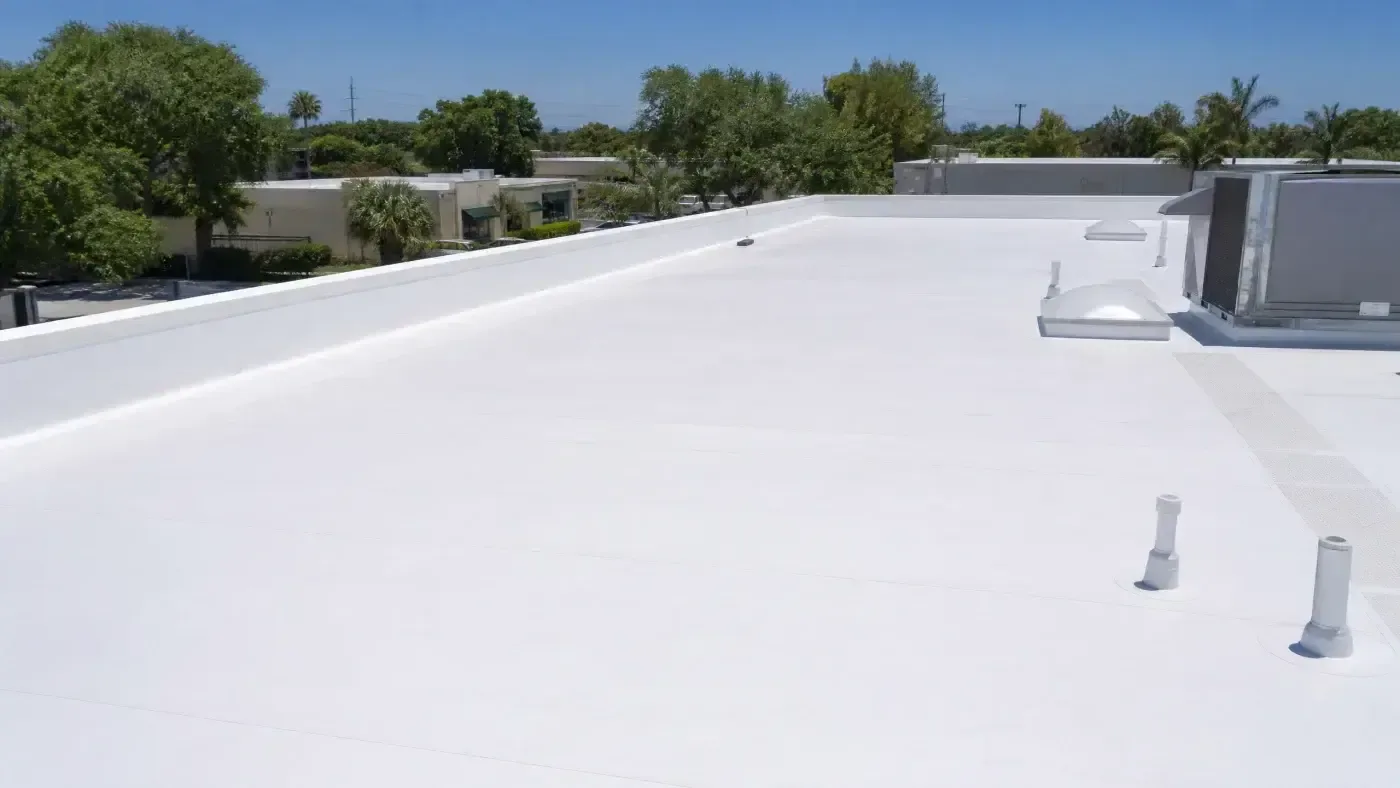
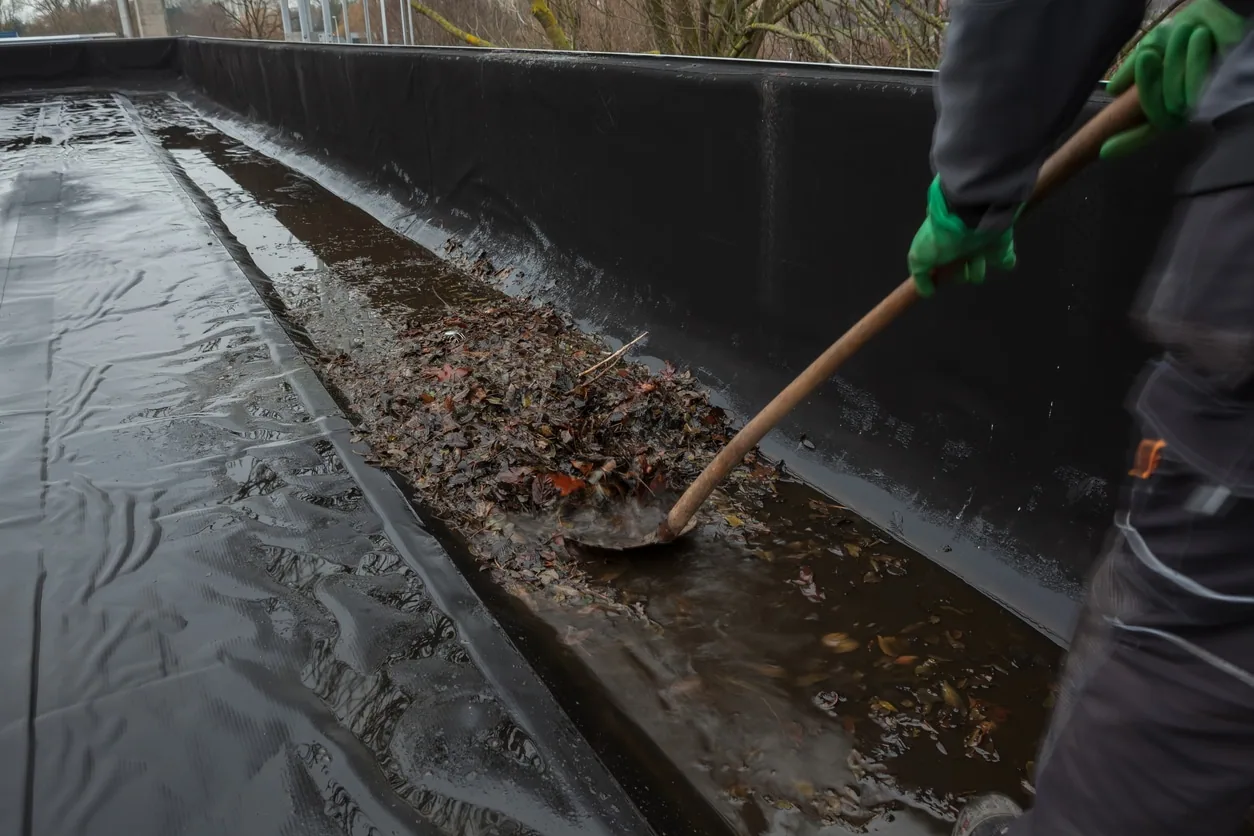
The usual jobs here are commercial roof repair, roof drain and scupper work and hail damage roof repair. The same plan covers Moody, about 5 miles northeast, and Pleasant Grove. A commercial roof inspection is the usual first step.
Commercial Roofing Questions
How soon after a storm should I have my Leeds roof checked?
Within a week, and sooner if a stain shows inside. We suggest a storm walk after any storm with hail or strong wind. We check the edges, seams and drains and give you a written list. Early photos help with an insurance claim as well.
Does a downtown project change my roof schedule?
It can. Streetscape work can block lifts and street access. We recommend booking roof work before the lane closures begin, or confirming access in writing. Tell us the dates and we plan around them.
Repair or replace, which should I pick?
Choose replacement once the insulation is soaked, the same spot leaks again or a patch will not hold. Keep repairing while the damage stays local and the membrane holds. The repair-or-replace line is marked on the roof, with both sides priced.
What does a roof cost to leave alone another year?
That depends on the damage. A small leak left alone through a wet spring can soak the insulation and cost more than the repair would have. You get a number for each choice to weigh at budget time.
Do you handle interstate-side buildings?
Yes. Buildings near I-20 and US 411 take wind and heat like everything else here. Our advice is a spring hail check, a fall drain check and an edge-metal look after any strong wind.
Related Roofing Work
Commercial Roof Repair
Roof Drains and Scuppers
Hail Damage Roof Repair
Moody
Emergency Leak Calls
Call for a storm walk or budget review
Call before spring storm season or before your budget year closes. The walk pins down your ponding lines, tie-ins and repair-or-replace line, in writing, with a price on each side.