
Moody
Commercial Roofing in Moody, AL
Moody, AL grew from 11,726 residents in 2010 to 13,170 in 2020, and it sits about 22 miles east of Birmingham. I-20 crosses the southern part of town with exits 144 and 147, and US 411 passes through, 5 miles northeast of Leeds. Growth brings new buildings, additions and new tie-ins, and it can leave roofs of different ages along one street. Commercial roof repair and replacement are our work in Moody, and the first and last steps are a storm walk and a written note marking where repair gives way to replacement. The method is brief, and the file it produces stays with the building. Someone walks the roof, shoots photos, records findings and adds prices, and the owner picks what happens and when.
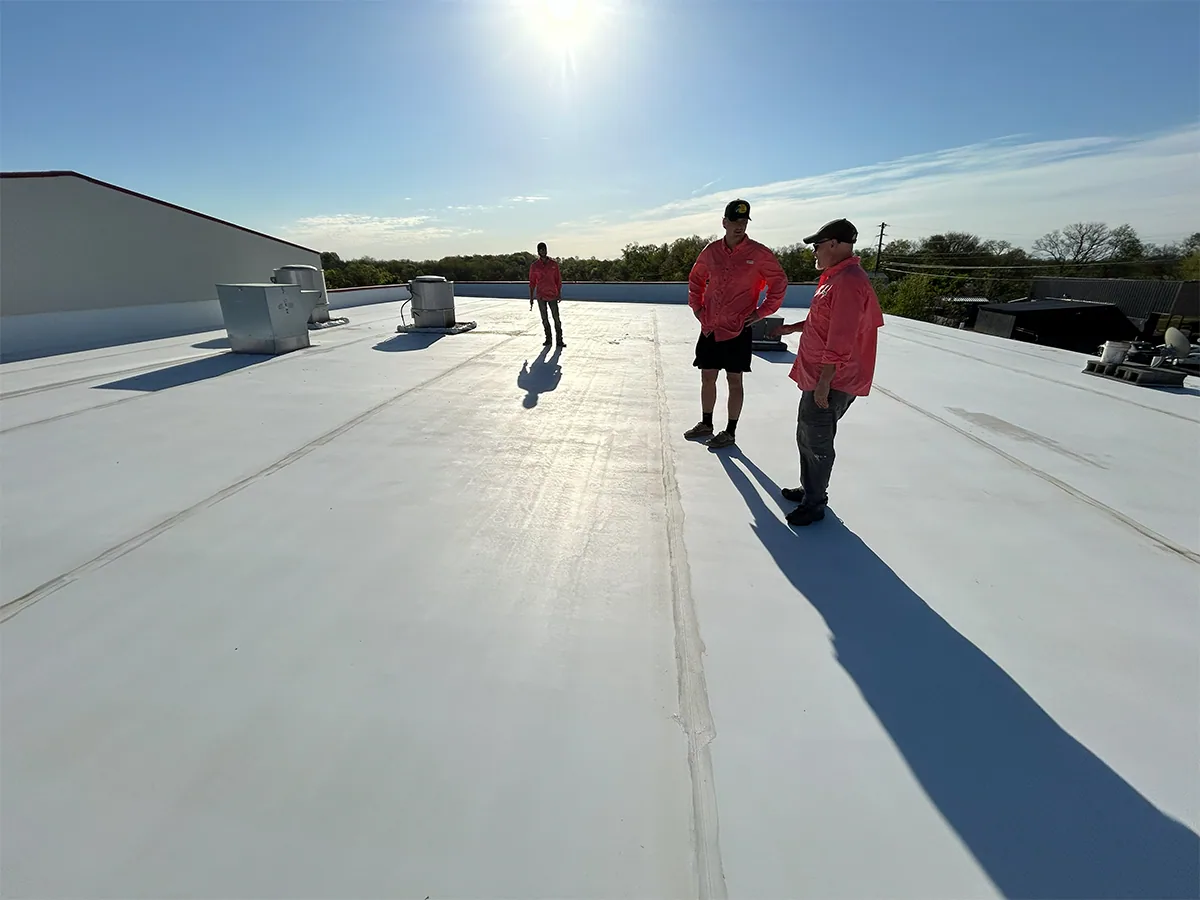
Growth: new roofs, additions and mixed ages
In a growing town, new buildings rise beside older ones, and the result is a mix: some roofs new, some middle-aged, some due. The first walk sorts out which is.
A new building deserves a first-year walk once the other trades are done. Check each curb, pipe and tie-in, clear the drains and fix small problems while the warranty is fresh. On an older building we look over the surface, the seams and the edges, and a moisture scan maps any insulation that has taken on water. The outcome is a written ranking: fix, watch or replace.
Keep the paperwork, even the dull parts, because a dated invoice settles arguments later. Warranty letters, installer names, dates and drawings belong in one folder per building, and in year four, when a leak appears, that folder saves a week of calls. We help set it up on the first walk, with the roof access plan on the first page: where the hatch is, who holds the key and which route avoids the skylights. Phase your roofs the way you phase your growth. If you plan an addition in two years, ask which part of the existing roof it will disturb. Renewing that section first can put the tie-in on a roof with years left.
Additions: where new meets old
When a business grows it adds on, and the join between new roofing and old, the tie-in, is where the trouble starts. The two parts move at different rates in heat, and the joint between them opens.
At every tie-in we inspect the flashing, the sealant and the slope, and we watch how water crosses the joint. When the old roof is near the end of its life, you hear it from us. Replacing both sections together may be smarter, or patching now and replacing later may be, and both options get a price. Drainage also shifts at a tie-in, because an addition can push water onto the old roof where old drains may not keep up. We count the scuppers and check the slope, and where the old roof ponds we note where and how deep. Ask who built the addition: different crews use different details, and a mismatch in flashing or attachment shows at the joint first. A walk with the original drawings finds those problems fast, and when there are no drawings we sketch what we find for the file.
Interstate side: exits 144 and 147
Buildings near I-20 exits 144 and 147 and along US 411 can face wind, road grit and delivery traffic. Wind lifts edges first, grit clogs scuppers and delivery trucks need clear lanes.
Edge metal, coping and flashing get inspected. Scuppers are cleared and photographed. Materials are staged away from lanes and docks, and work moves in sections so the building is dry each night. A short call ahead saves trouble on the day.
Rooftop units are the other watch item, since every unit sits on a curb whose flashing cracks with heat, and we check the seal on each. Signs and antennas add holes of their own, so the sealant around each base gets a look and gets replaced where it has dried out. On a retail strip the roof is shared but the leak is not: a tenant's ceiling may stain while the cause sits two bays away. We trace the water before pricing and document the source so the right party pays.
Storm season: Dixie Alley in spring and November
Moody sits inside the Birmingham area's Dixie Alley record, which lists tornadoes in 1977, 1998 and on April 27, 2011. Thunderstorms arrive in spring and again from November into early December, and the 2003 hail that crossed central Alabama on April 25 grew to softball size.
A hail check in late winter and a storm walk after each big storm keep a roof honest. Claims cluster in March, April and November, when crews book out, so call early. Once a storm has passed and the roof is safe to reach, check the edges, the drains and the ceiling below. If you see water, phone us. We cover and dry first, then price the repair, and same-day photos help any claim.
Budget year: cost, code and heat
Price moves with roof size, access, the layers to strip, soaked insulation, deck repair, penetrations and edge metal, and each appears by section so you can follow the money.
A replacement has to clear the International Building Code as the state enforces it, along with ASHRAE/IES 90.1-2013 for commercial energy, and insulation depth can change the price. Seams and sealants also fight a humid, hot climate.
The 2020 census counted 5,550 housing units in town. Timing helps price: fall for drains and small repairs, late winter for hail checks and replacement planning. Plan a replacement? Request bids over the winter for more choices and an easier schedule. Waiting has a cost too, and we write it down. Lenders and landlords often want a roof report. Tell us the format and the date and we match it, since a report in the right form can speed a refinance or a lease renewal.
More on Moody
What to bring to the first call
When you phone, have the address, the roof's age, the drawings if the building is new, invoices and warranty paper in hand, and know where water appears. The walk will settle the rest.
The work here includes shopping center roofing, rooftop equipment curbs and supports and flashing failure repair. A commercial roof inspection is the usual first step. The same approach fits Leeds and Montevallo.
Commercial Roofing Questions
Should I inspect a new commercial roof?
Yes, once the other trades are finished. Our advice is a walk of every curb, pipe and tie-in, then a drain check. While the warranty is fresh, small problems are inexpensive to correct.
What do I do when I add on to a building?
Plan the tie-in, and have the old roof checked first, since an addition can send water onto it. Replacing both sections together gets priced against patching now and replacing later.
How often should rooftop units be checked?
Twice a year, in fall and late winter. Heat cracks curb flashing over time, so the seal and the straps get checked on each curb.
When should I book roof work?
Fall is the slot for drain cleaning and minor repairs. Late winter is the slot for hail checks and replacement bids. Storm claims fill up the spring.
What does a delay cost?
If a leak runs all through a wet spring, insulation soaks and the deck can rot, so a repair grows into a tear-off. The cost of each choice goes in writing.
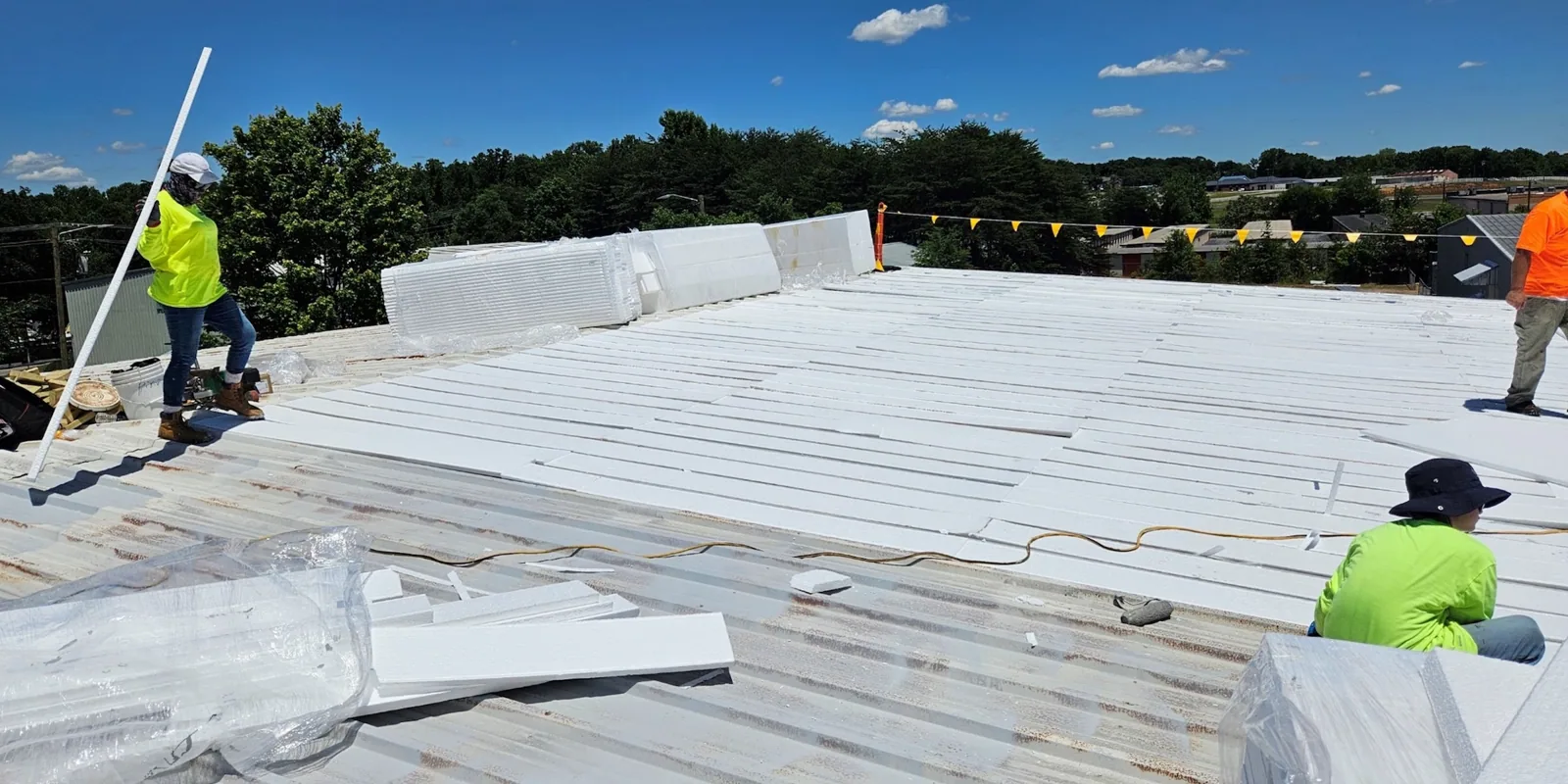
Related Roofing Work
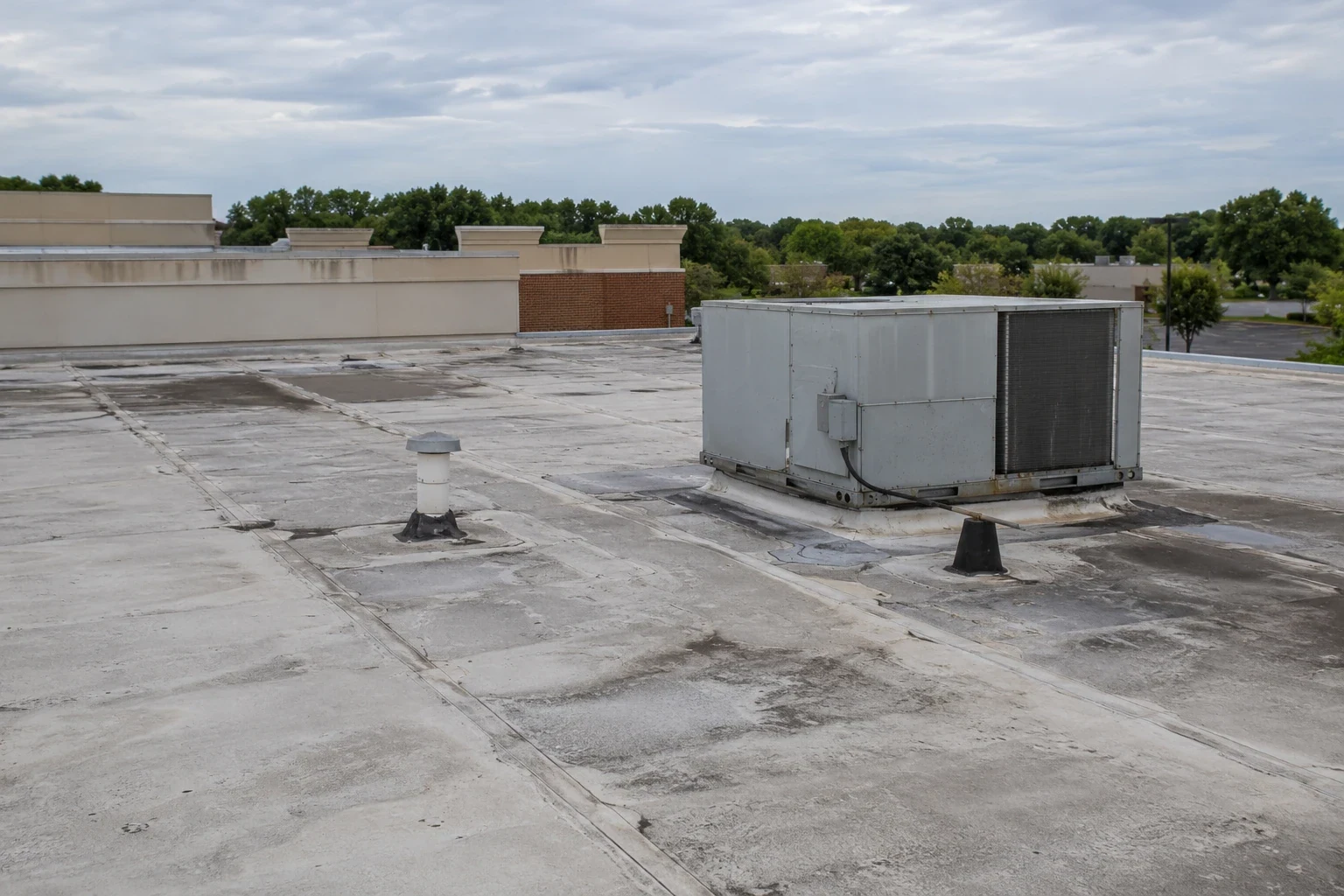
Shopping Center Roofing
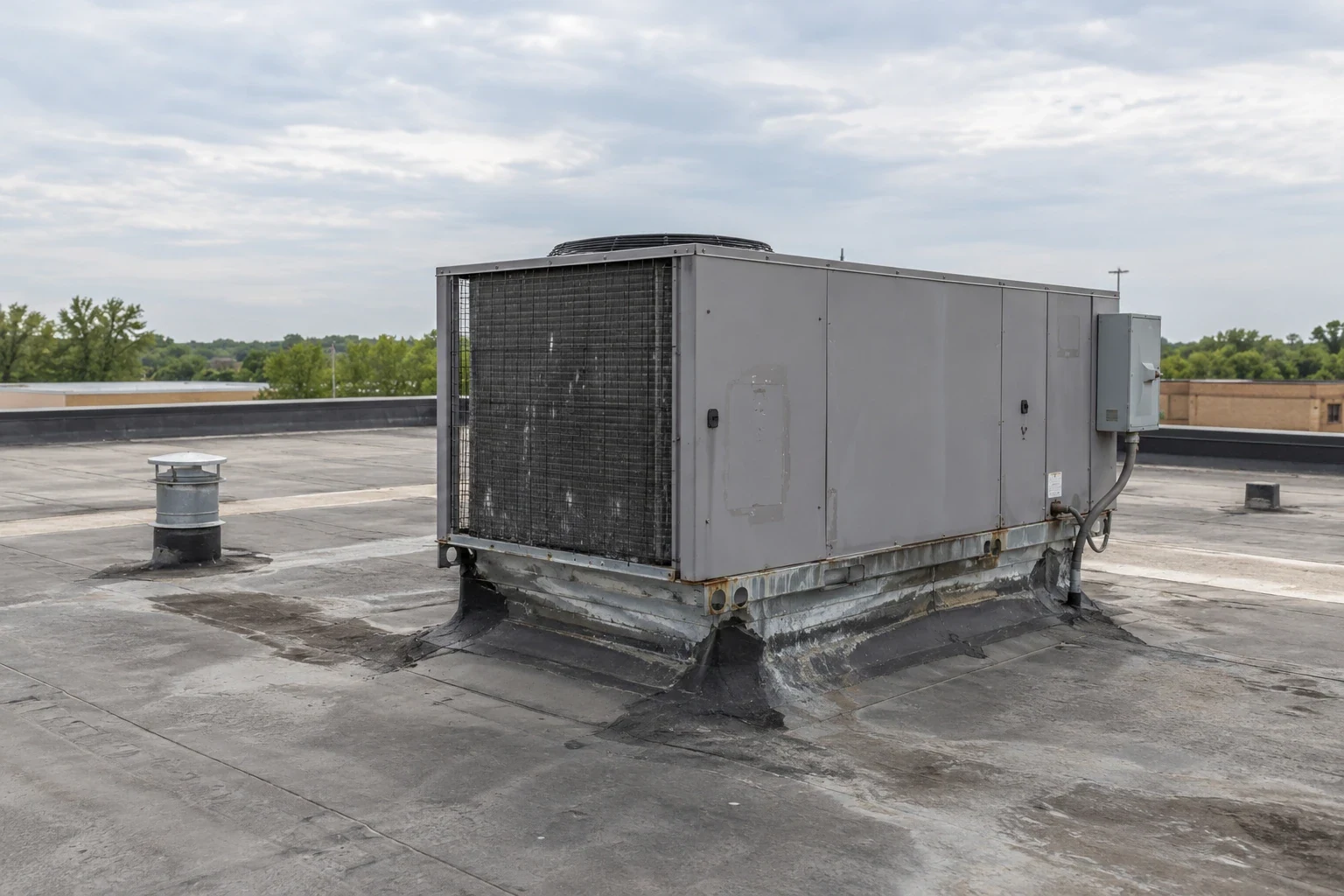
Rooftop Equipment Curbs and Supports
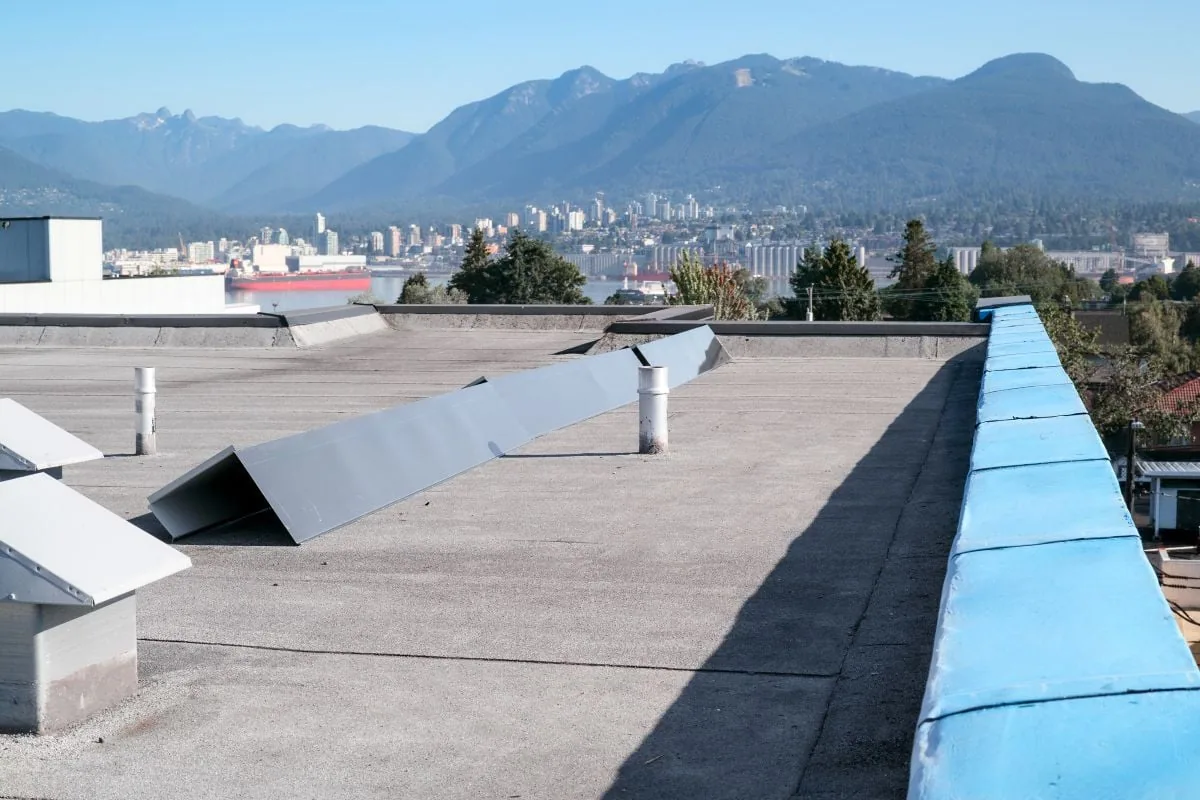
Flashing Failure Repair
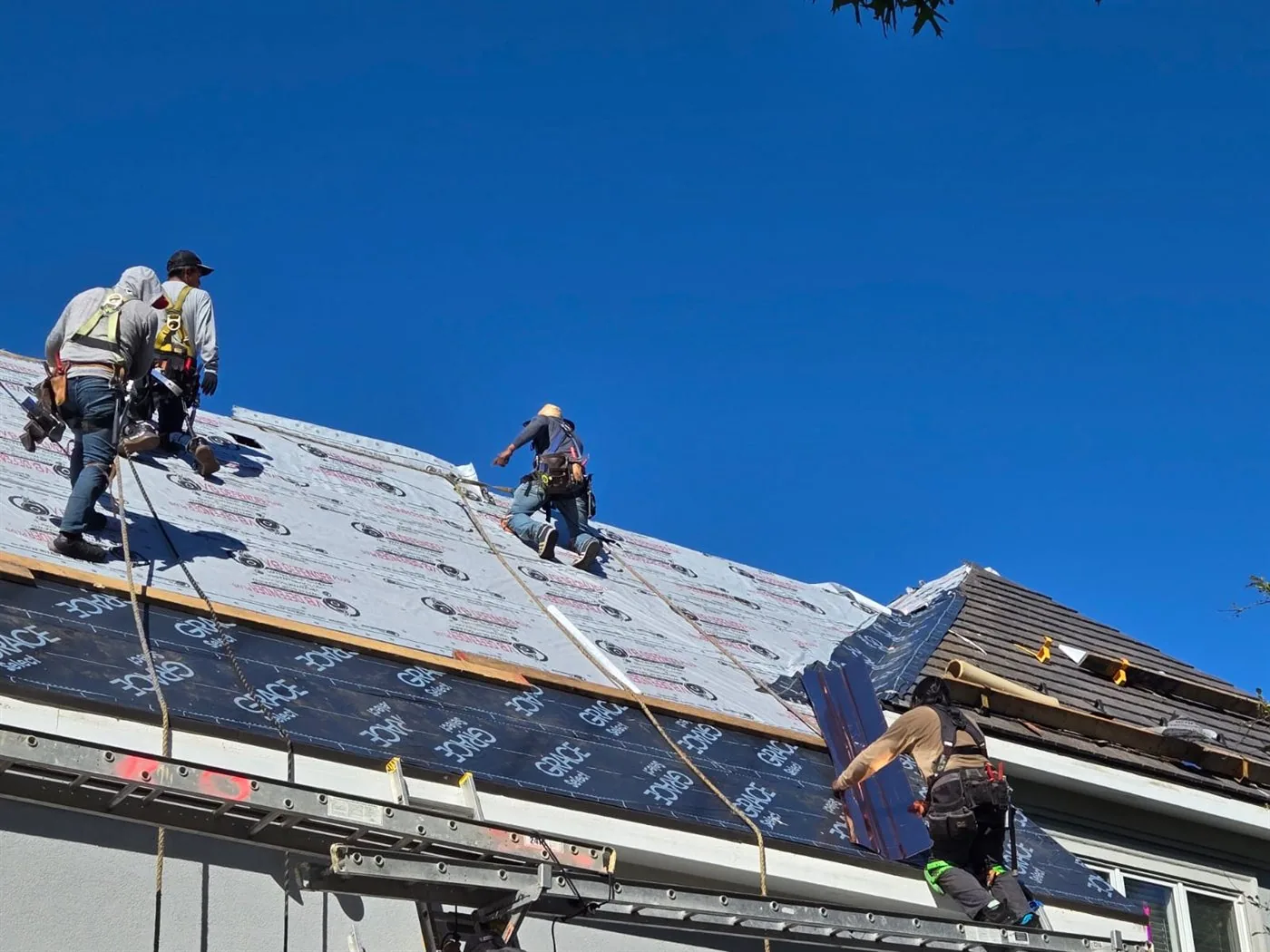
Commercial Roof Inspection
Emergency Leak Calls
Call for a storm walk or budget review
Call before spring storm season or before your budget year closes. The walk pins down ponding lines, tie-ins and your repair-or-replace line, in writing, with a price on each side.