
Rooftop Equipment Curbs and Supports
Rooftop Equipment Curbs and Supports in Hoover, AL
A bad curb costs more in April than in February. That is the timing story for rooftop equipment in Hoover, AL, in one line. Units sit on curbs. Curbs sit on the deck. The roof wraps around every one. When the wrap fails, water runs down the curb and into the building. Spring storms find it fast. We check curbs, supports and pipe stands before the season starts, price what needs work, and give you a clear line between fix now and fix later.
Rooftop units are a common source of leaks on office and retail buildings, and nobody walks up there until a ceiling tile drops.
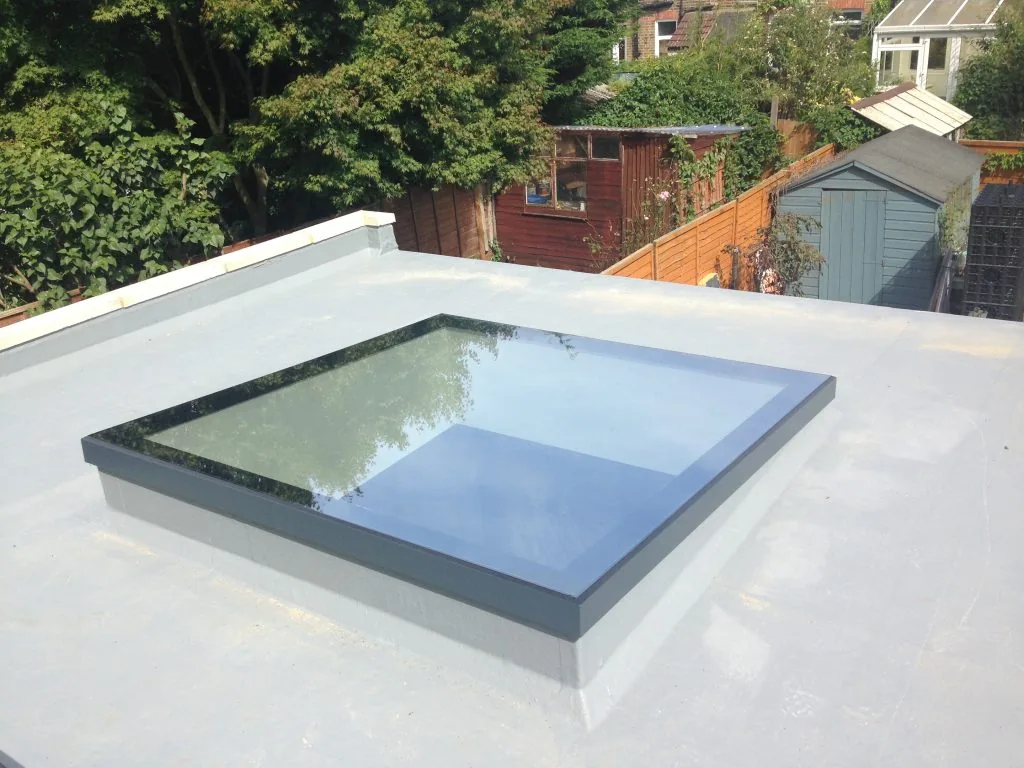
The issue: what goes wrong at a curb
A curb is a box. The roof membrane runs up its sides and ties into counterflashing at the top. Four things fail first:
- Sealant at the counterflashing dries and cracks in the heat.
- The membrane pulls away at corners, where stress piles up.
- Fasteners back out and leave small open holes.
- The unit itself shifts, breaks the seal and opens a gap.
Heat of 90 degrees or more arrives on about 65 days a year around Birmingham, with humidity near 70 percent. Metal curbs expand and shrink every day. Sealant does not keep up. After several summers, curbs often need attention even when the field of the roof looks fine.
Supports fail a different way. A pipe stand with a bare steel foot rests on the sheet. The foot rocks in the wind and grinds the membrane. A conduit run sags and sits on the surface. Water collects under it and stays. Each one is a ten-minute fix when caught. Left alone, it is a patch the size of a door.
What it costs: a repair now or a ceiling later
Resealing a curb is a small job. Rebuilding its flashing is a bigger one. Replacing a curb and resetting the unit takes a crane and a mechanical contractor. The price climbs at every step, and the step you land on depends on when you call.
Wet insulation is the real cost. Water that runs down a curb for a season soaks the board around it. Then you replace insulation, not just flashing. A moisture scan tells us how far the water went before we quote. You see the number first. Then you pick: spot repair, curb rebuild or a wider section replaced.
We price it in three lines: reseal, rebuild and replace, each with what it does for the budget year. A reseal may buy two or three seasons. A rebuild resets the clock on that curb. A replacement is rare unless the curb itself has rusted through or the unit is changing. Having all three on paper makes the choice easy to defend.
Storm season: wind, hail and loose units
Hoover sits in the Birmingham metro, in the part of the Southeast people call Dixie Alley. Severe weather clusters in spring and again in late fall. Gulf tropical systems add storm-force wind now and then. A unit that is not strapped to its curb can slide. A curb that is not fastened to the deck can lift.
Hail is the quiet damage. Softball-size hail fell across central Alabama in April 2003. It dents unit housings and bruises the membrane around them. After a storm we walk each unit, check the straps and the curb fasteners, and look at the sheet on all four sides. Our hail damage repair crews handle what we find.
After a tornado watch or a hard blow, we also check the roof edge near each unit. Debris from a loose panel can puncture the sheet. A cracked housing sheds water onto the membrane in a stream. The sooner we find those, the cheaper the dry-in. Our storm walk covers every unit on the plan, not just the ones we can see from the ladder.
When to do it: the calendar
Do curb work in the dry, mild weeks of late winter. Sealants and adhesives behave. Crews are not buried in storm calls. A unit can be shut down for a day without hurting a tenant.
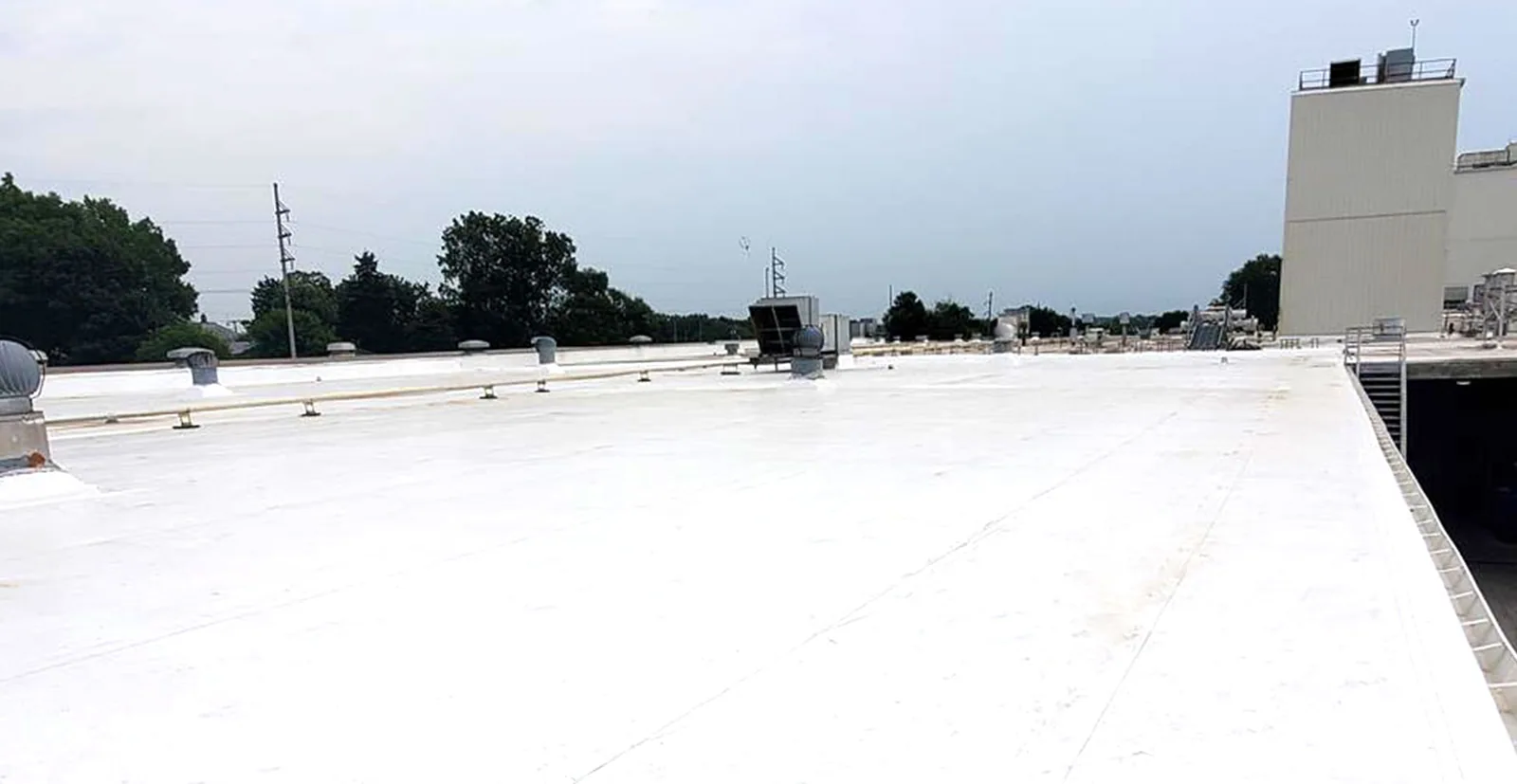
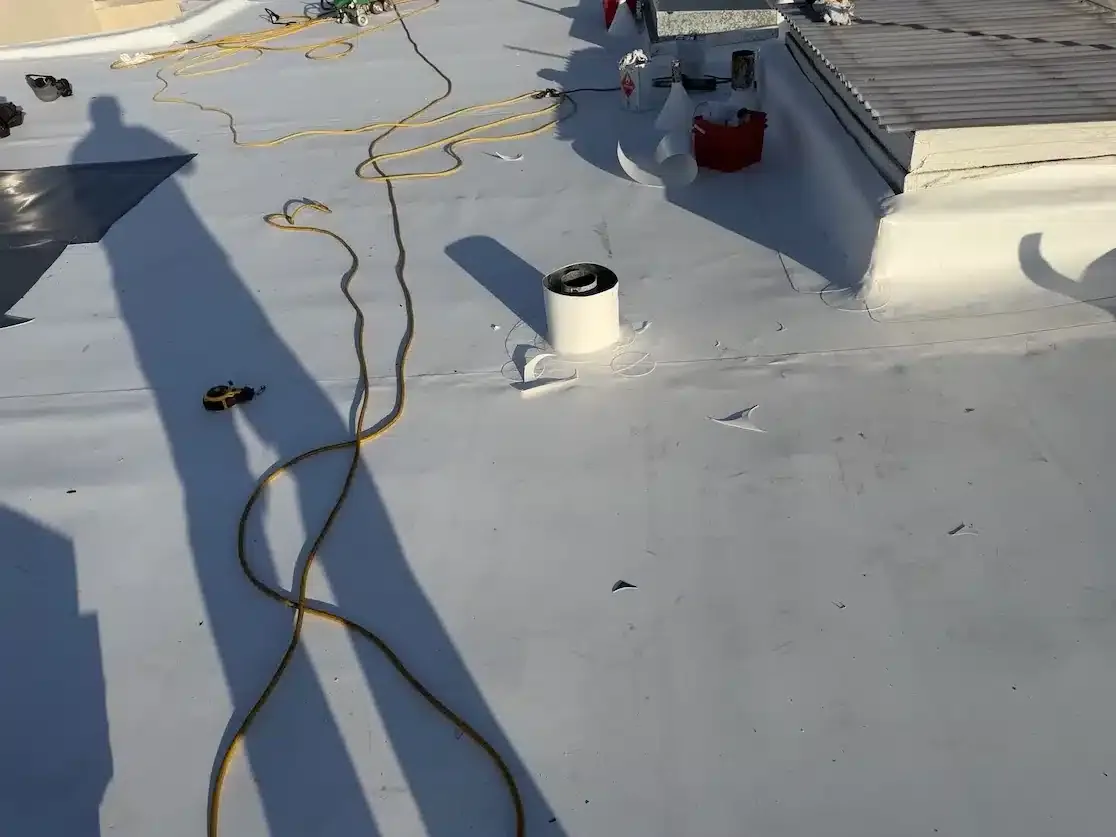
Pipe supports and conduit stands follow the same rule. A rigid pipe resting on the membrane wears a hole with each hot afternoon. We swap it for a support with a pad that spreads the load, or raise it on a stand. For long runs the cost is modest. Skip it and you replace the membrane under the pipe within a few seasons. The detail also matters on a TPO roof, where foot traffic and hot pipes mark the sheet.
By building: where units pile up
A multi-tenant office or retail roof can carry many units. Office buildings near Riverchase and the Galleria side typically carry air handlers, exhaust fans and split systems. Strips along Highway 31 and Highway 150 can add tenant-installed units, each with its own curb and its own flashing.
Tenant additions are the usual trouble spot. A new unit goes in. A curb gets cut in. Someone seals it with caulk. The caulk fails in two summers. We keep a roof plan with every curb marked and dated, so the next tenant change gets flashed right. The same walk suits an office building roof in Riverchase.
Highway 31 retail in Pelham and Alabaster faces the same issue wherever a tenant adds a unit. Each added unit means a new penetration. We tag it, flash it and log it, so the roof plan grows with the building.
More on Rooftop Equipment Curbs and Supports
Recommendation: what we would do first
Start with a curb walk. Photograph every unit, support and pipe stand. Mark the sealant, the corners and the fasteners. Then sort the list into three groups: reseal this month, rebuild this budget year and watch another season.
Pair the walk with a look at drains and penetrations. Water from a leaking curb often pools at a nearby scupper. The drains and scuppers get the same look, and so does the flashing at nearby pipes and skylights. For a single failed curb with no other problems, commercial roof repair is the fastest route.
Commercial Roofing Questions
How do I know whether a curb needs resealing or a full rebuild?
Look at the sealant and the corners. Cracked sealant with a tight membrane is a reseal. A membrane that has pulled away, split at a corner or lost its adhesion is a rebuild. We press, probe and photograph each curb, then give you the call for each one with a price beside it. Mixed results are common on one roof.
Can the unit stay running during curb work?
Often yes, for resealing and for flashing repair on the outside of the curb. A full rebuild or a reset needs the unit shut down for a few hours to a day. We schedule that with your mechanical contractor and, in a tenant building, with the property manager. Cooling season is the tight window, so spring is better.
Who pays when a tenant unit causes the leak?
The lease decides, but the photographs settle the facts. We mark which curb leaked, who installed the unit and what failed. A dated roof plan with every unit tagged makes the conversation short. Many property managers keep that plan and update it each time a unit is added or swapped.
Do I need to replace the whole roof if the curbs are bad?
Not by default. If the field membrane is sound and the insulation is dry, curb work alone can carry the roof for years. If a moisture scan shows wet board across a wide area, the repair-or-replace line moves. We scan before we quote, so the answer comes from the roof.
How often should curb flashing be checked?
Twice a year is the working rule: once in late winter before storm season and once in fall after the heat. Add a check after any hail event or tornado watch that brought wind to your area. Each visit takes little time on a small roof and gives you dated photographs, which help when a warranty or a claim question comes up later.
Related Roofing Work

Hail Damage Roof Repair
TPO Roofing

Office Building Roofing

Riverchase
Emergency Leak Calls
Call for a curb walk and a priced list
We will walk the roof, photograph every curb and support, and give you a list with a price on each line. The visit pins down which curbs are fix-now and which can wait a budget year.