
Skylight and Penetration Flashing
Skylight and Penetration Flashing in Hoover, AL
Count the holes in your roof. Skylights, vent pipes, exhaust fans, conduit and hatches each cut the membrane, and each cut is a flashing that has to stay sealed for years. A roof with a dozen openings has a dozen places to leak. In Hoover, AL, heat, humidity and hard rain test every one of them.
Many commercial leaks start at a penetration, not in the open field of the roof. That is good news. It means a leak can usually be found and fixed at a known spot. It also means a cheap fix in February beats an expensive one in May.
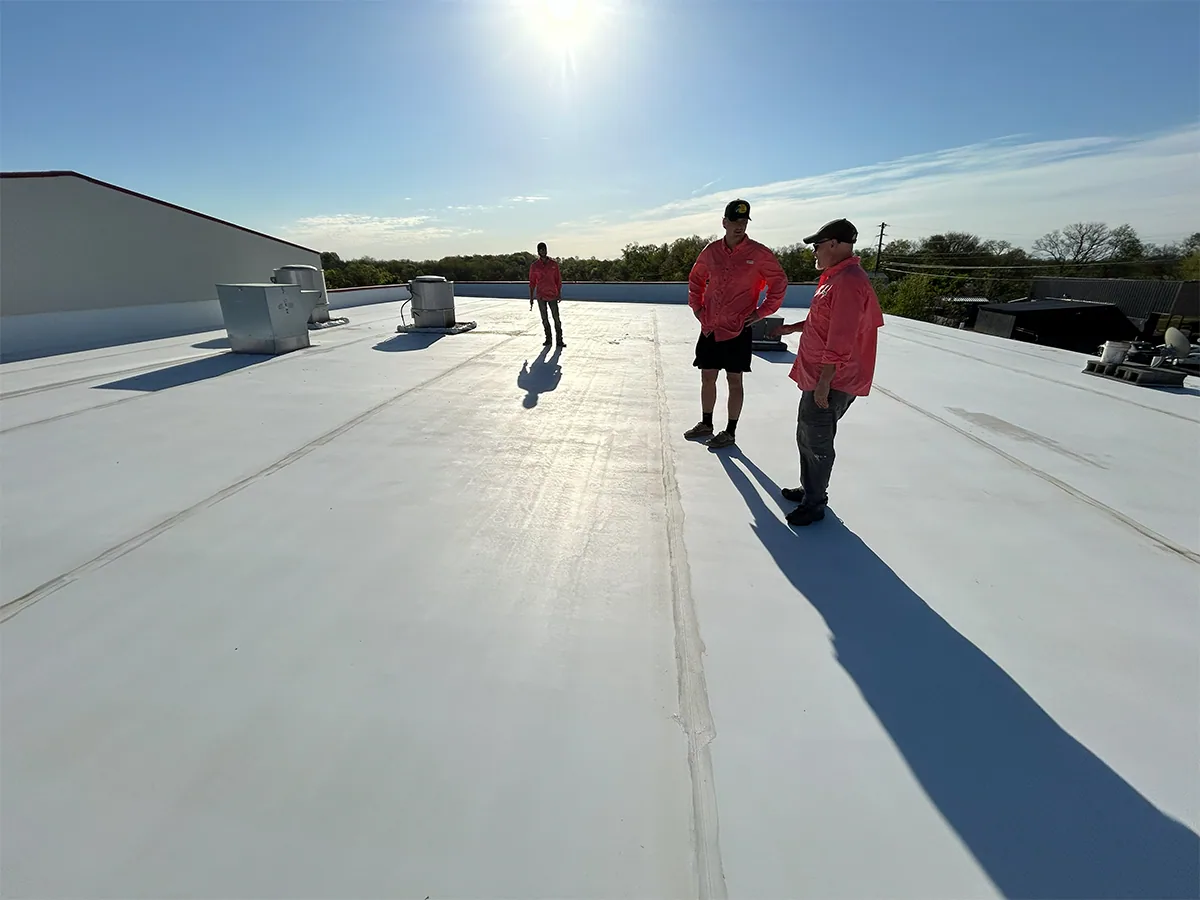
The issue: where leaks begin
A penetration flashing fails in a handful of ways. Sealant was used where a mechanical termination was needed. The flashing was never bonded to the curb on all sides. Movement tore the membrane at the opening. Or the curb is too low, and standing water rises above the flashing height.
Heat makes each one worse. Birmingham-area heat reaches 90 degrees on about 65 days a year. Rubber boots crack. Sealant dries and shrinks away from pipes. Metal flashings expand in the afternoon and pull on the sealant that holds them. Put those two facts together and a joint that held in April can open by August. Plastic domes craze. Humidity near 70 percent keeps moisture in the air, so condensation on a cold skylight can look like a leak.
We mark every opening on the roof plan with a number. Then we rate each one good, marginal or failed. That list is the repair plan. The owner gets it with a photo for each opening, so a facility manager can approve the failed ones now and calendar the marginal ones.
Skylights and hatches
A skylight sits on a curb flashed into the membrane on all four sides. The dome or glazing seals to the top of the curb. Leaks come from three places: base flashing at the curb, the gasket between glazing and curb, and condensation inside the unit.
We separate them by testing. A dome that sweats on a cool morning is not leaking. A dome that drips only after rain is. Cracked or crazed plastic, failed gaskets and rusted frames are replaced as units. Curb flashing is rebuilt back to sound membrane, with new base flashing and a termination at the top.
Hail is hard on domes. Stones as big as softballs dropped on central Alabama on April 25, 2003. Cracked domes after a hail event are a hail damage item, and we photograph them for the claim. Roof hatches get the same check, with attention to hinges, latches and curb height.
Pipes, stacks and conduit
Round penetrations get a pipe boot, a prefabricated flange or a field-built detail. Rubber boots crack in sun. Clamps loosen. Field-made sealant pockets dry out and shrink. A pocket full of old tar or holding a pool of water is a leak waiting to start.
When a new line is added, the question is how it was flashed. Was it done to the roof system or improvised? Conduit and small lines get a prefab boot or a welded or adhered collar. Larger stacks get a curbed detail with counterflashing. We record size, type and condition for every pipe, so later additions can be checked against a baseline. Plumbers, electricians and low-voltage crews all cut roofs. Each cut gets a flashing that matches the roof system, or it gets reported.
Curbs and rooftop units
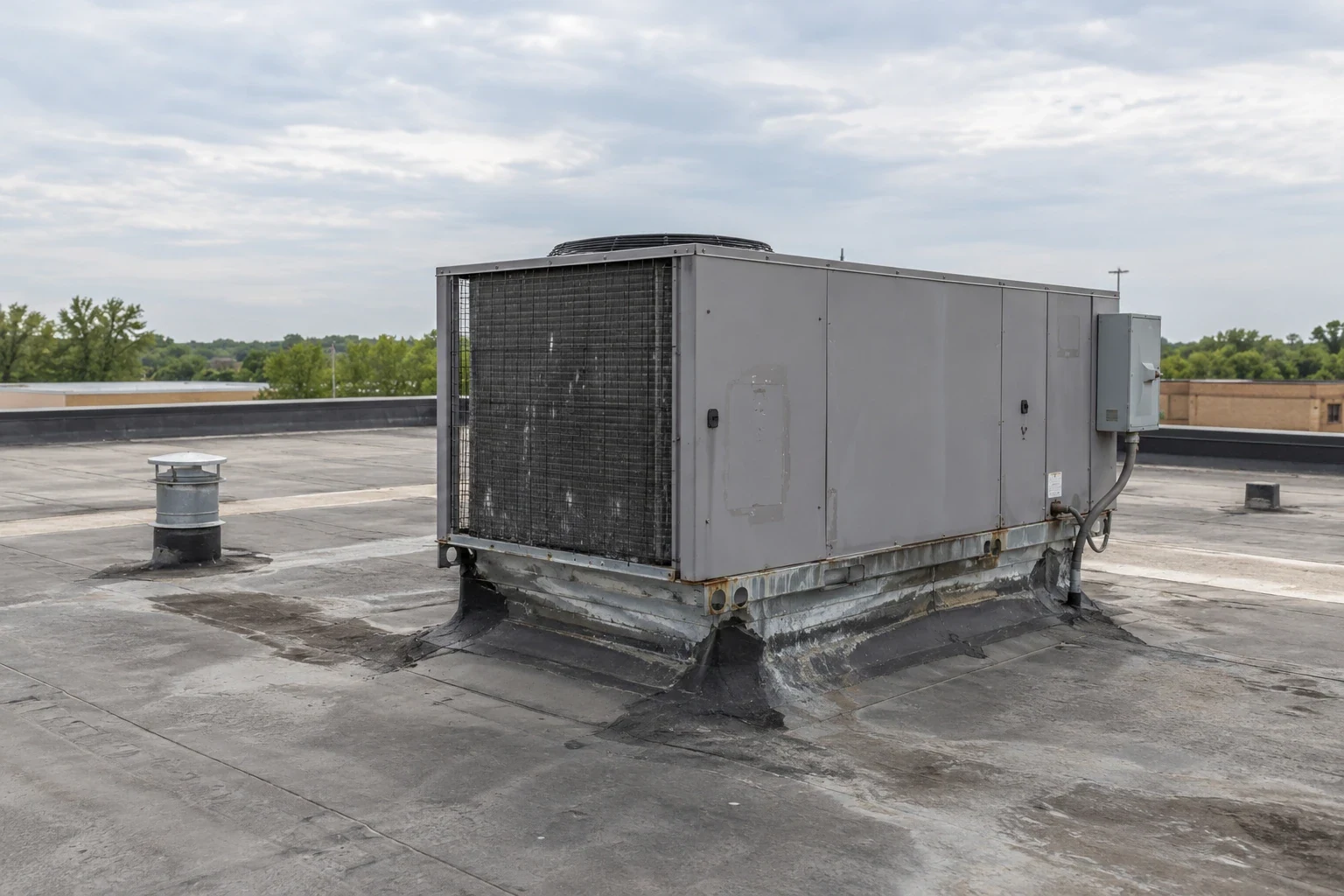
Units and fans sit on curbs. Vibration loosens fasteners. Service traffic wears the membrane. A unit swapped without a roofer can leave a curb flashing cut or lifted. If the new unit is a different size, the curb may need rebuilding, and that work comes before the crane date.
How a unit sits matters: the height of its curbs and supports decides how far it rides above the membrane. For flashing, each curb gets new base flashing and a termination when the unit moves. We schedule the roof crew with the mechanical contractor, so water stays out during the swap.
Tracing a leak to its opening
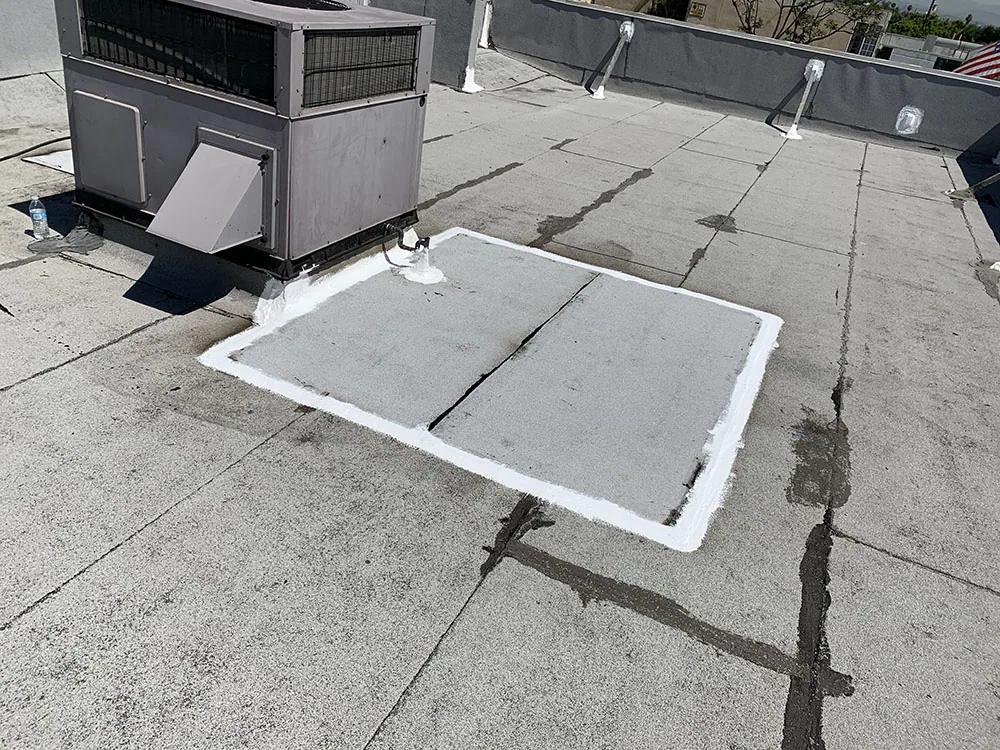
Water can travel along a deck before it drops. A drip near a skylight can start at a pipe five feet uphill. We trace from the stain upward and check each opening in the area. A hose test on one opening at a time confirms the source. Wetting several at once proves nothing.
If insulation around the opening is wet, the repair area grows. Leak repair starts with tracing and temporary protection. The permanent flashing follows when the area is dry enough to bond.
More on Skylight and Penetration Flashing
What it costs: priced by the opening
Penetration work is priced per opening. Cost rises with the size of the penetration, the condition of the membrane around it, access and whether insulation is wet. A pipe boot replacement is a short visit. A skylight curb rebuild is a day or more per unit. When many openings fail at once, doing them in one trip lowers the cost of each. Access counts too. A roof reached by a ladder inside the building needs a hoist plan for materials, and that cost is shown on its own line.
Plan it before storm season. Do the failed and marginal ones in late winter. Put the good ones on the maintenance list. A flashing failure found in February is a small bill. The same failure found after a May storm is a larger one.
Local: retail strips and office roofs
Inverness sits on US 280, a corridor lined with restaurants and shopping centers. Restaurants bring kitchen exhausts and shopping centers bring rooftop units, so openings add up fast on roofs like these. Along US 31 in Pelham, any retail building with kitchen fans or rooftop units follows the same arithmetic. The opening count is the first number on a roof like that, and it sets the visit. Grease from kitchen fans also needs a look, since it attacks some membranes and sealants around the fan. We note where grease reaches and what membrane is under it before suggesting a repair.
Commercial Roofing Questions
How can I tell a skylight leak from condensation?
Condensation shows on cool mornings on the inside of the glass and dries by midday. A leak follows rain and shows at the curb edges or the gasket line. If you are unsure, we test it with a hose. Our advice: do not seal a skylight until you know which one you have.
Should a cracked pipe boot be sealed or replaced?
Replaced. Sealant over a cracked boot lasts a season and then repeats. If the boot is sound and only the clamp is loose, re-clamp and seal the top. Our note records which one we did.
What does a roofer need to know before a rooftop unit is swapped?
The new footprint, weight, curb height and crane date. A different curb size changes the flashing. We schedule the roof work to finish with the equipment work, so the opening is never left unprotected overnight.
Why do roofs with many openings leak more?
Each opening adds one more place for movement, heat and foot traffic to act on the membrane. A numbered list and a yearly check keep the count under control.
Is replacing a skylight better than patching it?
A patch works when the frame and curb are sound and only the gasket failed. A crazed dome, a rusted frame or a curb that moves points to replacement. We price both and note the age of each unit.
Related Roofing Work

Hail Damage Roof Repair
Rooftop Equipment Curbs and Supports
Commercial Roof Leak Repair
Flashing Failure Repair
Emergency Leak Calls
Call for a storm walk or budget review
Call and we will count and rate every opening on the roof. The visit pins down which flashings fail now, which can wait a budget year and what each costs.