Wind Damage Roof Repair
Wind Damage Roof Repair in Hoover, AL
A wind-lifted corner costs little to fix the week it lifts. Left alone through the next front, it can cost a whole roof section. Hoover, AL gets severe thunderstorms in spring and a second round in November and early December. Gulf tropical systems add storm-force winds now and then. Each one tests the same weak spot: the edge.
Wind damage is a timing problem as much as a roofing one. The earlier we see it, the smaller the repair. We start at the perimeter, work inward, and hand you a written repair-or-replace line. Call for a storm walk and we will mark where the wind got in and what it will cost to close it.
The issue: wind gets under the edge first
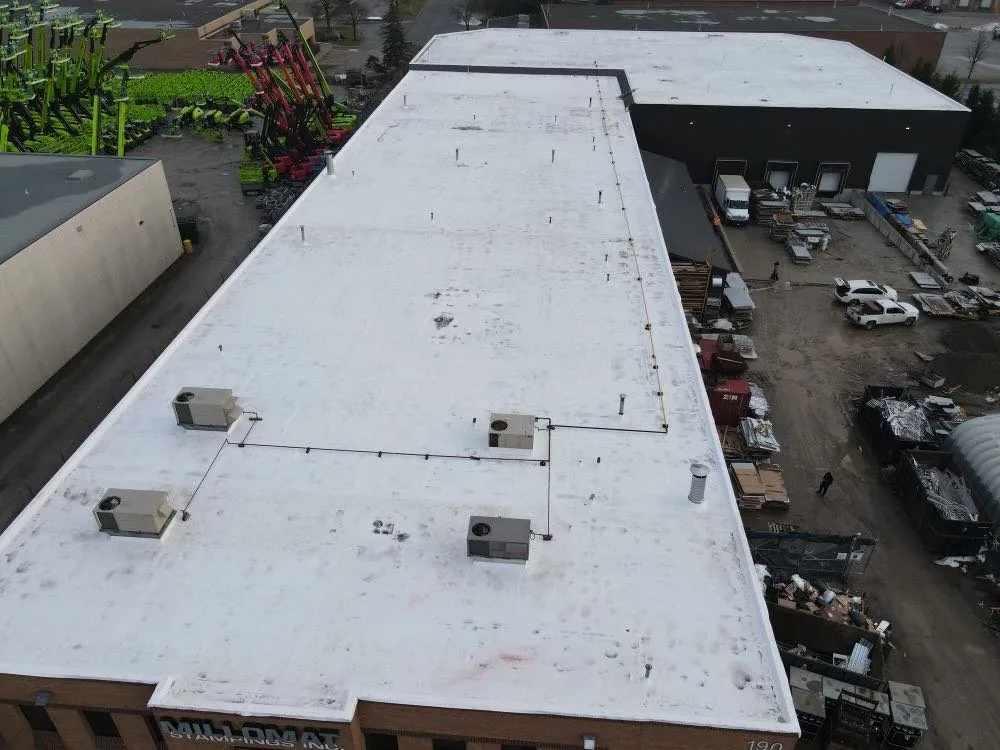
A roof holds against wind through its edge metal, its fasteners and its adhesive. If any of those lets go, air gets under the sheet. Then the sheet flaps. Flapping tears seams and pulls fasteners through the membrane.
We look for four signs. A bent or missing edge strip. Daylight under a coping cap. Fasteners standing proud of the metal. Ripples or tents in the membrane near the corners. Each is cheap to fix when found early. Each is expensive once the field of the roof has started to peel. Check the corners first, because corners see the highest suction in a gust.
Local record: Dixie Alley is not a figure of speech
Dixie Alley covers the Birmingham area. Its record holds the F5 tornadoes of 1977 and 1998 and the EF4 of April 27, 2011, and Hueytown and Oak Grove took both the 1998 and the 2011 storms. Those are tornado records, not straight-line wind readings, but they show how hard wind can hit this part of Alabama.
Most wind damage on a commercial roof comes from ordinary storms, not those extremes. A strong spring line of thunderstorms can lift an edge that was marginal. Treat the edge as a maintenance item, not a once-in-a-decade event. A tornado damage repair is a larger job, and a wind repair done early may keep it from becoming one.
What it costs: small now, large after the next front
Costs follow how far the damage has spread. Resecuring an edge strip is a small repair. Replacing a torn section of membrane and the wet insulation under it is a larger one. A peeled field with a failed deck is a replacement.
We price three stages. Stage one: make it safe and dry. Stage two: repair what the wind broke. Stage three: fix what made the roof vulnerable, such as short fastener patterns or a weak edge detail. You can stop after stage two. Many owners do. We tell you what stage three would prevent, and you decide. No price is final until the roof is open and we see the deck.
When to do it: before March or after the claim
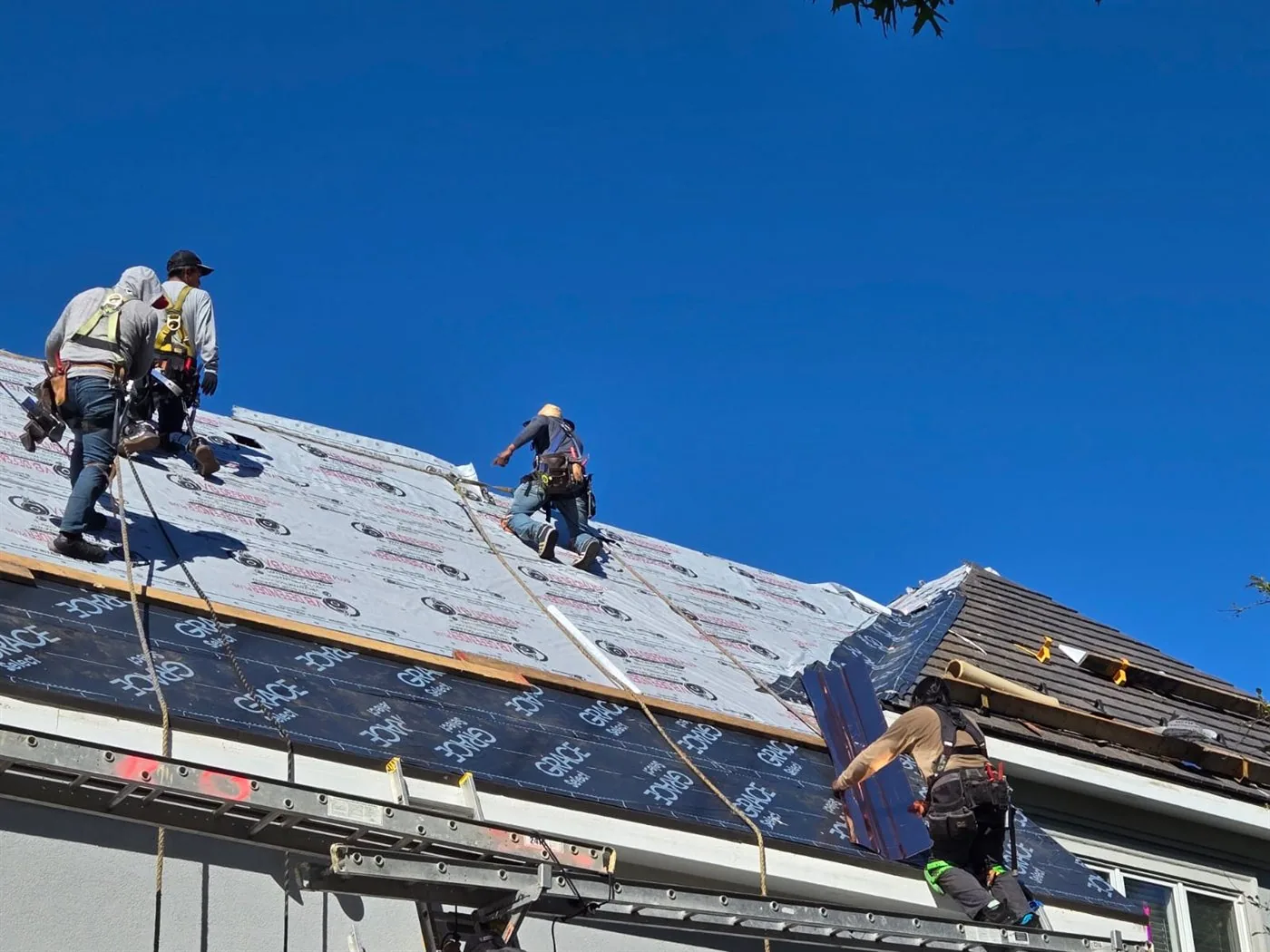
Storm damage claims cluster in March, April and November, so the best repair window is before March. A February walk finds loose edges while the roof is dry and crews have open dates. A walk after a storm finds more, but the schedule is crowded.
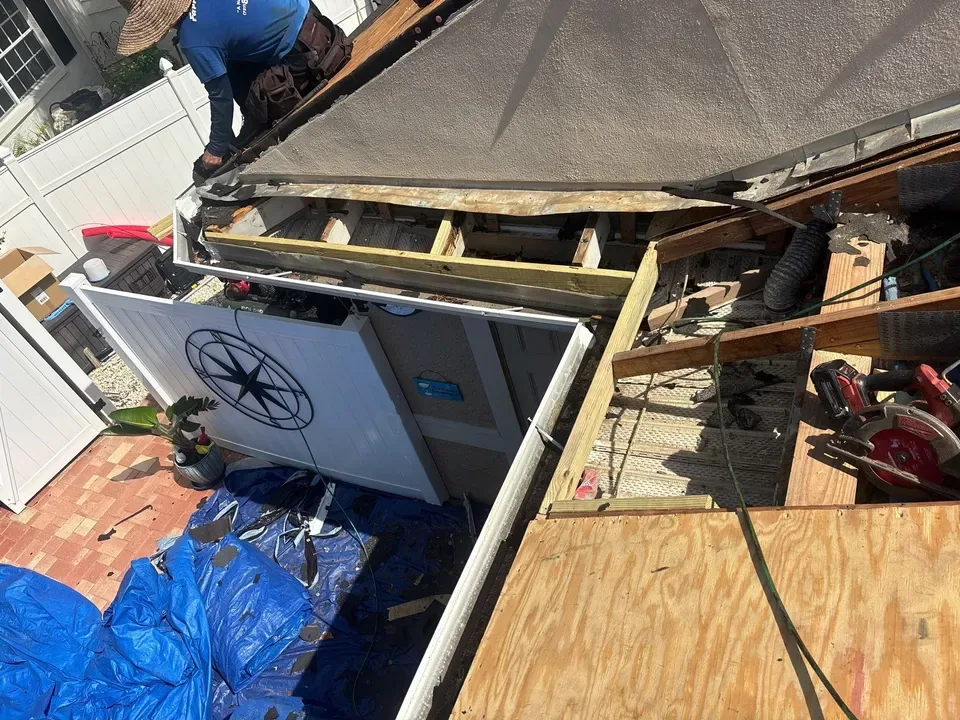
If wind has already hit, stop the water first. A tarp-and-dry buys days. Then document everything for the carrier before repairs start. Storm damage repair handles both steps: tarp first, documentation second. For a building you are still weighing, a commercial roof inspection fixes today's condition in writing.
The repair: what the crew actually does
The crew starts with safety. We clear loose metal and debris and tie down anything that could blow. Then we dry the area. Wet insulation under a torn sheet is cut out and replaced, not covered.
Next comes the edge. We reset the cleat, replace bent strips and refasten at the spacing the system needs. Membrane that has pulled free is cleaned and re-bonded or replaced with a patch lapped well past the damage. Sealant is a final step, not the repair. We photograph each stage and number it on the roof plan. The record tells the next crew what was done and where, and it tells the insurer the same. When the work is done, we walk it with you and close the punch list.
More on Wind Damage Roof Repair
Access: what to clear before the crew arrives
Tell us who holds the roof key. Tell us which tenant sits under the damage. Tell us the hours the building is quiet. Those three answers set the schedule.
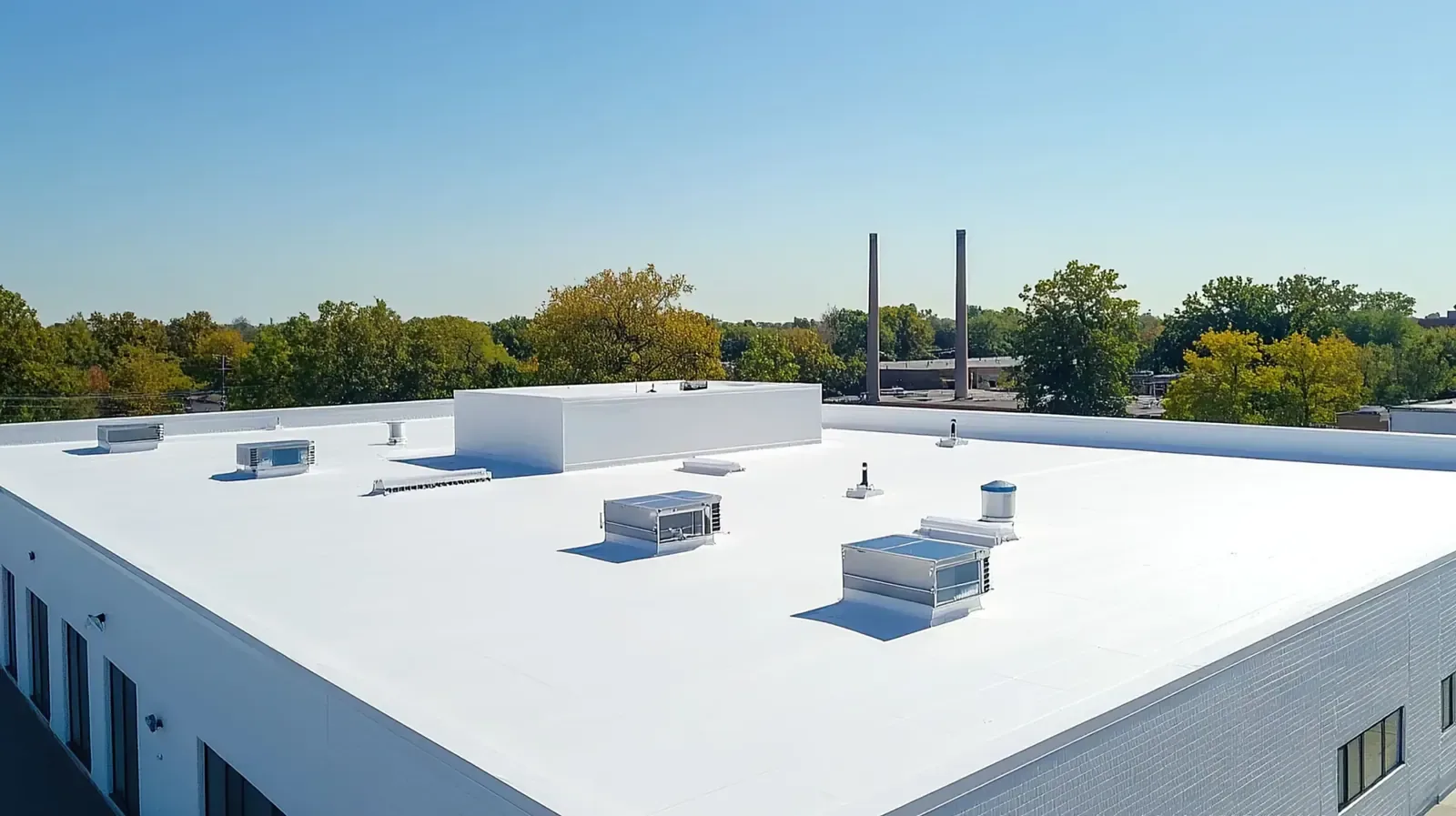
We need space for a lift or a ladder near the damaged corner. We need a staging spot for material that does not block fire lanes or customer doors. If the roof has rooftop equipment, we ask the mechanical contractor to stay clear while we work. A crew that waits at a locked hatch costs money for nothing, so the access sheet goes out the day before. For occupied buildings, occupied building reroofing methods keep the interior protected while the roof is open.
Where it shows up: office parks and retail strips
Large corporate tenants fill Riverchase Office Park, and the Riverchase Galleria on Highway 31 combines shopping, a hotel and offices. A flat office roof with rooftop units near the edge has one wind risk. A retail strip with many tenants and added units has another. Roofs in Riverchase and along the Highway 150 corridor get the same walk: edges first, then flashing at curbs.
Alabama enforces the 2021 IBC, which took effect July 1, 2022 and picked up parts of the 2024 IBC in March 2025. A major wind repair or replacement follows that code. We confirm what applies before the work starts. A seam failure repair often goes with a wind repair, because a flapping sheet strains its seams.
Commercial Roofing Questions
How do I know if wind damaged my roof or if it was already worn?
Look at the edges of the damage. Fresh wind damage has clean tears, bent metal and debris nearby. Old wear shows dirt in the opening and weathered edges. We recommend a roof walk with photographs either way, because the insurer will ask. We separate the two in the report and price them separately, so you can see what the storm cost and what was already due.
Can a small wind repair wait until my budget year?
If it is a loose edge and the roof is dry inside, a short wait is usually safe. If water is entering, do not wait. We recommend a temporary seal now and a permanent fix before the next storm line. Spring and November are the windows to beat, and a repair booked in February costs less than one squeezed into April.
Does wind damage always mean I need a new roof?
No. Most wind damage is local: an edge, a corner, a panel or two. The repair-or-replace line depends on moisture in the insulation and the condition of the deck. We core and scan before we recommend replacement, and we show you the results. If the field is sound, a repair is the right call.
What should I photograph before the repair?
Take the damaged edge, the nearest ceiling stains and the whole roof from the ground. Date the photos. Keep the debris if it came off your roof. Those items support a claim, and they take ten minutes.
Will a repair void my manufacturer warranty?
It can if the repair uses the wrong materials or method. Send the warranty terms and we match the repair to them, flagging anything that limits the work. We recommend doing this before the crew arrives, not after.
Related Roofing Work
Tornado Damage Roof Repair
Storm Damage Roof Repair
Commercial Roof Inspection
Occupied Building Reroofing
Emergency Leak Calls
Call for a storm walk
Call after the storm or before the next one. The walk pins down which edges are loose, what the wind broke and what it will cost to repair. You get the list in writing, with a price on each item.