
Seam Failure Repair
Seam Failure Repair in Hoover, AL
A seam is the cheapest place on a roof to catch a problem. It is also the place most likely to hide one. In Hoover, AL, a membrane roof sits through roughly 65 days a year at 90 degrees or hotter and around 56.6 inches of precipitation. Heat opens a seam a little each summer. Rain finds the opening each fall. Neither shows from the ground.
Seam repair is a timing job. Caught early, it takes a probe, a cleaning and a few feet of new weld or tape. Caught late, it takes a section of wet insulation and a bigger bill. Call for a roof walk before spring storm season and we will probe the seams, mark the weak ones and give you a price for each side of the repair-or-replace line.
The issue: what a failed seam looks like
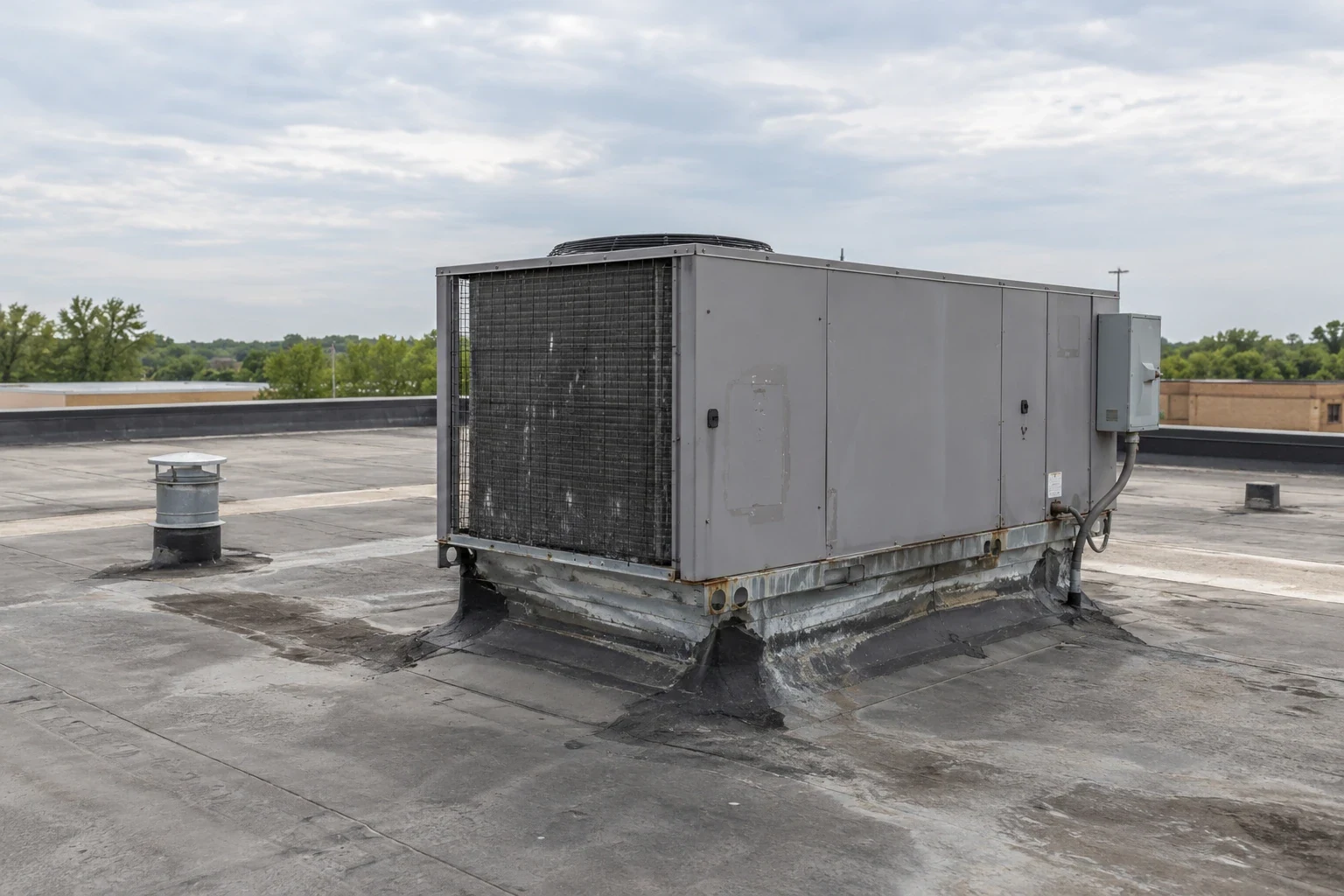
Seams fail in four ways. They split along the weld. They lift at the edge. They fishmouth, curling up like an open lip. They pull apart under tension at walls and curbs. Each lets water in, and each looks small until the insulation is wet.
We probe every seam within reach. A probe is a blunt tool run along the edge to feel for gaps. A sound seam resists. A weak one gives way. We mark every open spot with paint and photograph it. We also look for ridges and shadows, which point to a seam that is moving. Water stains on the underside, where we can see it, show where the seam is leaking now.
Why seams fail: heat, movement and workmanship
Heat is the first cause. Birmingham's hot, humid summers cycle the membrane, and a seam made with a thin weld or poor bond gives up early. Movement is the second. Walls, curbs and decks shift, and the membrane stretches across them. Workmanship is the third. Dirt in a lap, a cold weld or a missed spot shows up as a failure in the first few seasons.
Foot traffic adds a fourth. Technicians walking to rooftop units grind grit into seams. A path to a unit with no walk pads is a path of worn seams. Ponding adds a fifth, because a seam held under water ages faster. We note which cause fits each failure, since the repair differs. A ponding water repair often belongs in the same scope.
What it costs: by the foot, then by the section
Seam repair is priced by length and access. A few feet near a drain is a small job. A long run across a field takes more time. A seam with wet insulation under it takes a section cut-out. The bill grows with the wet area, not the crack.
We give three numbers. Repair the open seams. Repair and re-weld the weak ones. Replace the section. The first is cheapest and shortest. The second buys years. The third is the repair-or-replace line, and we tell you when a section has crossed it. If the membrane is near the end of its life, you may do better to put the money into a recover or replacement than into more seam work.
The fix: clean, heat, bond, cover
A good seam repair starts clean. We remove dirt, old sealant and loose edge. We dry the area. On a thermoplastic roof, we re-weld the lap with a hot-air gun and roller and cover the edge with a strip. On a modified bitumen roof, we heat or cold-apply a patch lapped well past the opening. On a built-up roof, we cut out blisters and splits and rebuild the plies.
Compatibility matters. A patch of the wrong material does not bond. We confirm the membrane type by sample or label before we choose a product. Where the seam sits at a tie-in, the fix follows a flashing failure repair, because a seam at a corner will not hold if the flashing is moving. We test the finished seam with a probe and photograph it. Each repaired seam gets a number on the roof plan, with its length, the method and the date, so the next walk can see whether it held. Repairs that fail twice in one place point to movement, and we recommend a different fix for that spot.
Wet insulation: check before you cover
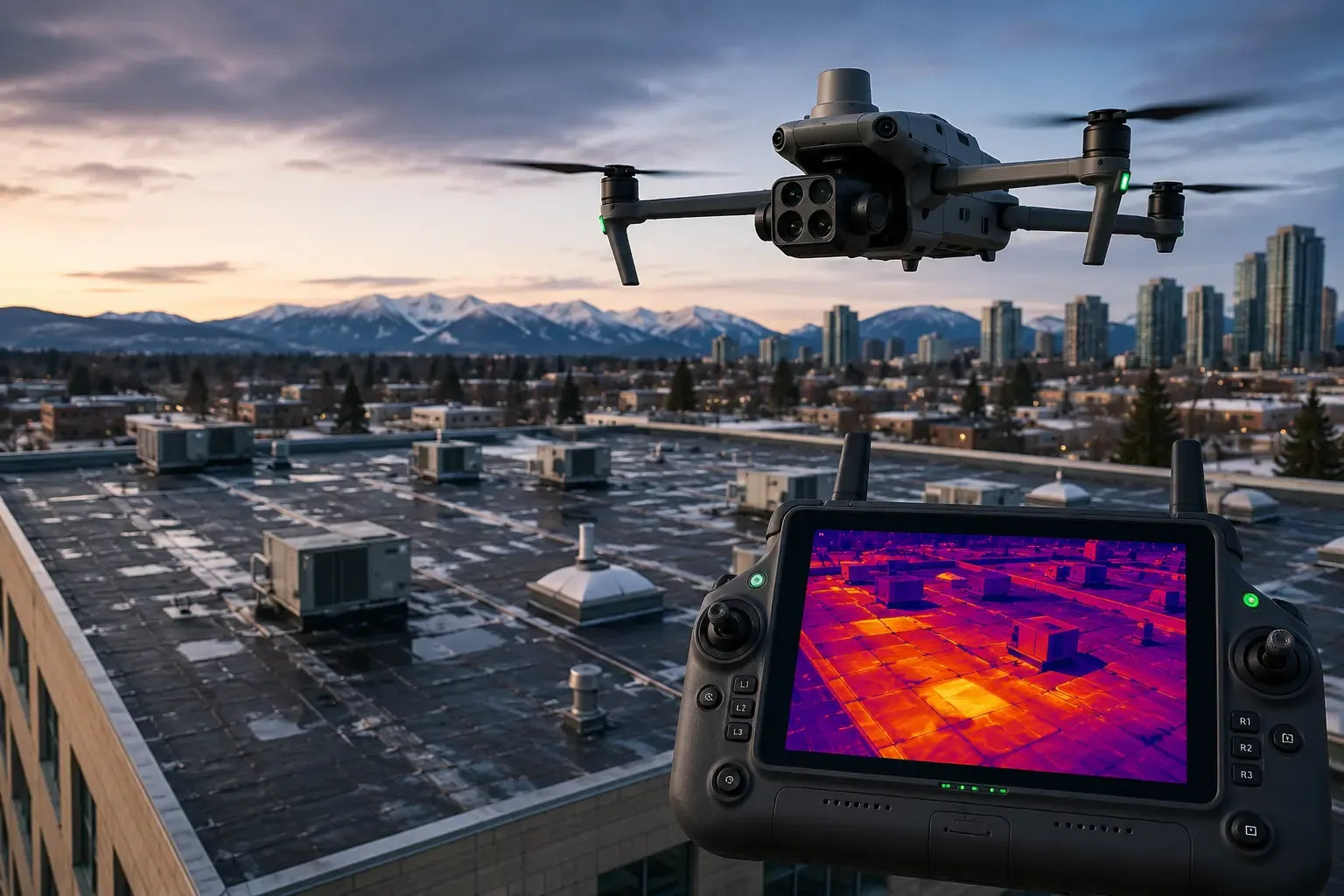
An open seam may have let water in for months. Covering it without checking leaves wet insulation under a new patch. We run a moisture scan on the area around the failure. An infrared moisture survey maps wet insulation without cutting the roof, and a core cut confirms what the scan suggests.
If the insulation is wet, we cut it out and replace it before we close the seam. If it is dry, we repair and move on. The scan costs less than one wrong repair. Do it on a dry day, a day or more after rain, when the roof has cooled after sun. We time the visit to the weather and tell you why. The scan map goes into the roof record with dimensions, so a later repair or a replacement can be sized from evidence.
More on Seam Failure Repair
Where it shows up: wide roofs and busy roofs
Wide roofs have long seams. Busy roofs have worn ones. Any wide roof has long seams, and every foot of seam is a place to check, whether it covers an industrial plant in Bessemer or an office in Riverchase. In Bessemer and Riverchase, the walk goes the same way: edges, laps, then field.
Spring is storm season in Hoover, with severe thunderstorms common in March, April and again in November. Fix open seams before then. A preventive roof maintenance visit each late winter catches seams while repairs are small, and it gives the budget year a list instead of an emergency.
Commercial Roofing Questions
How do I know if a seam is failing before it leaks?
You usually cannot see it from the ground. We recommend a probe along the seams twice a year, in late winter and early fall. We mark any gap, lift or fishmouth and photograph it. A seam that gives under the probe is on its way out, and fixing it now costs far less than fixing the ceiling later.
Is a seam tape or coating enough to fix a split seam?
Sometimes, if the membrane is sound and the split is short. If the seam is moving, wet or part of a larger pattern, tape or coating hides the problem. We recommend re-welding or patching the lap, then checking the insulation. We tell you which case you have.
How many seam repairs mean I need a new roof?
There is no fixed number. The pattern matters more than the count. If failures cluster along walls, ponds or one direction, the cause may be local. If they are spread across the field and the insulation is wet, replacement is the better value. The moisture scan and a core cut set the line.
Will foot traffic cause seam failures?
It can. Grit under shoes and tools wears laps, and repeated paths to rooftop units create weak lines. We recommend walk pads along service routes. We mark the routes on the roof plan and price pads as a small add-on to the repair.
What records do you need for a seam repair?
Send the roof plan, membrane type if known, repair history and warranty terms. Add photos of any stains inside. With those in hand, the first visit can settle the cause, bring a price range and match the repair to the warranty.
Related Roofing Work
Ponding Water Roof Repair
Flashing Failure Repair
Infrared Moisture Survey
Bessemer
Emergency Leak Calls
Call for a storm walk or budget review
Call before spring storm season. The walk probes every reachable seam, marks the weak ones and pins down which repairs fit this year's budget and which can wait.