
Soprema
Soprema Roofing Systems in Hoover, AL
Soprema is a roofing and waterproofing maker. Its commercial range covers SBS modified bitumen sheets, built-up systems, liquid-applied membranes and insulation. Those are the families we repair on Hoover roofs. They share one trait: they are thick. A thick roof forgives foot traffic and small hail. It does not forgive a bad flashing. So we start at the walls, curbs and drains, where layered roofs fail first. Then we price the fix.
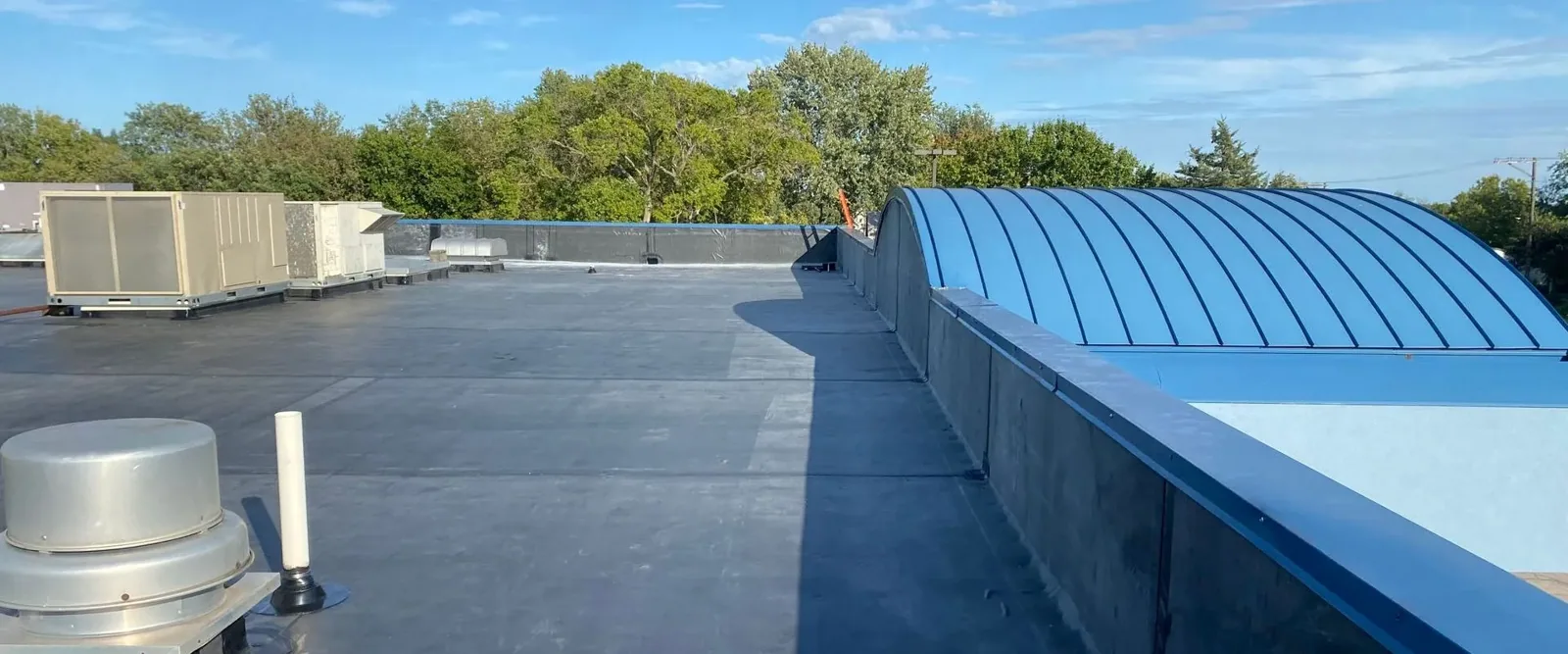
SBS modified bitumen: how it is built and repaired
SBS sheets are asphalt blended with a rubber-like polymer. They stay flexible in the cold and hold up in the heat. A layered roof, such as a built-up roof or a mod-bit roof, usually carries two or more layers: a base sheet and a cap sheet with granules on top.
Sheets go down three ways. They can be torched, which melts the underside to bond it. They can be set in cold adhesive. Or they can be self-adhered, with a peel-off backing. Each method has a place. Torch work needs a fire watch and a clear plan near walls and combustible materials. Cold and self-adhered methods avoid open flame.
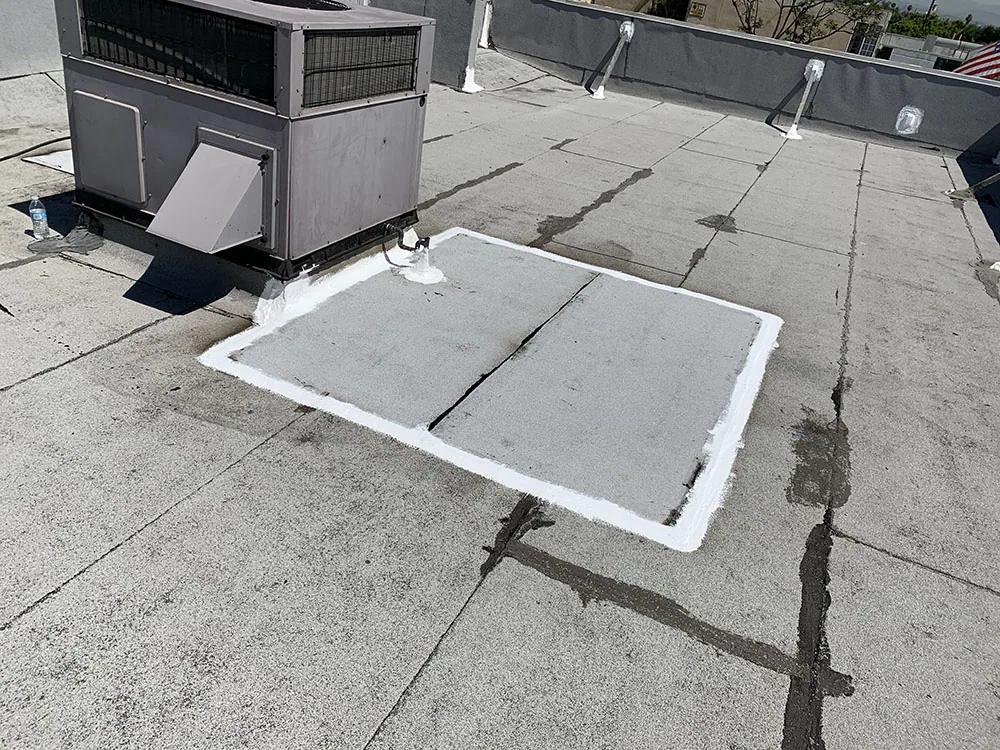
Repairs follow the build. A split is cut out and patched with a matching sheet. A blister is cut, dried and patched. Laps are re-bonded and sealed. The modified bitumen rules are the same whoever made the sheet.
Liquid-applied membranes: for the details a sheet cannot wrap
A liquid-applied membrane is a resin rolled or brushed onto the roof. It cures into a continuous layer. It is used for flashings, small roofs and repairs around odd shapes. Pipe clusters, curb corners and drain edges are typical.
Surface prep decides the result. We clean, prime and often add reinforcing fabric. We apply in coats and measure thickness. Cure depends on temperature and humidity. So we pick dry mornings. We cover fresh resin before afternoon storms.
A liquid detail can also extend a tired roof. Used over sound surfaces, it can seal many small gaps at once. It does not cure a wet roof. Moisture is checked first.
Hail: why thick roofs still need a check
Hail as large as a softball hit central Alabama in April 2003, and Bessemer and Hoover sit in the same metro. Granulated cap sheets resist small hail well. Large hail still knocks granules loose and can fracture the sheet below.
After a storm we look for bare spots, soft spots and cracks at dents. We mark each hit on the roof plan. Hail damage repair begins with that map. You get a count, a photo for each hit and a price. The map also supports the claim. The carrier can test each line.
Keep the record after the repair. Each hit gets a plan number and a photo. Next spring we look at the same spots. If a repaired hit has failed, the pattern points to moisture below. If it holds, the repair is proven. A buyer or lender who reads that file sees a roof that has been watched.
Walls, curbs and drains: where layered roofs leak
Layered roofs fail at details. Base flashings crack. Counterflashing sealant dries. Curb corners open. Drain bowls loosen.
We inspect each one:
- Base flashing: cracks, slumping, open laps.
- Counterflashing: loose metal, dry sealant, mortar joints.
- Curbs: height, corners, fasteners.
- Drains: strainers, clamping rings, sump slope.
Repairs are cut back to sound material and rebuilt in layers. Smearing cement over a crack hides it for a month. Rebuilding it fixes it for years. We price the rebuild and the smear side by side when asked, so the gap is clear. Drains deserve the same care. A strainer packed with granules and leaves holds water on the roof for days after a storm. We clear every sump on each visit and photograph the result, which takes minutes and prevents most of the ponding calls.
Storm season and the calendar
An F5 tornado hit Hueytown and Oak Grove on April 8, 1998, and an EF4 hit the same area on April 27, 2011. Storm risk peaks in spring and returns in November. Gulf tropical systems sometimes bring storm-force winds.
So the plan is simple. Walk the roof in February. Fix flashings and edges before March. Keep spring tear-off in small sections, so no deck sits open overnight. Check again after storms. Owners near Hueytown and in the wider metro can follow the same calendar. Each repair gets a plan number and a photograph.
More on Soprema
Cost: what moves the price on a layered roof
Five things drive the price. Area is first. The second is the number of layers to tear off, since removal and disposal grow with thickness. The third is wet insulation. The fourth is detail work: curbs, drains, walls and edges. The fifth is the method. Torch work needs fire watch and slower pacing. Cold-applied systems cost more in materials and less in risk.
We put each on its own line. A recover over a dry, firm roof avoids tear-off and disposal, and the test decides whether it is available. A roof with many penetrations costs more per area than a clean one. Heat shortens the working day in summer, so large jobs belong in winter or early spring.
Choosing: layered roof or single-ply
Layered roofs cost more per square foot in many cases. They offer redundancy and handle foot traffic. Single-ply roofs install faster and weigh less. Rooftop traffic, drainage and budget decide it.
Asphalt-based systems from GAF and the insulation and membranes from Johns Manville overlap with this family. A roof with many units favors layers. A large clean roof favors a sheet. We write both options on one page, with a price on each side of the choice.
Commercial Roofing Questions
Is torch work safe on an occupied building?
It can be, with a plan. We keep a fire watch, clear combustibles near walls and stop early enough to check the area after the crew leaves. Where risk is high, we use cold-applied or self-adhered sheets instead. The choice depends on the walls, the deck and the tenants. Call for a storm walk and we will recommend a method.
What is a liquid-applied membrane good for?
Details that a sheet cannot wrap: pipe clusters, curb corners, drain edges and small odd-shaped roofs. It cures into a continuous layer. Surface prep, coat thickness and weather decide success. It does not fix a roof with wet insulation, so we check moisture first.
How does hail damage a granulated roof?
It knocks granules loose and can fracture the sheet below. The damage may be invisible from the ground. We walk the roof after a storm, mark each hit and press at dents. You get a count, photos and a price. That map supports a claim as well.
Is smearing cement over a cracked flashing a real repair?
It is a short-term seal at best. Cement dries and cracks again. A real repair cuts back to sound material and rebuilds the flashing in layers. It costs more now and less over five years. We can price both so the difference is on paper.
When should I schedule layered-roof work?
Winter to early spring is good, before the March storm peak. Dry summer weeks also work, though heat shortens the day. Fall before November storms is a third window. Keep tear-off sections small in spring.
Can a layered roof be recovered?
Sometimes. The insulation must be dry, and the deck must carry the weight. Code limits the number of layers. We test with scans and core cuts, then price a recover and a tear-off side by side.
Related Roofing Work
Built-Up Roofing
Modified Bitumen Roofing

Hail Damage Roof Repair
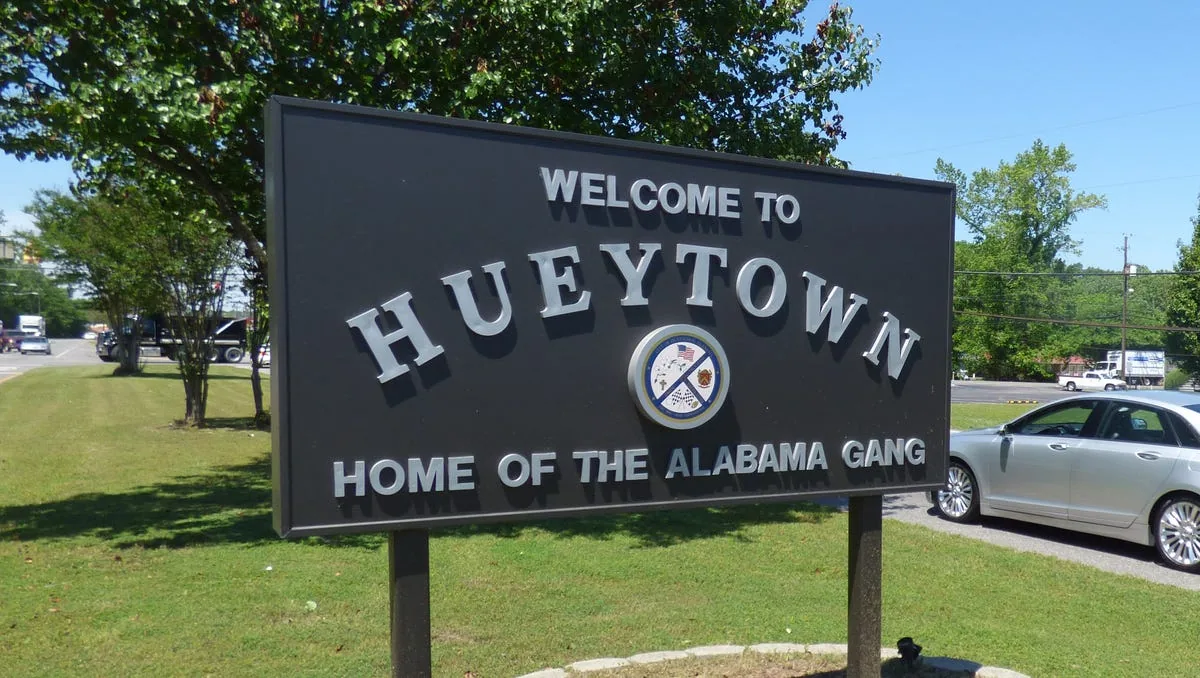
Hueytown
Emergency Leak Calls
Call for a storm walk or a budget review
We will check the walls, curbs and drains first, mark every hit and defect and put a price on each. The visit settles which flashings get rebuilt and in which month.