
Johns Manville
Johns Manville Roofing Systems in Hoover, AL
Johns Manville is best known to roof owners for two things. It makes roof insulation, and it makes commercial membranes. The membranes include built-up, modified bitumen and single-ply types. So a JM label on a Hoover building can mean a sheet, a layered roof or just the boards under someone else's membrane. Each case changes the repair. Insulation is also the largest hidden cost on most roofs. We start by learning what is under the surface, then we price the fix.
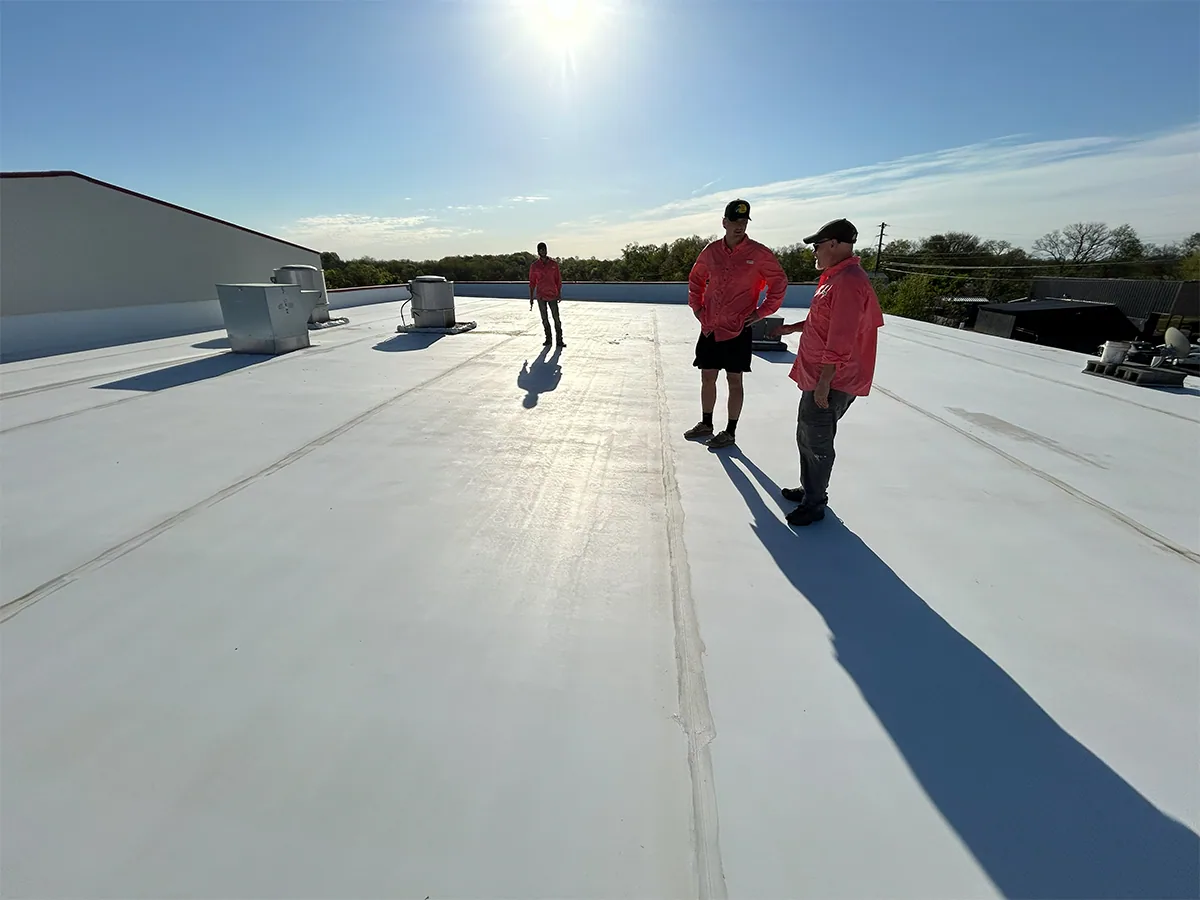
Insulation: the line that moves the budget
Rigid insulation boards sit between the deck and the membrane. They control heat flow. They also take the blame when a roof leaks, since wet boards lose their value and add weight.
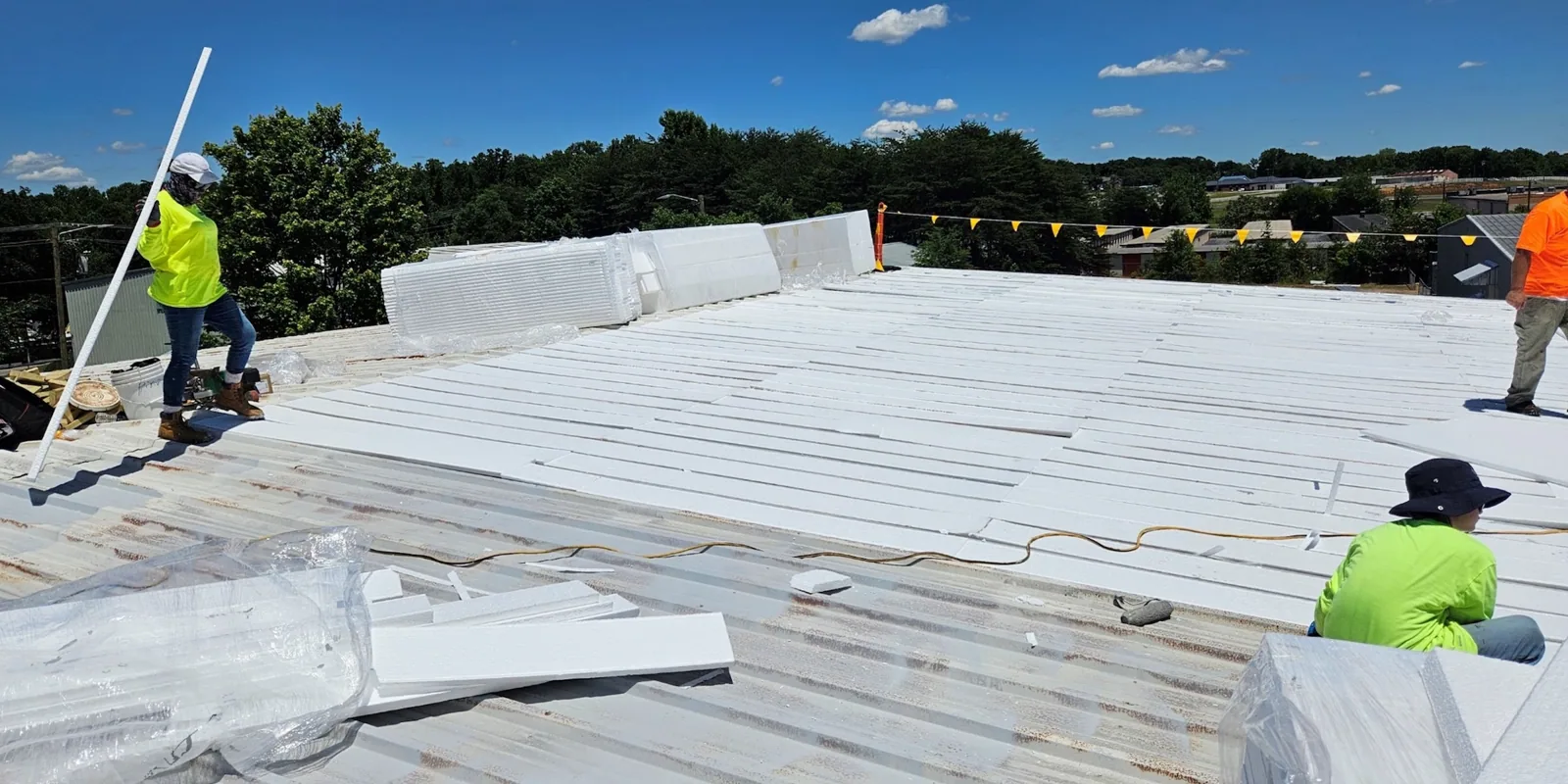
Polyisocyanurate boards are common on low-slope commercial roofs. They are light, rigid and carry a high insulating value per inch. Other boards are used where fire or compressive strength matters. A cover board over the insulation spreads foot loads and resists punctures.
We record board type, thickness and condition on the first walk. Then we core-cut the suspect areas. A wet section shows as dark, heavy, crumbly board. That section comes out. The rest can stay if it is dry and firm. The core cuts draw the line between repair and replacement.
Code: what a new roof must add
The base building code in Alabama is the 2021 IBC, and portions of the 2024 edition were folded in during March 2025. For commercial energy it applies ASHRAE 90.1-2013 across the whole state. A full replacement can require more insulation than your old roof carries.
That is a cost line. It is better to know it before the bid. We check the local rule, then price insulation as its own item. You see what the code requires and what is optional. A cover board and insulation package can be priced two ways, at the minimum and at a higher value. The gap pays back in cooling cost over the life of the roof. Hot, humid summers make that real, and cooling systems run hard through all of them. We show the extra first cost and the yearly saving side by side, so the choice is yours and the math is visible.
Layered roofs: built-up and modified bitumen
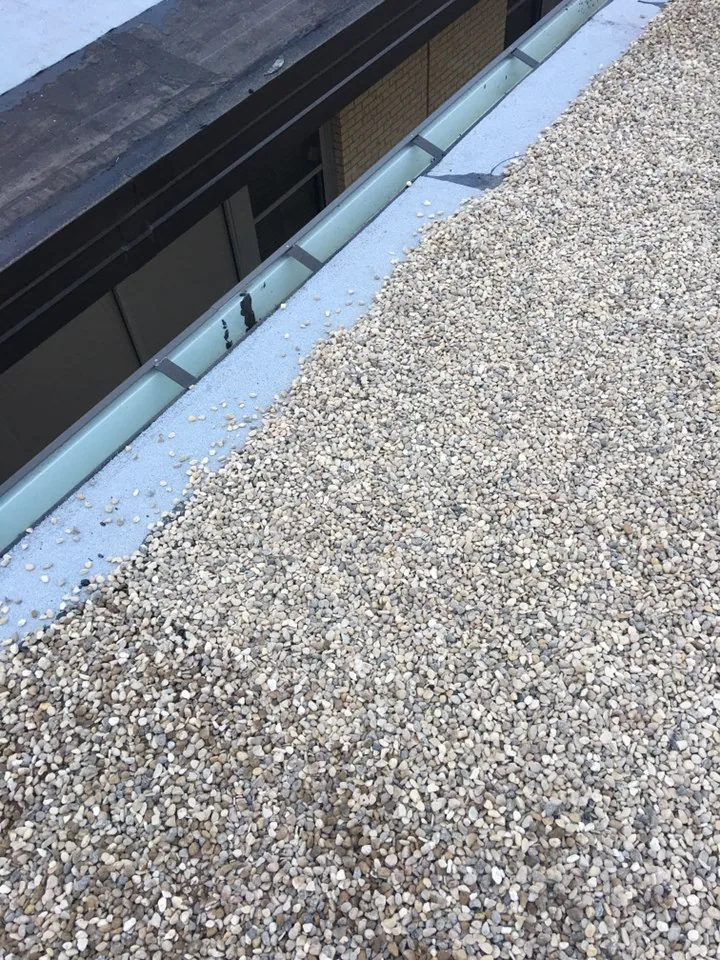
Built-up roofs stack felts in asphalt. Modified bitumen adds polymer sheets in the top layers. They give a thick, redundant surface. Foot traffic and small hail do less harm. Their weak points are laps, flashings and blisters.
Repairs follow the build-up. A blister is cut, dried and patched. A cracked flashing is cut back and rebuilt in layers. Surface granules are restored where they have worn off. On a built-up roof, we avoid heat near fresh sealant, and we plan fire watch for torch work. On an older layered roof, a recover is worth pricing, and it works only if the insulation is dry. A test decides it, not an opinion.
Storm season: timing the work
Spring is storm season in Hoover. Severe weather crests in March and April, then returns in November. April 25, 2003 brought hail as big as softballs to central Alabama. Roofs that are already tired lose the most.
The timing advice is plain. Do big insulation work in winter, before March. Do small repairs in any dry week. Keep sections small in spring so a storm never finds an open deck. If a storm does hit, a storm damage walk comes first, then a priced list. We stage tarps and sealing materials on every open section.
Insulation gets special care in storm timing. Wet board is heavy and slow to replace in the rain. So we cut out only what we can close the same day. The new board is covered by the end of the shift. The deck stays dry, and the schedule stays honest.
Cost drivers: what moves the price
Five things set the price of an insulation and membrane job. Area comes first. Then comes the amount of wet insulation to remove. The deck condition under it is third, and penetrations and edge metal are fourth. Access closes the list. We put each on its own line.
- Roof area and number of sections.
- Wet insulation found by scan and core cut.
- Deck repair, if rust or rot shows after tear-off.
- Curbs, pipes, drains and edge length.
- Lift or crane needs, and tenant hours.
Deck repair is the unknown. We carry it as a separate allowance, and we tell you when it is used. Any unused allowance stays with you. We write a price beside each line, so you can approve in steps. It also makes bids easy to compare.
More on Johns Manville
Where it shows: office parks and distribution
An office roof in Riverchase with rooftop units has many curbs. Insulation gets wet around the curbs first. A retail roof on Highway 31 or US 280 with long parapet runs puts the load on its flashings. Bessemer, where Amazon announced an 800,000 square foot fulfillment center, is where distribution buildings enter the picture, and any such building has long runs of seam and deck. Big roofs reward a yearly check.
For owners of several buildings, we rank roofs by leaks, then by wet insulation, then by age. One page lists the order. The top roof gets the first budget dollars. The rest wait their turn. An owner planning a replacement can price Soprema and Duro-Last systems beside this one, one building at a time.
Commercial Roofing Questions
How do I know if my insulation is wet?
You usually cannot tell from the surface. Infrared scans show temperature patterns, and a core cut confirms water. Wet board is dark, heavy and crumbly. We scan first, then cut cores where the pattern shows. The map tells you how much insulation to replace, and that number drives the price. Call us out for a walk and we will scan the boards first.
Does the energy code force extra insulation on a replacement?
It can. Alabama's commercial standard is ASHRAE 90.1-2013, and a full replacement may need more insulation than your old roof has. We check the local rule and list insulation as a separate line. You can see the code minimum, and a higher option with the payback in lower cooling cost.
What is a cover board and do I need one?
A cover board is a firm layer over the insulation. It spreads foot loads, resists punctures and gives the membrane a flat base. Roofs with heavy rooftop traffic or hail exposure benefit most. It adds a small material cost and often saves repair costs later.
Can I recover over old layers?
Sometimes. The insulation under the old membrane must be dry and firm, and the deck must carry the weight. Local code limits how many layers a roof can carry. We test first, then quote both a recover and a tear-off, so the price gap is visible.
When is the best month to schedule a replacement?
Late winter is often the best slot, ahead of the March storm peak. Dry stretches in summer also work, though heat shortens the working day. Fall before November's second storm season is a third window. We recommend starting early in the budget year, because spring delays push work into storm season.
Should I replace wet insulation or dry it in place?
Replace it. Drying in place is slow and rarely reaches every board. Wet insulation loses insulating value, adds weight and rusts steel decks. We cut out the wet area, check the deck and install new board before any new membrane goes on.
Related Roofing Work
Roof Insulation and Cover Board
Built-Up Roofing
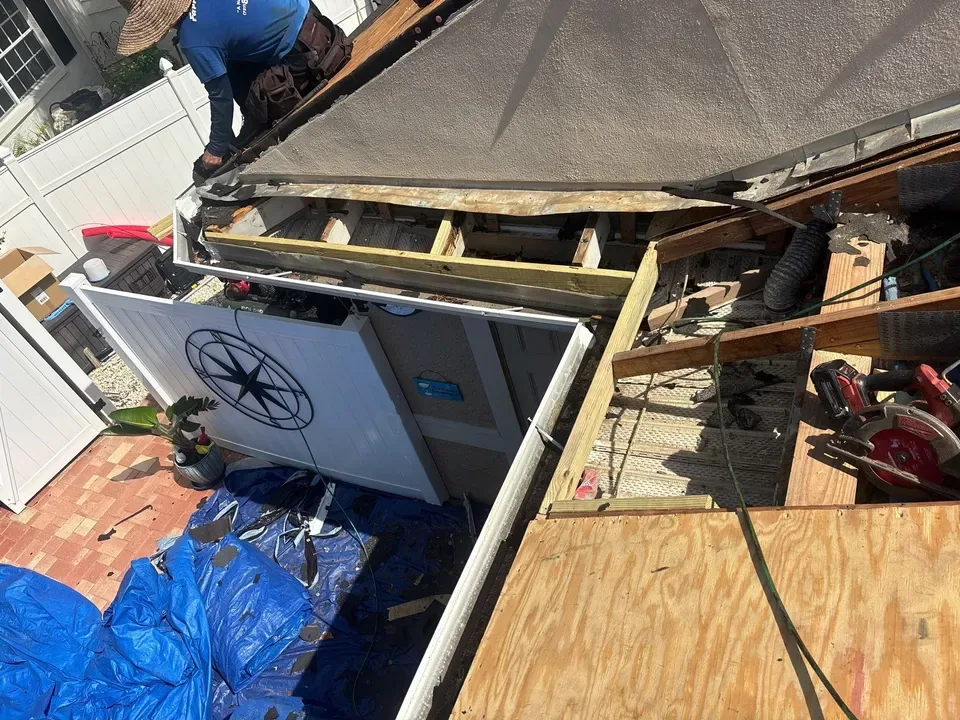
Storm Damage Roof Repair

Riverchase
Emergency Leak Calls
Call for a storm walk or a budget review
We will scan the insulation, cut cores where the map shows heat, and give you a priced list. The visit pins down how much insulation must come out and which budget year it belongs in.