Roof Coating Restoration
Roof Coating Restoration in Hoover, AL
A coating job has a deadline, and the deadline is the first hard storm. Put a coating on in the dry weeks of late summer or fall and the roof goes into the next spring with a fresh surface. Put it off and the same money buys a patch after the hail. In Hoover, AL, that is the timing question. Coat before storm season, not during it.
A coating is a liquid-applied layer over a roof that is still sound. It seals seams, reflects heat and adds years. It is not a fix for wet insulation or a failed deck. The first step is to find out which kind of roof you own. A moisture scan and a few core cuts answer that in a day.
The issue: heat, humidity and a tired surface
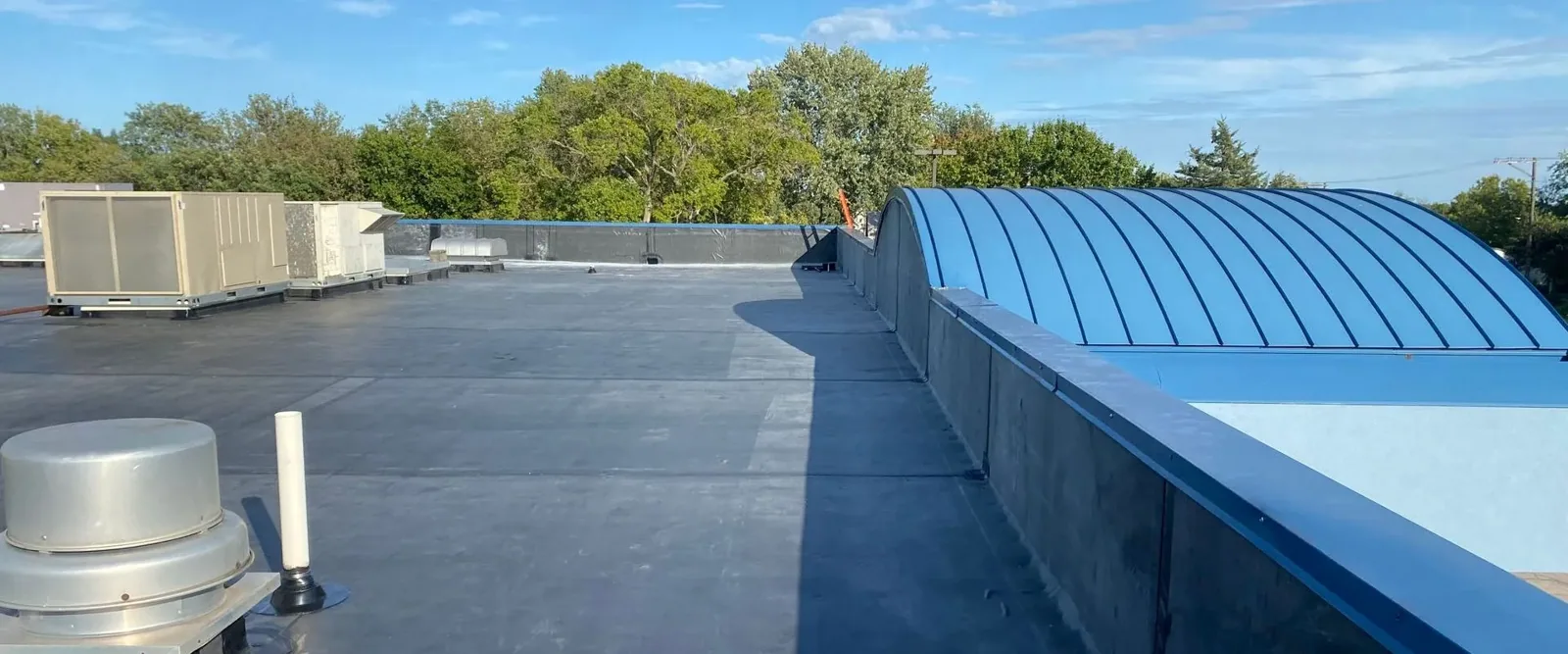
Summers in the Birmingham area bring about 65 days at 90 degrees or higher. Average humidity runs near 70 percent. Roof membranes cook in that weather. Seams stretch and shrink every day. Surface granules and top layers chalk away. Sealant dries and splits at laps.
A coating fights all of that. White or light-colored coatings reflect sunlight and cut surface temperature. A continuous coating, once cured, bridges small cracks and gives seams a second skin. The result is a roof that runs cooler and sheds water better. For an owner, that means fewer service calls and a longer gap before replacement.
It works only on the right roof. A coating on a sound roof extends life. A coating on a saturated roof traps water and fails in a year.
Screening: who qualifies
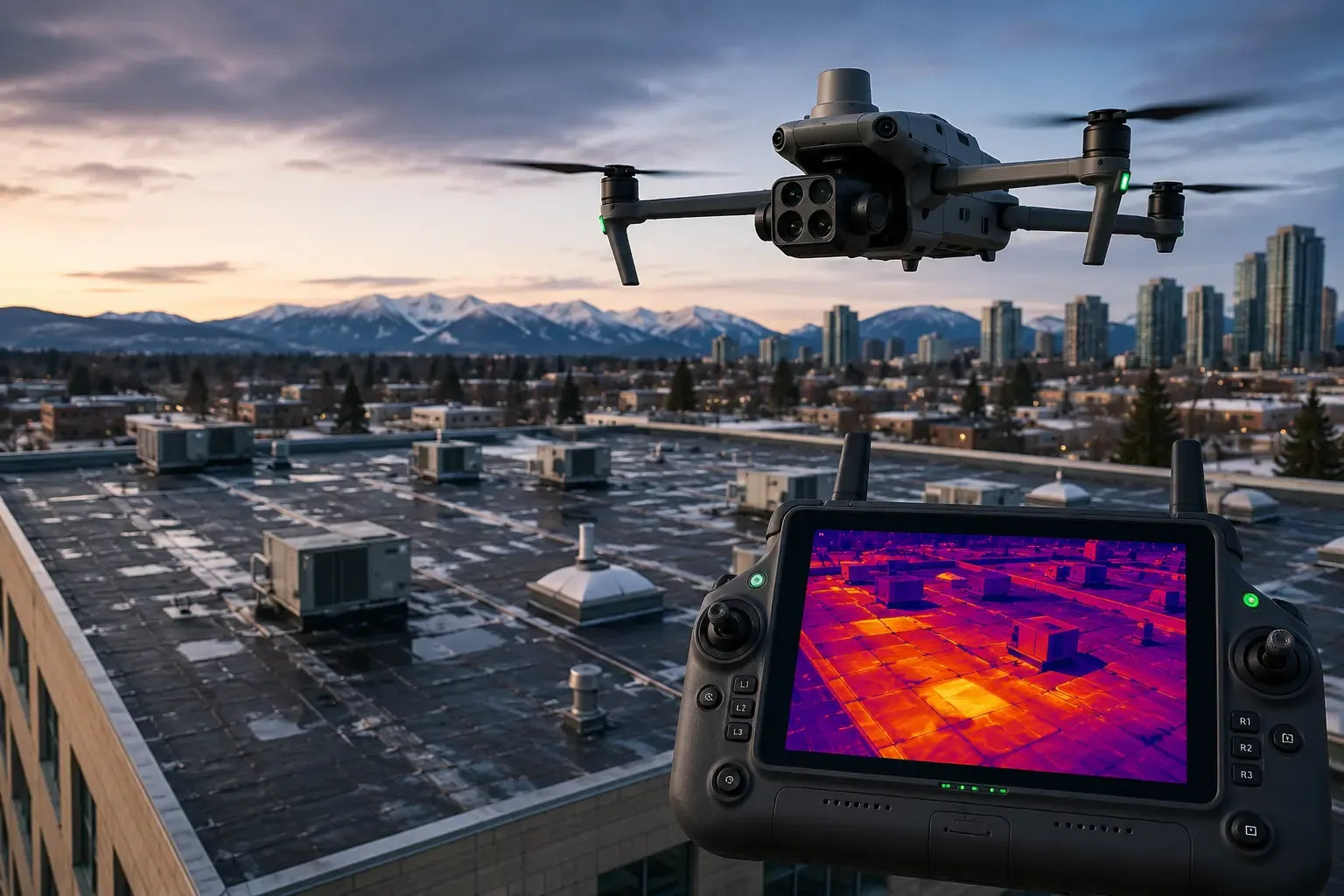
We screen in three steps. First, a walk to find soft spots, open seams, blisters and ponding lines. Second, an infrared moisture survey at dusk, when wet insulation shows warmer than dry. Third, core cuts at the doubtful spots, so we can see what is under the surface.
A roof qualifies when the membrane is intact, the insulation is mostly dry and the deck is firm. Roofs with large wet areas do not qualify. For them, a recover or a replacement costs less over time than a coating that fails.
Hail matters too. On April 25, 2003, central Alabama took stones as big as softballs. Hail bruises can hide under an old surface. We check for them first. If bruising is found, the hail damage is repaired before any coating goes on.
Silicone or acrylic: pick by drainage
Two coatings do most of the work. Silicone handles standing water. It is the better pick when a roof holds a shallow pond after rain. Acrylic is water-based and bright. It suits roofs that drain well and lets owners add a second coat later.
Rain in the Birmingham area adds up to about 56.6 inches a year, and ponding is common on flat roofs. A ponding line is the first thing we mark. If it comes from a clogged drain, we fix the drain. If it comes from a low spot, we plan a tapered build-up or choose silicone. Never coat over a drainage problem. It hides the cause and shortens the coating.
When to do it: the calendar
Coatings need dry, warm days and a clean surface. In central Alabama, the best windows are late spring before the heat peaks and early fall after it. Summer works if mornings are dry. Winter is the weakest season, because cold and damp slow the cure.
Storm season peaks in March and April, with a second round in November. Plan the job so it finishes before March. Start the screening in the fall, get the scope approved by January and schedule the work for the first dry stretch. If the budget year starts in July, the job slides to August or September. Either way, the cure should finish well before the next storm window.
A typical coating job runs by section. We clean, repair, prime and coat one area, then move to the next. Tenants stay in place. Rooftop units are tied in and masked. Each section is checked with a thickness gauge before we leave it.
What it costs: the repair-or-replace line
Cost follows roof area, repair needs, coating type and thickness, and access. A coating usually costs less than a tear-off. It also avoids disposal fees and downtime. That is why owners with sound roofs choose it.
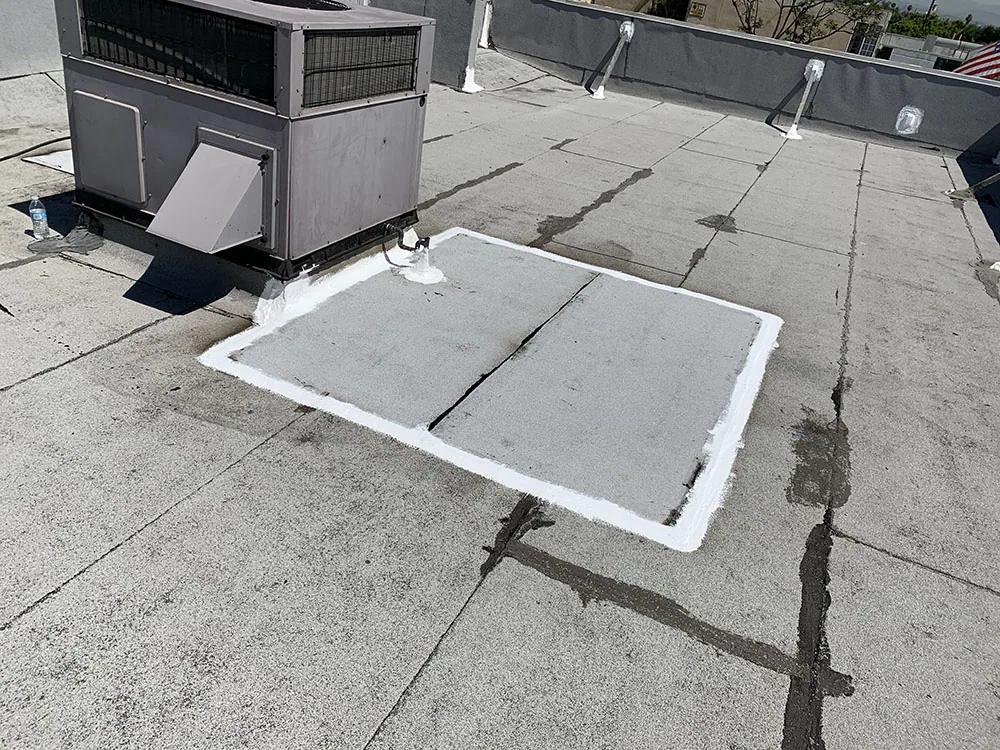
The price rises with the prep work. Open seams, bad flashings and rusted metal all need repair before the coat. We list them as separate lines, so the owner can see what is prep and what is coating.
Compare three paths in writing: repair, coat or replace. Add the likely years each buys. The lowest cost per year wins, as long as the roof qualifies. We give that comparison with the scope. If a roof is near the end, we say so and show the replacement number beside it. Warranty terms depend on the maker, and a coating may be covered only when the roof and the prep meet them.
More on Roof Coating Restoration
Code and energy: what the state requires
The 2021 International Building Code governs in Alabama, with parts of the 2024 edition folded in, and ASHRAE 90.1-2013 is the commercial energy standard everywhere in the state. A coating is a surface treatment and not a replacement, so it does not usually trigger full energy upgrades. A larger scope might. We check with the local building office before the proposal, and we put the answer in writing.
A reflective coating also supports a cool roof goal. Lower surface temperature cuts heat gain through the roof in summer. For an air-conditioned building, that can trim cooling load.
Local: where coatings fit best
Low-slope roofs with many penetrations suit a coating when the membrane is sound, because the coat seals around each curb and pipe. Offices and retail buildings along US 31 with that profile are worth screening first. In Riverchase, the Galleria complex opened in 1986, and Riverchase Office Park holds many large corporate tenants. Any roof there with tenants below is better served by a planned coat than by an emergency patch.
Further along SR 150, Patton Creek is a shopping area, and the Highway 150 corridor links Hoover with Bessemer. Retail roofs with grease from restaurant vents need extra cleaning before a coat. We note the grease zones in the scope.
Commercial Roofing Questions
Can a coating go over a roof that already leaks?
Sometimes. A leak from one open seam or a bad flashing is repaired, then coated. A leak from wet insulation across a wide area is not a coating job. Scan first. If moisture covers a large share of the roof, plan a recover or replacement. Our advice: do not coat until the scan is in hand.
How long does a roof coating last in Alabama heat?
Prep, thickness and drainage set the life. Heat, UV and ponding all shorten it. A well-prepped roof with the right thickness and a drained surface gets the most. We give a range with the scope and recommend a yearly check so small damage is patched early.
Is silicone or acrylic better for Hoover?
Pick by drainage. Silicone suits roofs with standing water. Pick acrylic for roofs that drain well and where a lighter, water-based product is fine. If you cannot tell, we mark the ponding lines on a plan and recommend one.
Will tenants have to leave during the work?
No. We work in sections and keep roof access closed only where we are working. Noisy prep is scheduled outside peak hours. Tenants get notice of the dates and any odor from the coating before we start.
Does a coating void my existing warranty?
It can. Some warranties limit what can be applied over the membrane. Send us the document before we price the job. We will mark any clause that affects a coating and ask the maker for approval when it is needed.
Related Roofing Work
Infrared Moisture Survey
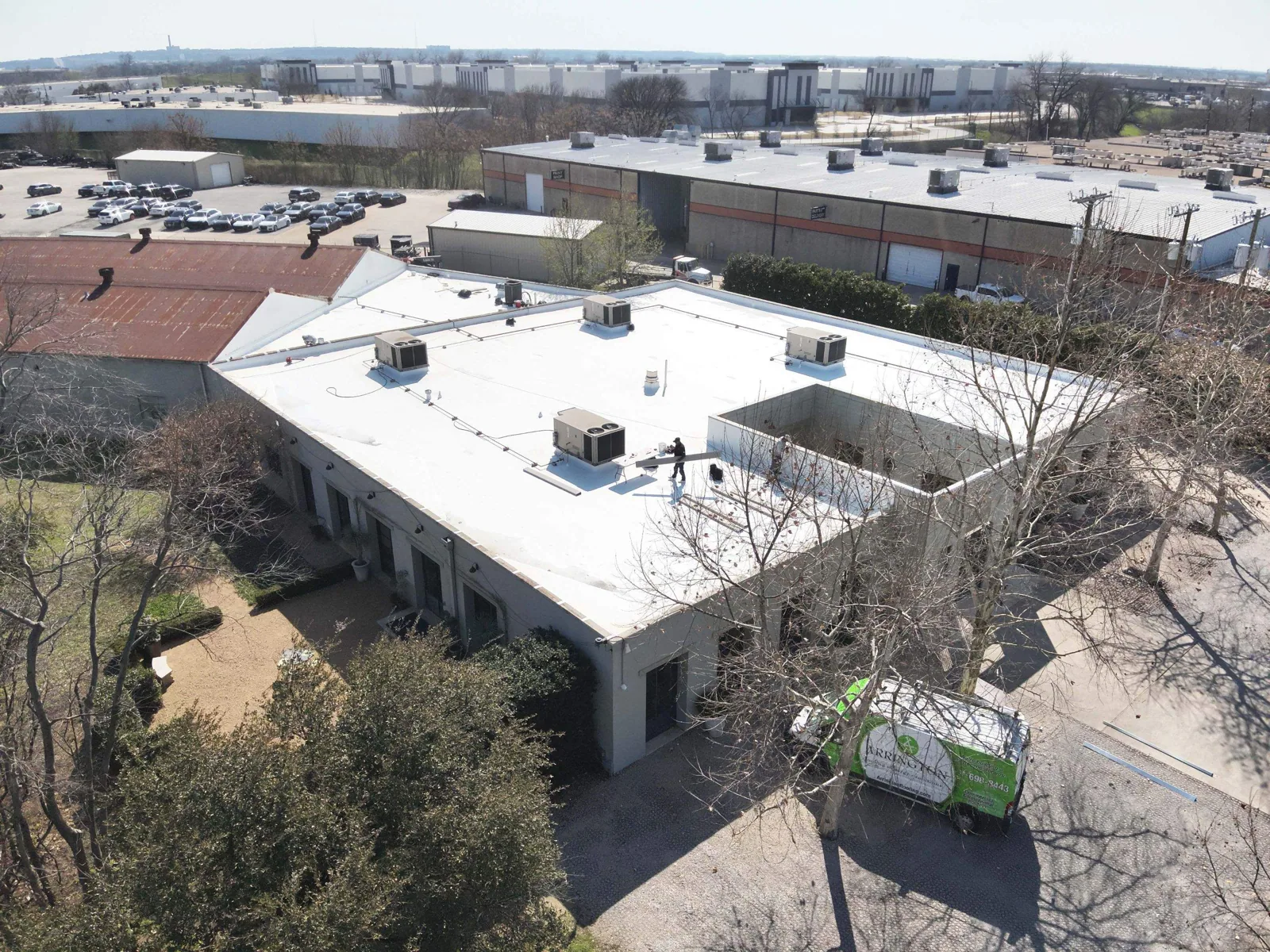
Roof Recover and Overlay
Hail Damage Roof Repair
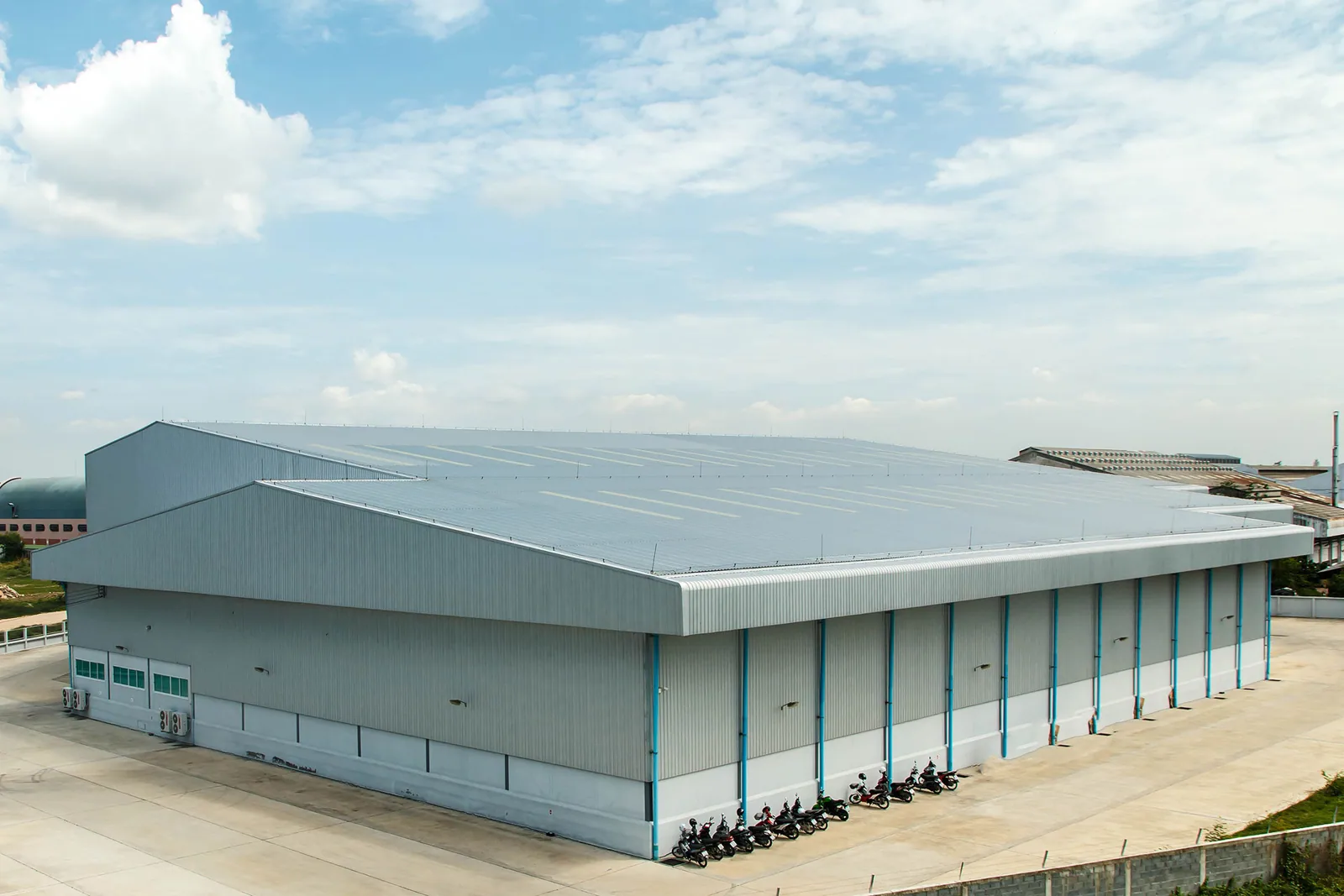
Silicone Roof Coatings
Emergency Leak Calls
Call for a storm walk or budget review
Call and we will walk the roof, run the moisture scan and mark which sections can take a coat. The visit pins down two numbers: the coating price and the repair-or-replace line, both in writing.