
Fultondale
Commercial Roofing in Fultondale, AL
Retail in Fultondale, AL has grown up around the I-65 and Walkers Chapel Road exit. I-65 and US 31 are the city's two major north-south highways. Rail lines run along the eastern edge from Boyles Yard in Tarrant. Birmingham's airport is nearby. Roofs here include shopping center roofs, service buildings and rail-side buildings, and they all face the same Alabama weather. We repair and replace them, and we start with a storm walk.
Fultondale took a hard hit on January 25, 2021. That day an EF3 tornado caused significant structural damage to homes, vehicles and businesses in the city. For roofs that stood through it, that date is a checkpoint. Roof work starts with questions. How old is the roof? Where does it leak? Who owns it? Who pays? We answer the first three on the walk. The fourth depends on your lease, and we help you read what the walk shows.
The January 2021 tornado: what to check
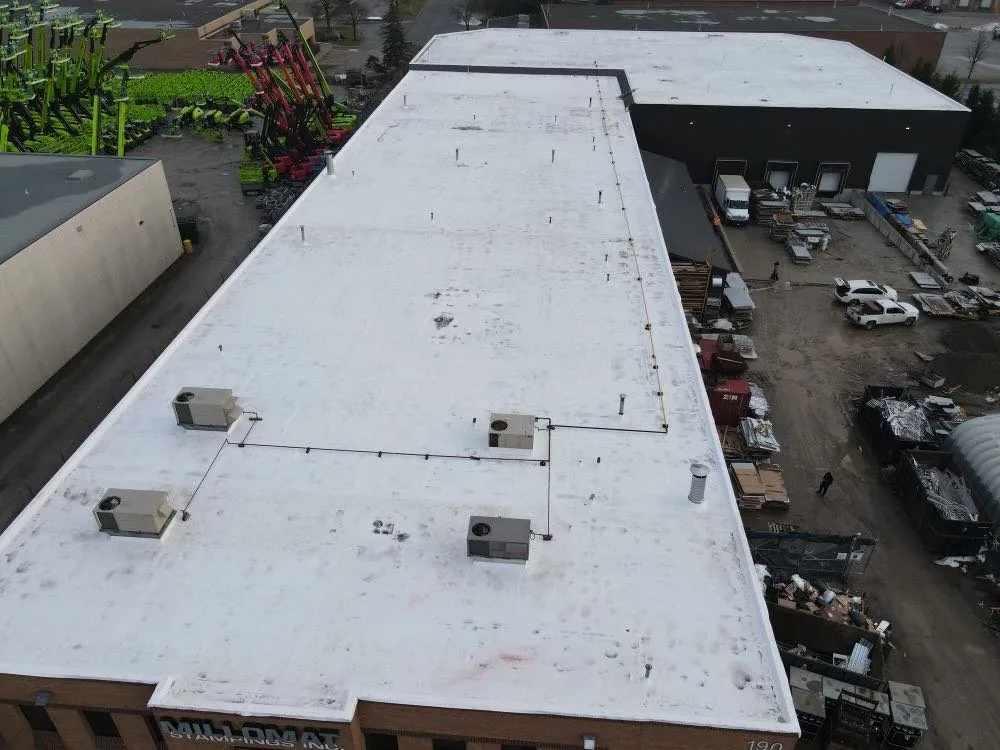
If your building stood through the January 25, 2021 EF3 tornado, check the roof again. Wind can lift a membrane without tearing it. It can loosen fasteners and bend edge metal. A roof that looked fine after the storm may leak a year later.
Here is what we look for. Lifted laps. Cracked or dented flashing. Rooftop units that moved on their curbs. Fastener heads standing proud. Debris dents. Then we check inside for stains on the ceiling grid.
We photograph each finding and mark it on a roof sketch. The result is a short list sorted three ways: fix now, watch, replace. If your lease says the landlord owns the roof, send the landlord the list. If you own it, put the findings in your budget year. Either way, a dated record is worth having when the next storm comes. We also check what blew onto the roof. Debris can leave a puncture that is hard to see from the ground. A small hole in a membrane is a leak waiting for the next rain.
Retail corridors: many tenants, one roof
Retail development in Fultondale has focused near the I-65 and Walkers Chapel Road exit. Colonial Promenade Fultondale, a shopping center, had its first portion open in fall 2007. A center that has been open that long has been through many seasons. Sealants dry out. Seams open. Rooftop units shift.
Shared roofs bring shared problems. A leak over one tenant can start at another. Who pays? Check the lease. Then call us. Before any repair gets a price, we follow the water back to where it entered.
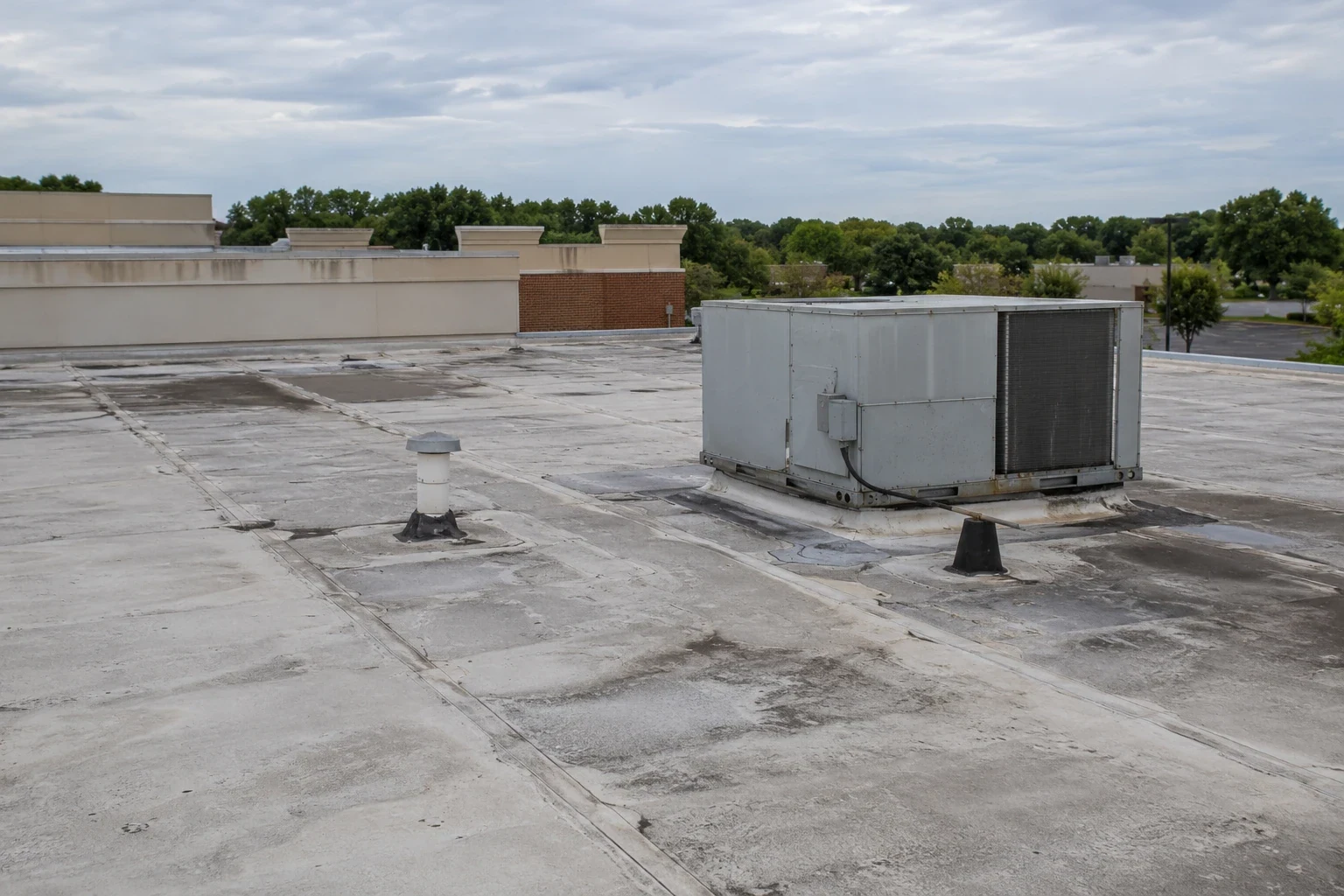
Tie-ins fail first. It is the joint where a roof runs into a wall, a curb or a second roof. We check every one on the first walk. Rooftop units are the next thing. Each unit sits on a curb. Each curb has flashing. Flashing cracks with heat. We check the seal and the straps. If a unit was swapped for a bigger one, we check the curb height too. A bad curb is a leak you pay for twice.
Rail-side buildings: vibration, dust and drains
Rail lines run along the city's eastern edge, and I-65 and US 31 run through town. Roofs near rail and highway can collect grit and soot. Grit packs into scuppers, a packed scupper keeps water on the roof, and standing water wears the membrane down.
We clear the drains and photograph them before and after. After rain we locate the edge of each pool and mark it on the sketch. If water sits more than a day or two, it needs more than a sweep. It may need a tapered fix or an added drain.
For distribution or service buildings, we time the work to dock traffic, with materials parked clear of the trucks. We work in sections so the building stays dry each night. If the building also has a loading dock, check the dock canopy. Canopies tie into the wall, and the tie-in cracks. Water runs behind the flashing and shows up inside the dock door. It is a quick repair if you catch it early. It is a wall repair if you do not.
Storm season: Dixie Alley in March, April and November
Dixie Alley is the frame for Fultondale's weather. Tornadoes came in 1977 and 1998 (both F5) and on April 27, 2011 (EF4), and hail the size of softballs landed across central Alabama on April 25, 2003, so hail belongs in every roof plan here. Thunderstorms are common each spring and again from November into early December.
Plan around the calendar: hail check in late winter, drain clearing in fall. Storm claims pile up in March, April and November, and contractors fill their books. If a storm passes and it is safe, walk out that day. Check the edges and the drains, then the ceiling inside. Fresh stains trace more easily than old ones. If you find water, call, and we cover and dry the space before quoting the repair.
Budget year: what a repair costs and what waits
A leak caught in March costs less than the same leak in May. Insulation that takes on water is where the money goes, because once it does, a patch will not hold and the talk turns to replacement.
On a replacement, insulation depth is checked against ASHRAE/IES 90.1-2013 and the code edition in force, and the result can change the price. You hear about that before you sign.
Birmingham-area summers add wear: roughly 65 days a year reach 90 degrees or hotter. Budget for it. Get the repair-or-replace line on paper, with each side priced, then choose the side that suits the budget year. Waiting is a choice with a cost, and we write that cost down.
More on Fultondale
What to bring to the first call
Before the first call, pull the address, the roof age if known and any invoices. Tell us where it leaks. Tell us who manages the common areas. We tell you what the walk will pin down: ponding lines, tie-ins and your repair-or-replace line.
The work here runs from shopping center roofing to distribution center roofing and tornado damage roof repair. The same approach covers Gardendale to the north and Tarrant, where Boyles Yard sits. After a storm, claim documentation gets the photos and notes ready for your carrier.
Commercial Roofing Questions
Should I recheck a roof that survived the 2021 tornado?
Yes. We recommend a full walk of any roof that stood through the January 25, 2021 EF3 tornado. Wind can loosen fasteners and lift laps without tearing the membrane, and a leak may not appear for a year. We photograph what we find and give you a written list.
Who pays when a leak crosses tenant lines?
Check the lease first. Then get the source traced. We find where water enters, which is often not where it shows. That gives you what you need to assign the repair to the right party.
How often should drains be cleared near rail lines?
Twice a year at minimum, once in fall and once in late winter. Grit from rail and highway traffic builds up fast. We also suggest a check after any big storm.
Can the building stay open during a reroof?
In most cases, yes. We work in sections and dry in each one every night. We keep entrances clear and stage materials away from customers and trucks.
What does a repair-or-replace line mean?
It marks where repair stops paying off. On one side, patches and local fixes. On the other, wet insulation and repeat leaks. We draw it on the roof and price both sides.
Related Roofing Work
Shopping Center Roofing
Distribution Center Roofing
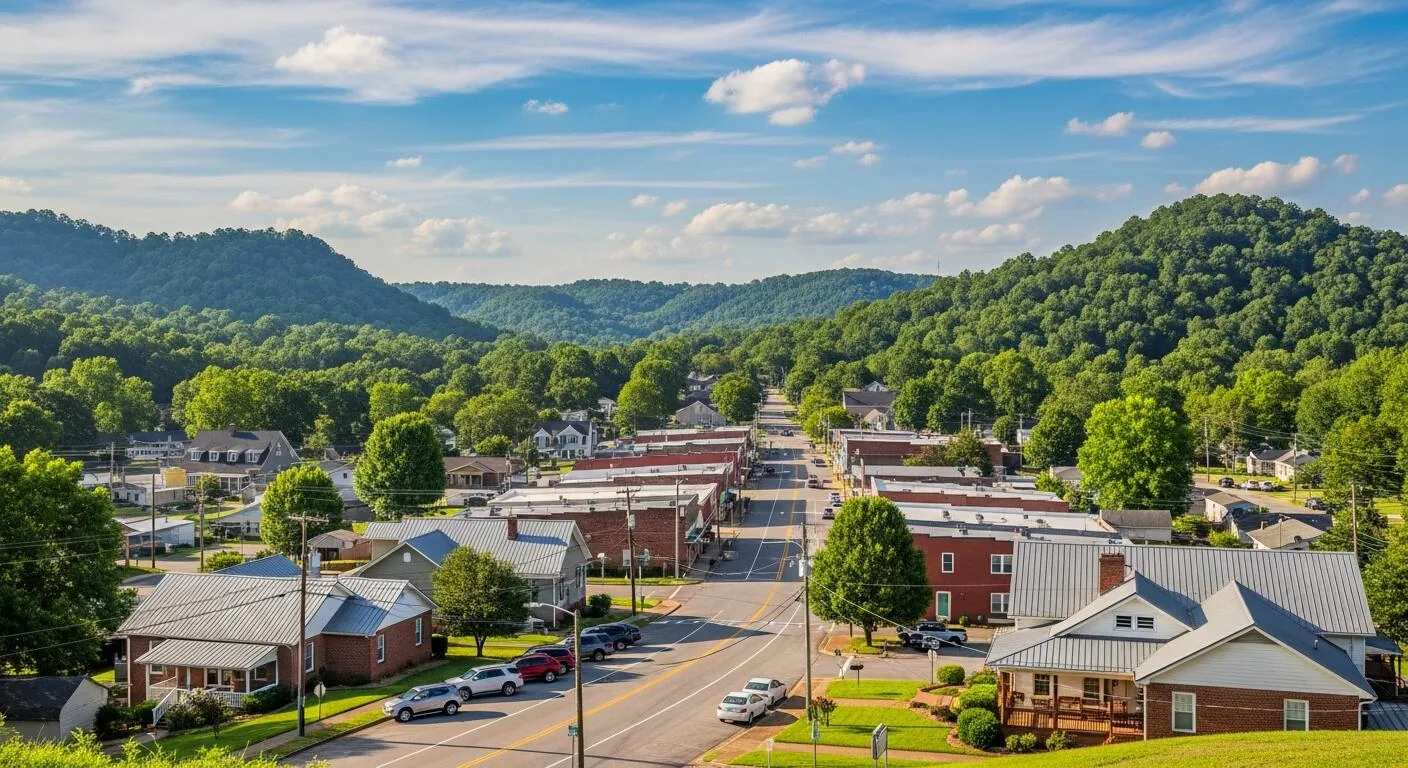
Tornado Damage Roof Repair
Gardendale
Emergency Leak Calls
Call for a storm walk or budget review
Call before spring storm season or before your budget year closes. The walk pins down ponding lines, tie-ins and your repair-or-replace line, in writing, with a price on each side.