
Roof Insulation and Cover Board
Roof Insulation and Cover Board in Hoover, AL
Insulation is the layer of a roof that stays hidden and still takes the bill. It sets how much energy the building loses, it sets the slope water follows to the drain and it soaks up the damage when water gets in. A budget year that skips the insulation check can end with a replacement it did not plan for. In Hoover, AL, a core sample taken in winter is one of the best-spent hours of a roofing plan.
One small plug of roof tells a lot. It shows the layers, the thickness, whether they are dry and what holds them to the deck. That is the first thing we take before pricing a recover or a replacement. We cut it, photograph it, measure each layer and patch the hole the same day with a sealed, tested repair, so the core itself does not become a leak.
The boards: what each one does
Three board families cover most commercial roofs. Polyisocyanurate gives a high insulating value for its thickness and is common under single-ply membranes. Extruded and expanded polystyrene offer lower cost or moisture tolerance in some assemblies. Mineral wool resists fire and compression and sits under heavy systems or at specific details.
Each board has a facer, a compressive strength and a list of approved adhesives. The membrane maker's rules decide which combinations are allowed. A board is picked for its job. Cost differs by type, and the cheapest board is not the cheapest roof if it fails under traffic. Foot traffic needs strength. A thin build-up needs the most value per inch. A fire-rated assembly needs the right listing. The note states each layer's job, so the owner sees what the money buys. It also lists what the maker requires, such as the fastener pattern and the adhesive, so the crew and the owner work from the same sheet.
Tapered systems: slope on a flat deck
Tapered insulation is cut in wedges, so a flat deck drains toward its outlets. It adds slope without touching the structure. The taper plan shows each wedge, each saddle and each cricket, laid out from the drain locations. A flat sheet of insulation does not fix a low spot. It covers it.
Where the roof ponds, the taper moves water toward drains and scuppers that are sound and set low enough. The total thickness sets parapet and curb flashing heights. If a taper lifts the roof past the old flashing, new flashing is needed, and that line appears in the price.
Cover board: the hard layer under the membrane
A cover board is a thin, dense panel between the insulation and the membrane. It protects softer insulation from foot traffic, fastener pressure and hail. It gives adhesive a better surface. It can improve fire and wind performance. Gypsum, fiber and high-density foam products are common.
Hail is the Alabama reason. A softball-size storm on April 25, 2003 is the extreme, and 29 hail days above 0.75 inch that year show the routine. A membrane over soft insulation takes the full blow. A cover board spreads it. If a roof is recovered or replaced, the board is a small cost beside a hail claim.
It adds a layer to install and a cost per square. The scope shows where it is used and where it is not. Under rooftop units and along service paths it earns its keep first. Over a quiet field with sound old board, it may be dropped.
Wet insulation: what it costs to leave in
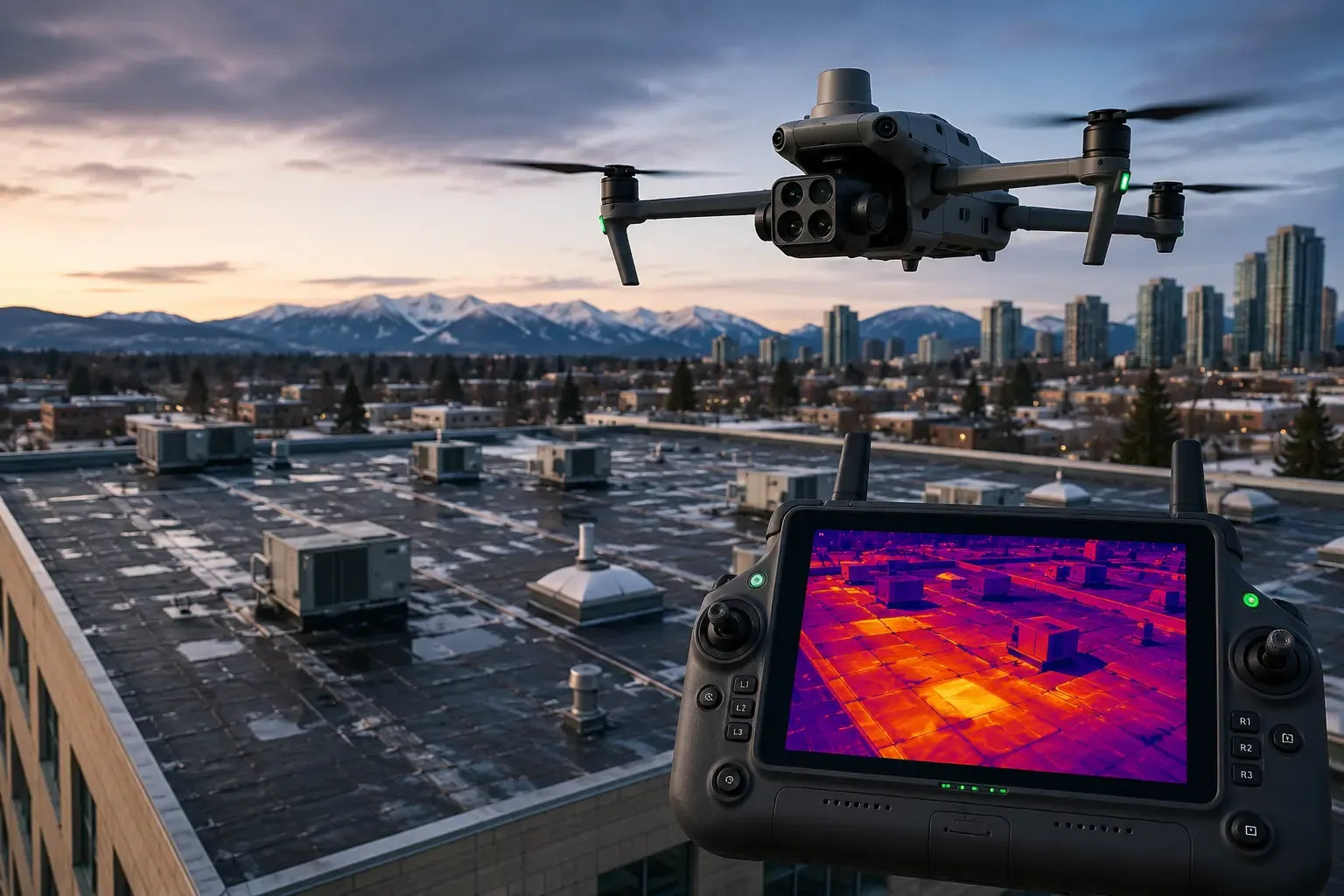
Wet insulation loses value and feeds membrane failure. It is found by infrared moisture survey, meters and cores. The survey draws wet areas on a plan. Cores confirm depth and layers. Scans work best at dusk after a sunny day, when wet insulation holds heat longer than dry.
The rule is simple. Wet material comes out. Dry material under it can stay if it meets the energy need. Mark it, label it and photograph it, so the record shows why a section was kept. A recover over wet insulation traps the water and shows up as blisters and soft spots. Humidity near 70 percent and roughly 57 inches of annual rain around Birmingham make the risk real. The cut-out follows the wet area, and the price is set section by section.
Energy code: what the state requires
For commercial buildings Alabama applies ASHRAE 90.1-2013, mandatory across the state. Since October 1, 2024, the state Licensing Board for General Contractors holds adoption authority. Permits also reference the 2021 International Building Code, in effect since July 1, 2022. A full replacement brings the roof up to the energy requirement in force at permit. A recover may need added insulation or only a cover board, depending on the scope. We confirm with the local building office and write the required thickness, the proposed thickness and the reason for any difference.
More on Roof Insulation and Cover Board
What it costs and when to do it
Insulation cost follows thickness, board type, roof area and the deck below. Tapered systems cost more than flat stock because each piece is cut and numbered. Attachment method affects labor and wind rating. Hoisting, staging and disposal are separate lines, and so is any structural deck repair found once the old layers come off. A deck that is rusted or soft is replaced by the sheet, and the unit price is quoted before the job starts.
Timing matters. Insulation is laid only as far as membrane can cover it the same day, because open board soaks up rain. Do the work in the dry stretch between storm seasons, late summer or early fall, and finish before November. A core and moisture survey in winter feeds the spring budget. The report sorts roof sections into keep, replace and watch, and each group carries a number. The facility manager can then pick the sections to fund this year.
Local: distribution and shopping roofs
Amazon announced in 2018 an 800,000 square foot fulfillment center in Bessemer, and U.S. Pipe operates a ductile pipe plant on the north side of town. For buildings like these, thermal performance is a budget line, and the condition of the roof is a separate question that a core answers. Out in Trussville, the Tutwiler Farm centers sit by the I-59/I-459 interchange. On any retail roof there that carries rooftop-unit traffic, we would price cover board under a membrane such as TPO.
Commercial Roofing Questions
How much insulation does my roof need?
The energy standard in force at permit sets the minimum. Alabama uses ASHRAE 90.1-2013 statewide. Our proposal shows required thickness, existing thickness and the layers we would add. We recommend confirming with the building office before ordering.
Can wet insulation dry out under a new membrane?
Not reliably. A sealed membrane traps water, and the board stays wet or the water moves to the next low point. Wet sections come out before the new membrane goes on.
Is cover board worth the added cost?
On roofs with traffic, hail exposure or rooftop units, usually yes. It protects the insulation and gives the membrane a firmer bed. On a quiet roof with sound existing board, it may be dropped. It is its own line in the scope.
What does tapered insulation fix that a patch cannot?
The slope. A patch can seal a seam under a pond but cannot make the pond leave. A taper sends water to the drain. It costs more up front and removes the repeat repair.
Can I recover my roof without replacing the insulation?
If the old insulation is dry, bonded to the deck and thick enough for the current standard, yes, with a cover board over it. Cores and a moisture survey show whether it qualifies.
Related Roofing Work
Roof Drains and Scuppers
Infrared Moisture Survey
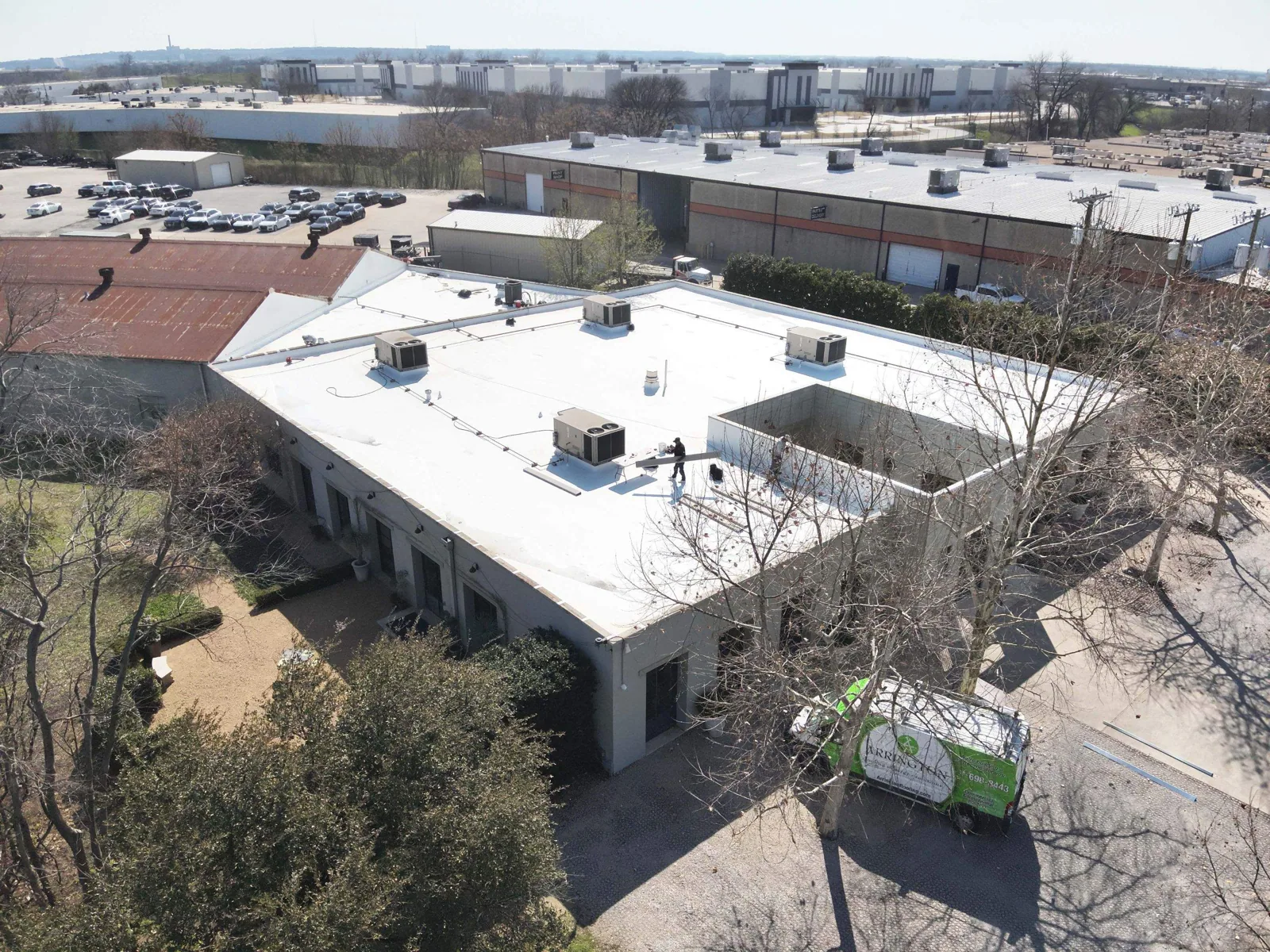
Roof Recover and Overlay
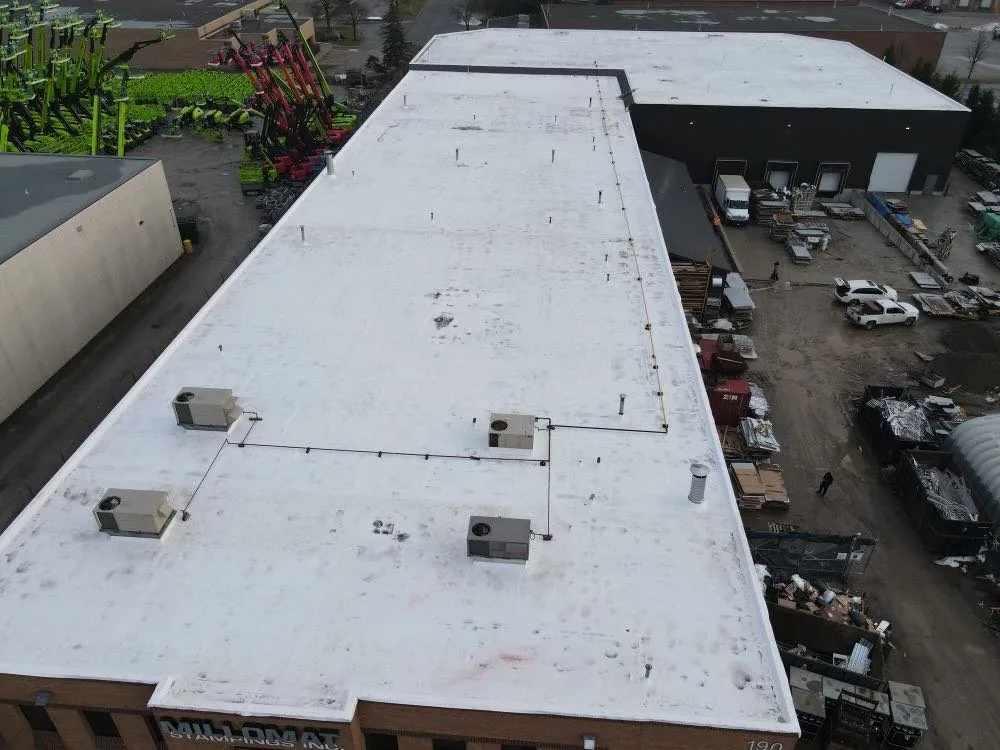
Commercial Roof Replacement
Emergency Leak Calls
Call for a storm walk or budget review
Call and we will take cores, run a moisture scan and write up the layers. The visit pins down which sections have wet insulation and the cost to bring each one to the required thickness.