
Church Roofing
Church Roofing in Hoover, AL
A building committee meets once a month, and the roof is rarely the first item. That is how a small leak turns into a ruined carpet and a large repair bill. In Hoover, AL, spring storm season runs from March through April, with a second peak in November. A congregation that books a roof walk in February has a price and a plan before the first storm. Low-slope and metal church roofs are repaired, recovered or replaced under a written list the committee can vote on.
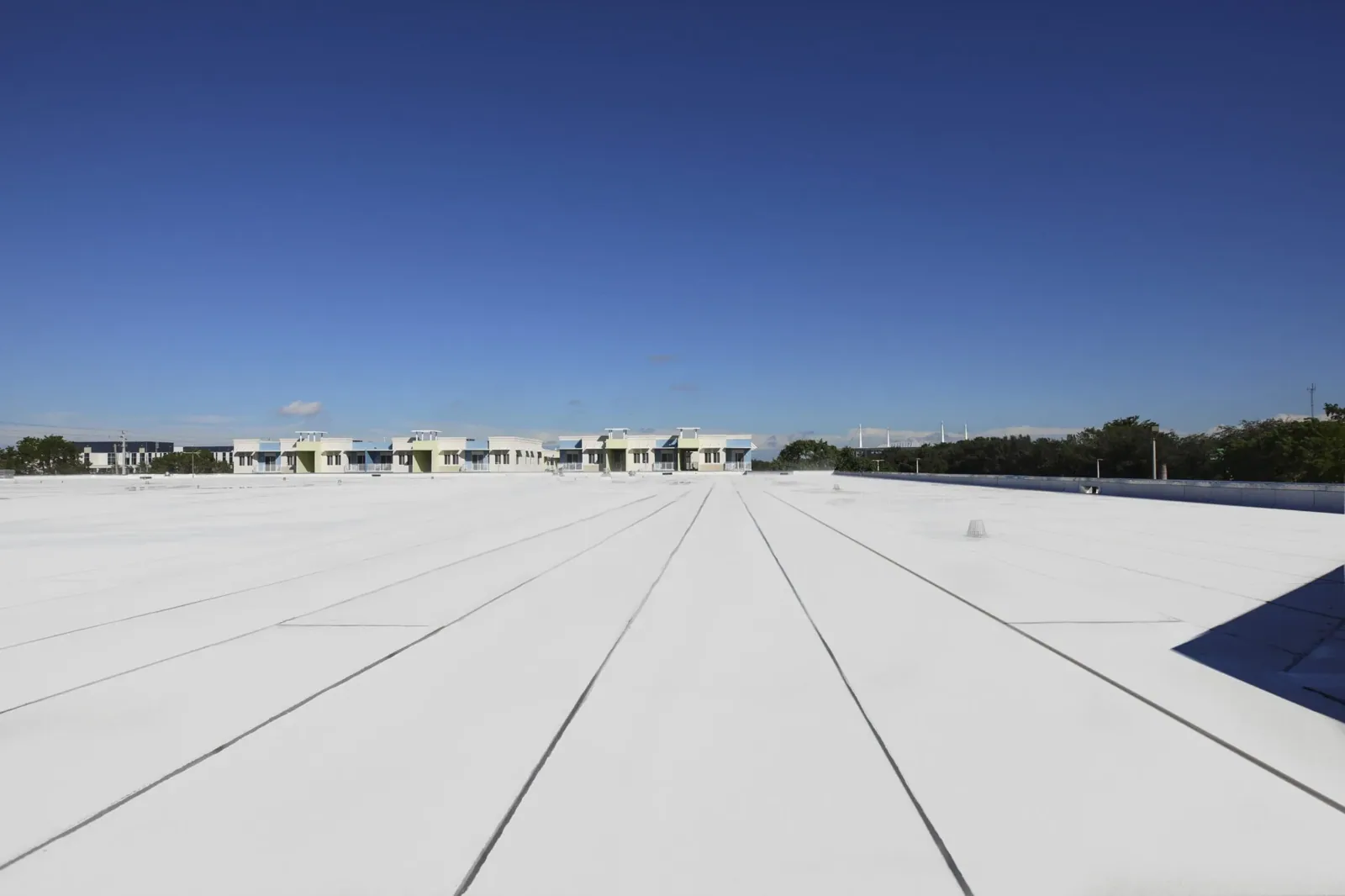
The issue: one campus, many roofs
A church is rarely one roof. The sanctuary is one. The fellowship hall is another. The education wing, the office, the covered entry and the connecting hallways each have their own. Additions often come in different decades.
Each addition leaves a tie-in where new roof meets old wall. Tie-ins leak first. We map every roof on the campus, note its age and system, and mark each tie-in. That map becomes the committee's working drawing.
Steeples and towers add their own detail. A steeple base has flashing on several sides, and the lower roof around it takes the runoff. We check both.
A fellowship hall often carries a kitchen. Kitchen exhaust adds heat, steam and grease to one corner of the roof. The wear pattern matches what a restaurant roof shows, in a smaller space. Watch the membrane near the fan. A pan and a walkway pad protect it.
What we find: age, tie-ins and drains
The common findings are plain. Cracked pipe boots. Open seams at walls. Dried sealant. Clogged scuppers and gutters. Worn membrane where someone walks to a unit.
Church buildings also hold tall interior spaces. A leak over a sanctuary can run down a wall before anyone sees it. We use a moisture scan to find wet insulation early. A core cut confirms it. We photograph each finding and number it on the roof plan.
Heat and humidity wear on seams too. Rain in the Birmingham area totals about 56.6 inches a year, and summer adds roughly two months of 90-degree days. That is a long season of expansion, soaking and drying for every joint on the roof.
Drains deserve a close look. Leaves from nearby trees collect in scuppers and gutters. A clogged scupper backs water behind a parapet. Water stands on low-slope roofs and works its way into laps. We clear every outlet, check its slope and mark any ponding line. A drain and scupper fix is among the cheapest repairs on the list and among the most useful.
Storm season: what Alabama has done to roofs
Hoover sits in Dixie Alley. The 1998 F5 is part of this record, along with 1977 and the 2011 EF4. That storm also took out two Hueytown schools, Oak Grove High and Oak Grove Elementary. On April 25, 2003, hail up to softball size fell across central Alabama.
Hail bruises membranes. You cannot see it from the ground. So walk the roof after any storm with large stones. Hail damage repair begins with dated photos. Keep it for the insurer and for the committee.
Wind goes after edges. We check edge metal, caps and gutters on every section and fasten what has moved.
November is the second season. A congregation that walks the roof only in spring misses the autumn debris. A short autumn visit clears leaves, checks fasteners and catches problems before winter rain. It costs little and keeps the roof ready for the second storm window.
When to do it: around services and events
Roof work should not collide with worship. We plan around Sunday services, midweek meetings, weddings and funerals. Loud work happens on weekdays. Weekend work is limited to safe, quiet tasks or none at all.
The best season is late autumn through early spring, before storms build. Summer heat limits crews. Spring storms interrupt them. We keep open sections small and close them each day.
A volunteer who knows the building can walk with us. That helps. They know where the keys, the ladders and the old leaks are. We write the access route on the plan so the next visit does not start from zero.
Access is the last detail. Roofs on churches can be tall, steep at the entry and reached through a bell tower stair or an attic hatch. We ask who holds the keys, which stair is safe and where fall protection ties off. Those answers go on the roof plan. A crew arriving at night in a storm should not be hunting for a key.
What it costs: the lines on the estimate
Cost follows roof area, the number of penetrations, the amount of wet insulation, the condition of the deck and the access needed. Steep, tall or hard-to-reach sections cost more to work. Tie-ins and steeple flashing add detail labor.
A repair costs the least, but repeated repairs pile up. Three calls to one corner is a signal. A section replacement costs more and stops the calls. A full replacement resets the clock. We put a price on each side of the repair-or-replace line, in writing.
A replacement has to meet the 2021 International Building Code, with its July 1, 2022 start date and the parts of the 2024 edition added in March 2025. We confirm the requirements with the building department before we price it.
Insulation upgrades are a separate line. If the committee wants better energy performance, a thicker board or a cover board adds cost now and trims the heating bill later. We price that choice on its own so the committee can say yes or no without redoing the whole estimate.
More on Church Roofing
Budget year: what the committee should hold
Keep one page per roof. List its age, its system, its last inspection and a replacement window as a range. Keep photos. Keep every repair invoice. A roof condition report gives the committee that page.
Spread the big items across years. Fix the worst tie-in this winter. Plan the next section for next year. A roof capital planning list ranks the sections so a congregation can fund them in order.
Churches in Riverchase and across the metro share these steps. A school roof works from a similar public-use calendar.
Fundraising takes time. A congregation that plans a roof two budget years out can raise the money without a rush. We give the committee a scope, a price range for each option and a written ranking, so a campaign letter can say exactly what the money buys.
Commercial Roofing Questions
How do we start when the committee has no roof records?
Start with one walk of the whole campus. We map every roof, rate each section and number each finding with a photo. That report becomes your first record, and you can add to it each year.
Can repairs happen without disturbing services?
Yes, with planning. Most repairs happen on the outside of the building during the week. Loud tear-off stays off Sundays and event days, and we agree the calendar with the church office first.
Why do tie-ins between old and new sections leak?
Old and new walls move differently, and the flashing between them takes the strain. Sealant dries and cracks over time. We rebuild the flashing with a proper termination instead of adding more sealant.
How soon after a storm should we check the roof?
Within a week if hail larger than a quarter fell, and right away if water appeared inside. Dated photos from that first week help both the repair and any insurance file.
Do you work after hours on a leak?
Our line stays open overnight and on holidays. At the first visit the water gets stopped and the opening gets recorded.
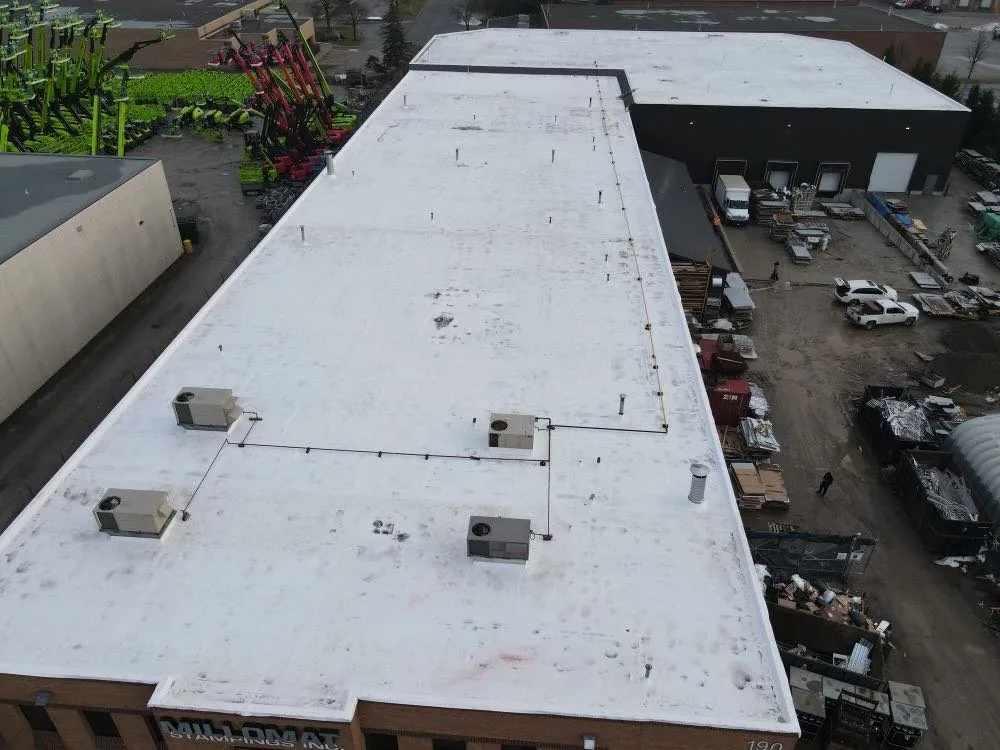
Related Roofing Work
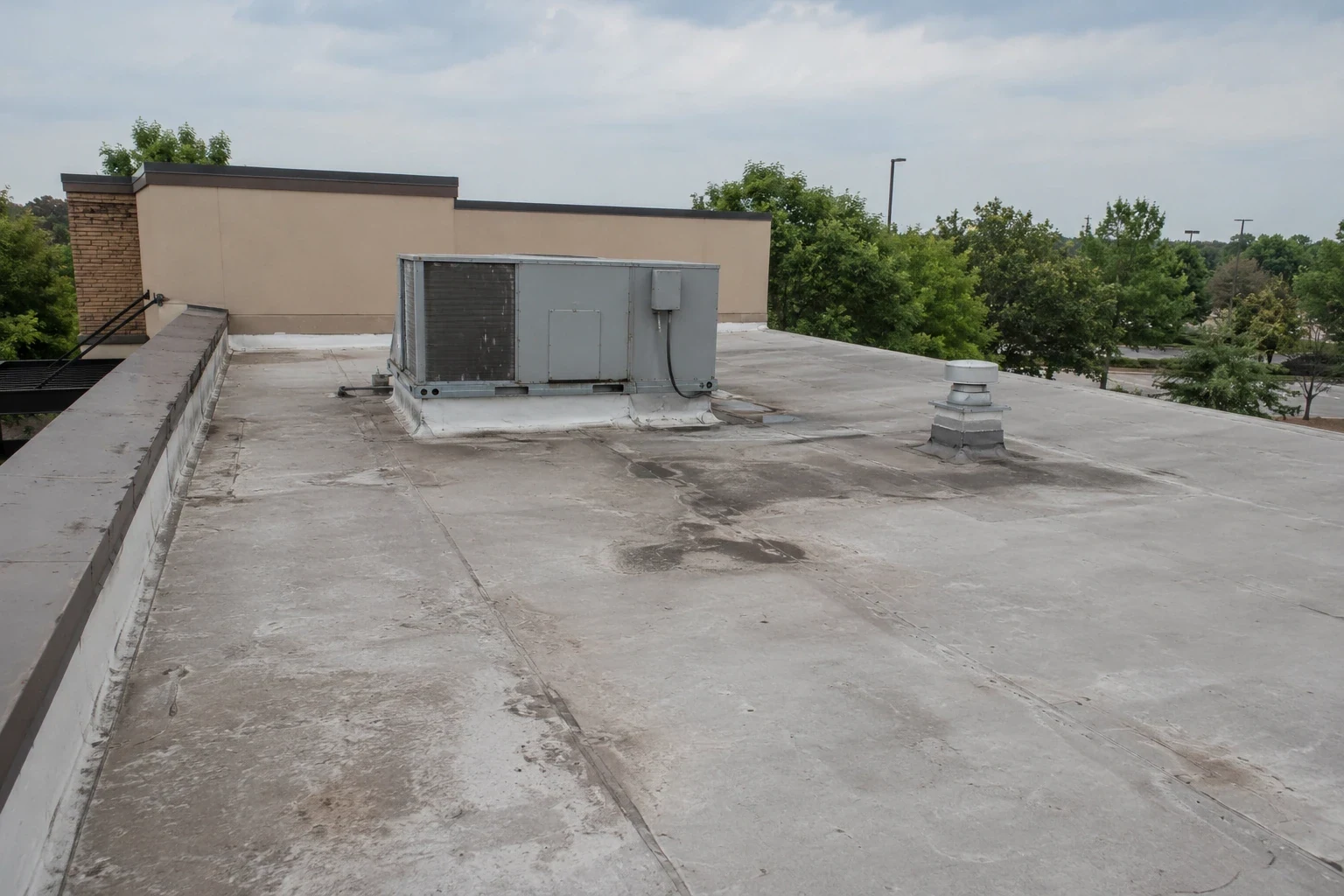
Restaurant Roofing
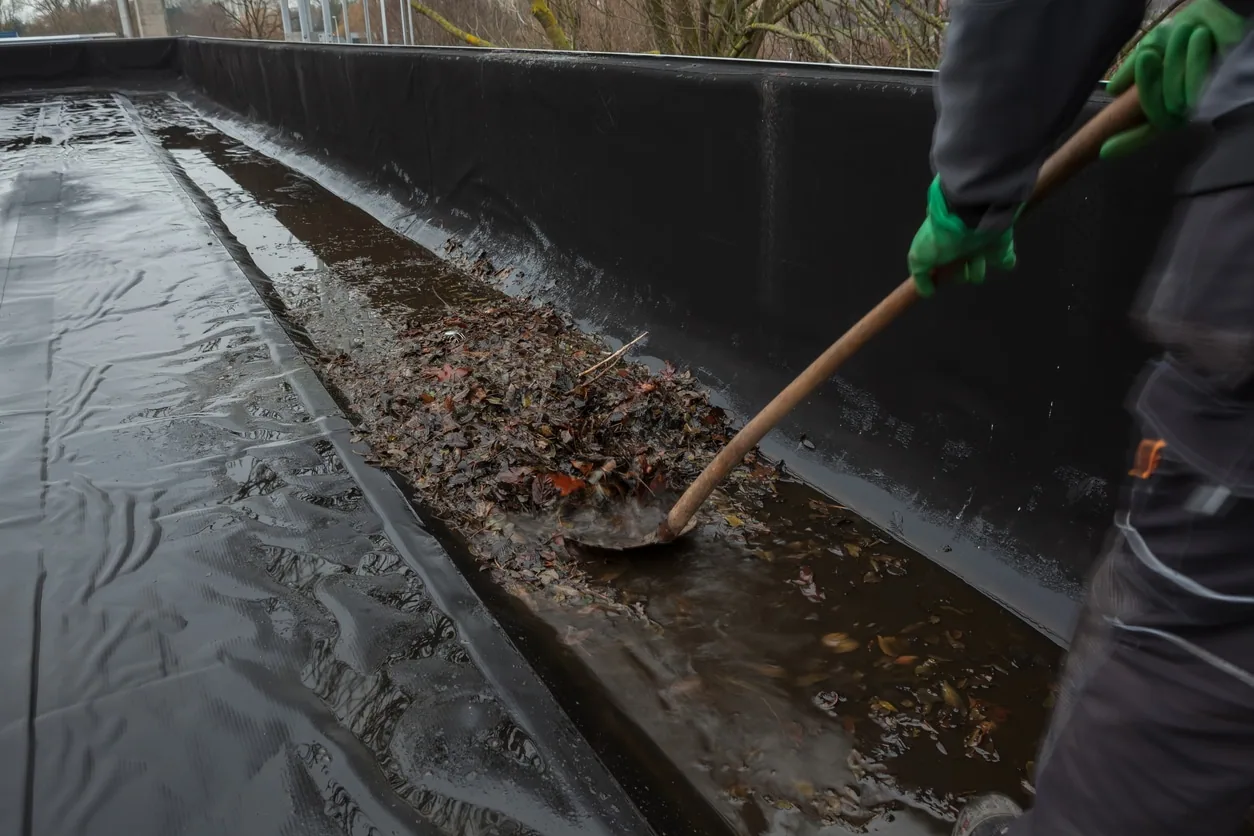
Roof Drains and Scuppers
Hail Damage Roof Repair
Roof Condition Reports
Emergency Leak Calls
Call for a storm walk or budget review
Call before storm season or after a storm. The walk gives the building committee a ranked list, a price on each item and the budget year each one belongs in.