
School Roofing
School Roofing in Hoover, AL
A school roof has about ten weeks to get done. Summer break is the window, and it closes on a date no one can move. Miss it and the work rolls to next year, with another round of storms in between. For a school in Hoover, AL, the roof plan starts with that calendar.
The budget has a date too. Bids need approval. Approvals need numbers. So the work starts in winter, with a survey and a price, and ends in August with a dry building and a closeout file.
The issue: many small roofs, one summer
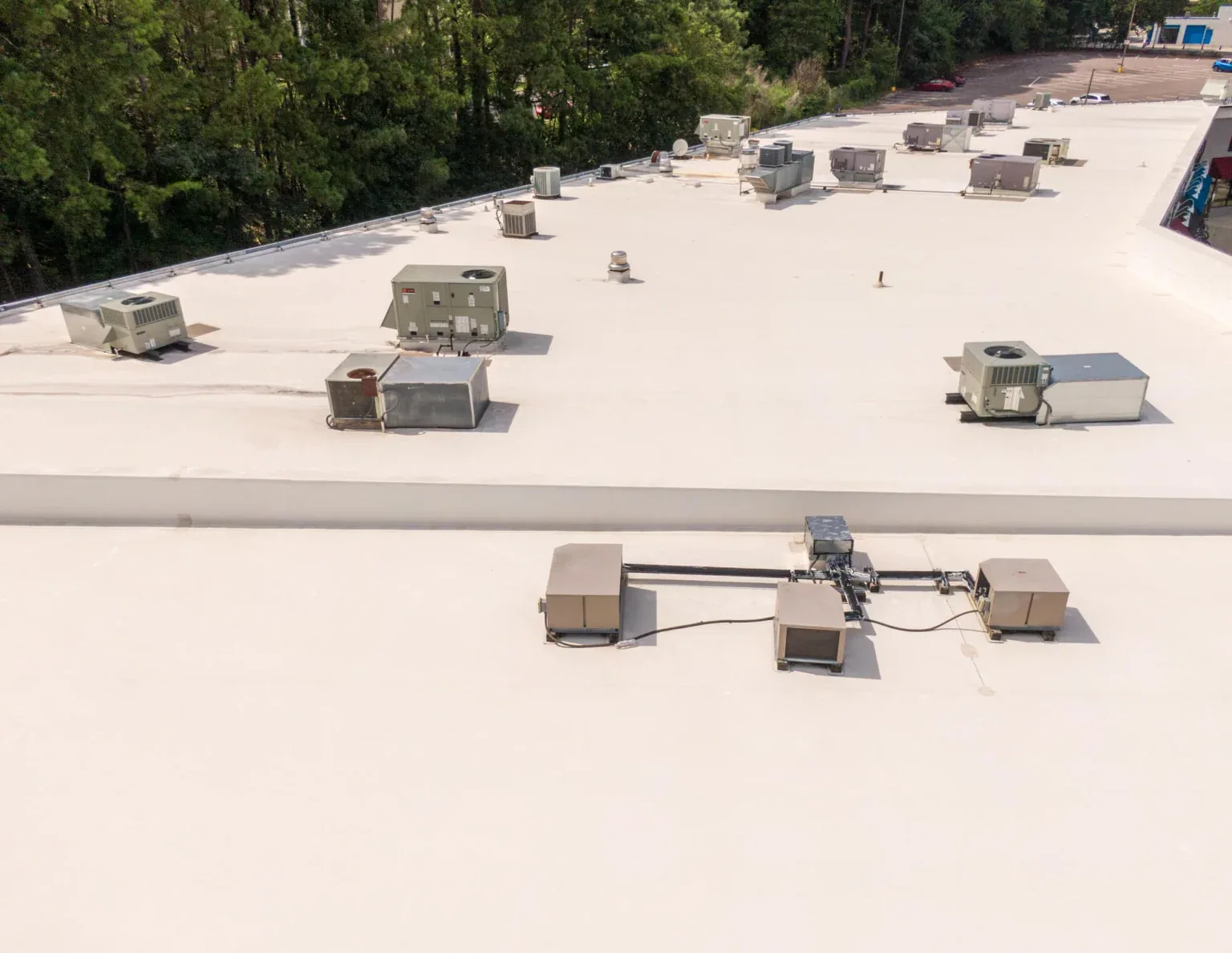
A school is not one roof. It is the classroom wing, the gym, the cafeteria, the library, covered walks and mechanical rooms. Each has its own membrane, its own age and its own details. A leak in a hallway may trace to a tie-in far from the stain.
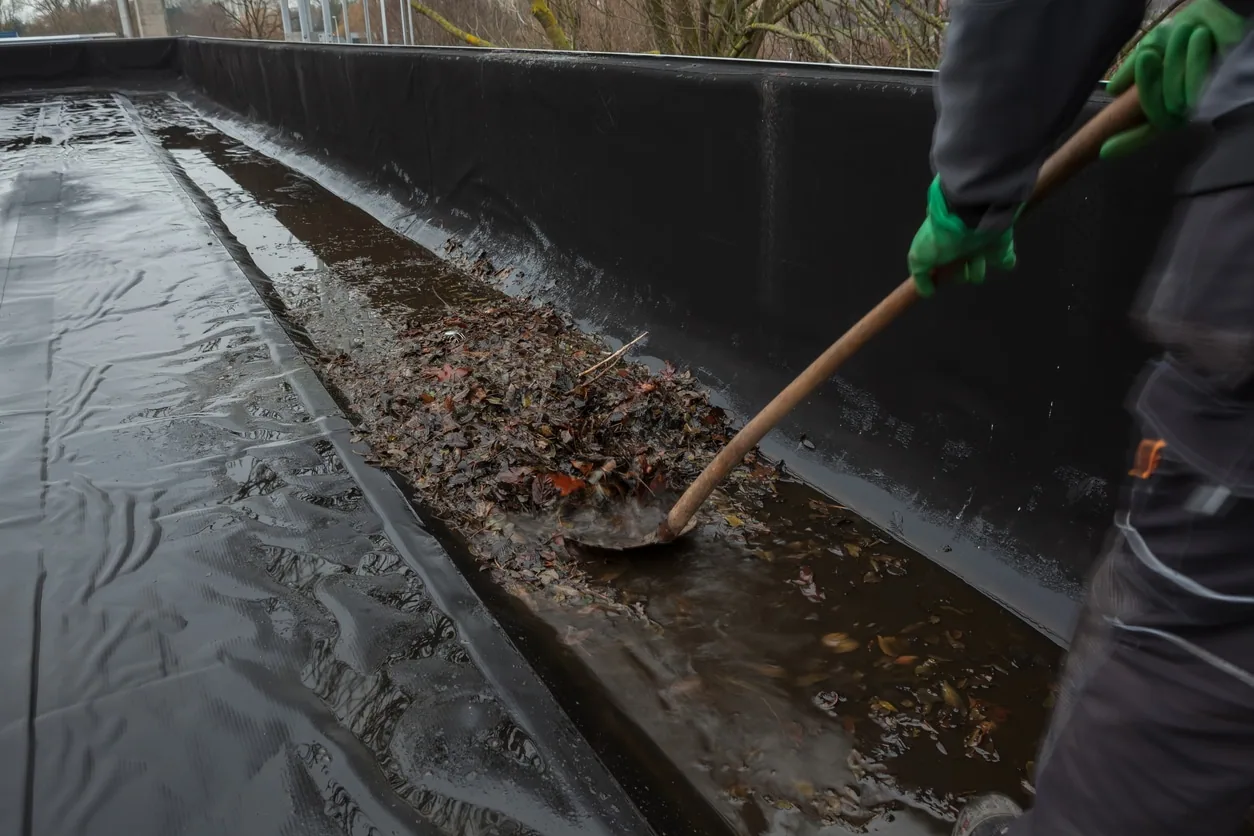
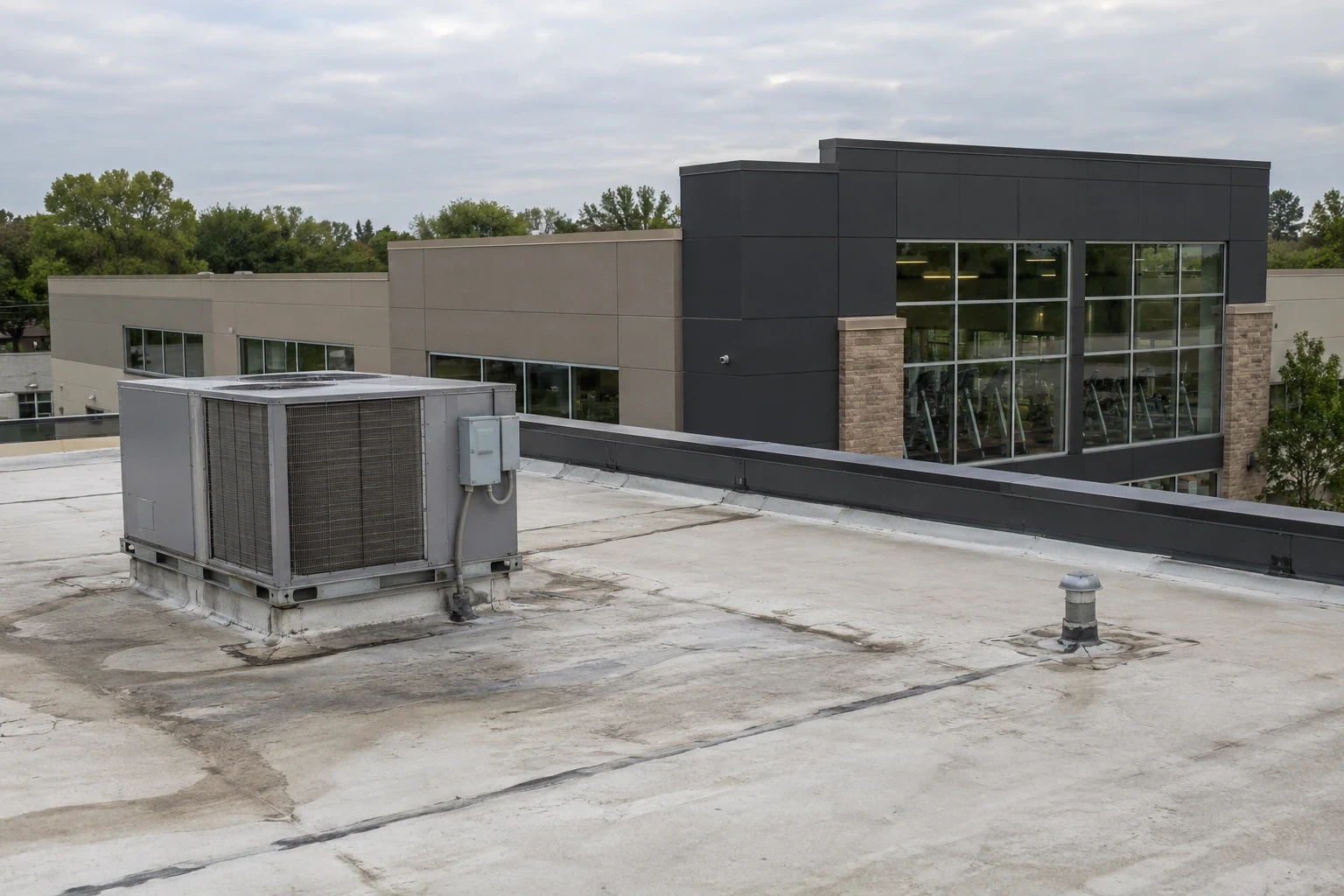
We number every roof area and rate it. We probe seams, check drains and mark every curb. Clogged drains and scuppers are the quickest fix and the one most often skipped, so we clear and flow-test every outlet at the first visit. A gym roof has long seams and tall walls, much like a fitness center roof. A cafeteria has kitchen exhaust. A covered walk takes the wind. Each one fails in its own way, so each one gets its own line on the sheet.
Vestavia Hills, about 4 miles from Hoover, runs five elementary schools, two middle schools, an alternative school and a high school, serving about 6,000 students. Hoover City Schools employs 1,869 people, and every school building under those systems has its own roof to plan around.
What it costs: a missed summer doubles the pain
If a roof misses its summer, it gets another year of weather. Another spring storm season. Another round of patches. Wet insulation builds. A repair that would have cost a modest amount becomes a section replacement.
Price follows roof area, the layers to remove, wet insulation, the units to lift and the access around occupied buildings. School work adds fencing, hours and safety. We price those items separately so the district sees what they add.
A commercial roof repair done before summer buys time. We list the repairs, the restorations and the replacements with a price on each, so the board can pick what fits this year's budget.
Storm season: tornadoes and the school calendar
The Birmingham area sits in Dixie Alley. On April 8, 1998, an F5 wiped out Oak Grove High and Oak Grove Elementary in Hueytown, and 1977 and 2011 are the other tornado years on the metro's record. Storm season overlaps the end of the school year.
Roofs need to be sound before March. That means drains cleared, edges tight and every open tie-in sealed by the end of February. A school that enters storm season with a clean report is in a better spot than one that starts the season with a bucket in the hallway. Once a severe report comes in, the storm walk covers edges, units, drains and covered walks. Hail matters too: on April 25, 2003, softball-size stones fell across central Alabama. We photograph every item with a date, so the district's insurer sees a clear record.
When to do it: winter survey, summer work
Survey in January. Price in February. Bid in March. Approve in April. Start the day school ends. That is the clock for a summer reroof. Small jobs can be done earlier, in school breaks, if the weather holds.
Summer heat means crews start early and keep materials out of the sun. Heat matters for adhesives, sealants and crew safety. We plan the day around it: roof work starts at first light, hot-weather breaks are written into the schedule and materials that dislike heat go on early. The same planning keeps the dry-in on time when afternoon storms build.
If one summer cannot finish a roof, a phased plan completes it in sections, each dried in before students return. A roof capital plan spreads the work over budget years.
Budget year: the district roof plan
A district with many schools needs one list. Every roof is ranked by condition and by what sits below, and the worst go first. Each year of the plan carries its own cost and its own list of work, for three years or more.
Public buildings also carry paperwork. The district may need a scope that can be bid, drawings with numbered roof areas and a closeout file for each school. We write the scope in that form. The district can hand it to its architect or purchasing office without rewriting.
More on School Roofing
Recommendation: survey every roof this winter
Survey every roof, repair the leaks before April and plan the replacements for summer. Core the doubtful roofs. Read moisture. Rank them. That is the work that makes a summer pay off.
School replacements are scoped to the state's adopted building code and to ANSI/ASHRAE/IES 90.1-2013 for energy. Larger campuses follow the same steps, as in college and university roofing, and a district with many buildings follows the plan for school districts. A school in Vestavia Hills or Hoover follows the same plan.
What to ask us: bids, dates and dry-in
Call with the school list and the last roof report, then work through these.
- Which roofs should be repaired this winter, and which replaced this summer?
- Which sections hold wet insulation, and how big are they?
- What does each phase cost, and what is the last safe start date?
- How do you dry in at the end of each day?
- What goes in the closeout file?
The district gets photos, readings and a price in return. We need the last day of school, the first day back, the test dates and the bus routes. Those dates fix the window. A plan that respects them gets approved faster and runs without calls to the principal.
A leak during the school year gets a temporary dry-in, done from the roof so little disturbs the rooms below. Then we plan the permanent fix for the next break.
Commercial Roofing Questions
When should a district start planning a summer roof job?
In winter. Survey in January, price in February, bid in March and approve in April. We recommend starting the survey as early as the schools allow, because the best contractor dates fill up. A late start means a rushed schedule and a higher price.
Can the roof be worked while students are in the building?
For repairs, yes, with fencing and clear routes. For a full replacement, summer is better. We recommend leaving large work for break and using the school year for leak repair and storm response. Noise near testing is planned with the principal.
What if one summer is not enough?
We phase the work. The worst section goes first and is dried in before students return. The next section follows the next summer. We recommend a written phase plan with a price per phase, so the board can fund the project over time.
How do gym and cafeteria roofs differ?
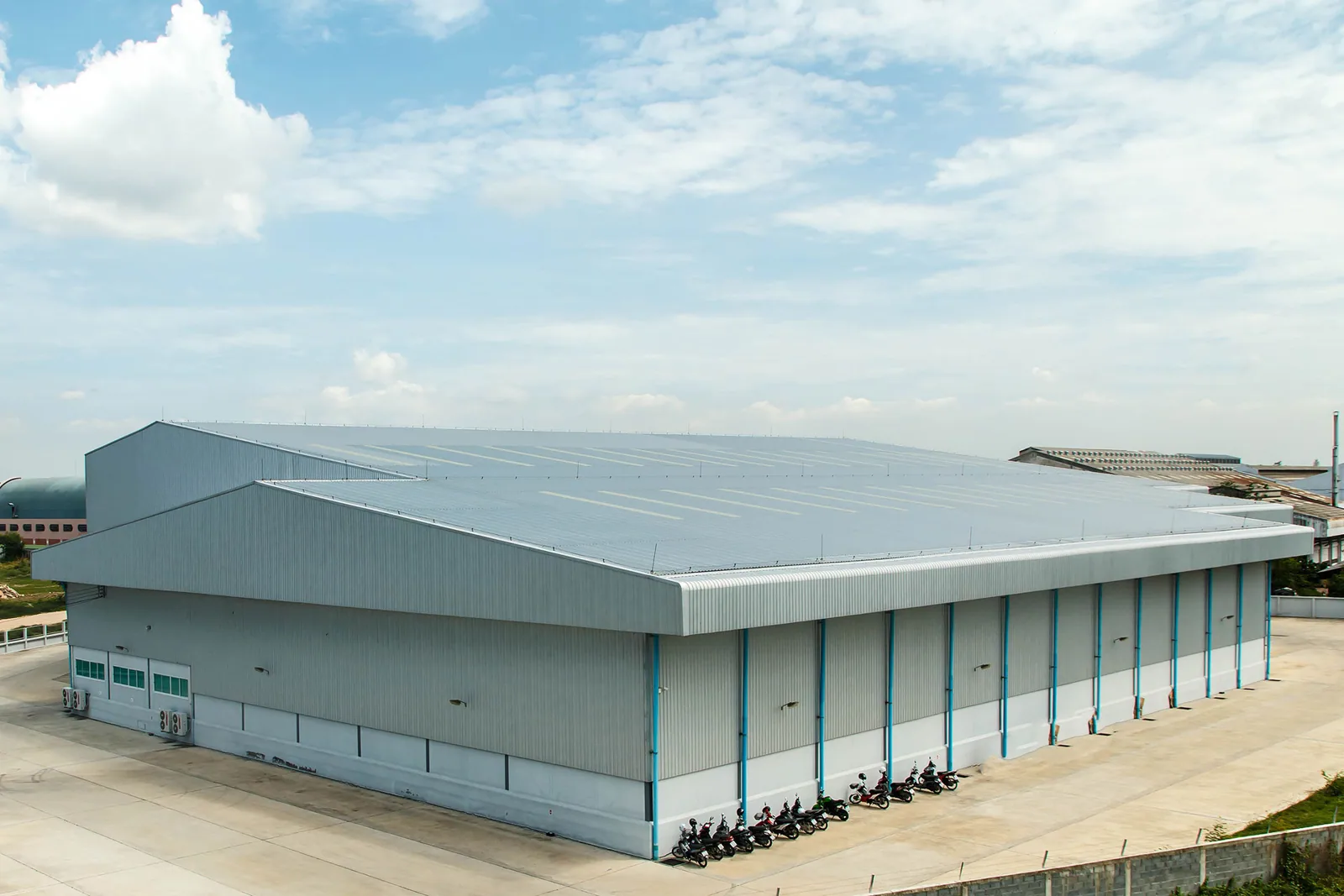
They have longer spans, taller walls and more penetrations. Kitchen exhaust adds grease and heat. We recommend inspecting them as separate roofs, with their own line in the report, because they age at different rates than classroom wings.
What paperwork does a district need after a roof job?
The scope, photos of the existing roof, moisture findings, material data, closeout photos and warranty papers. We recommend filing a set per school. The next facilities lead can then see what was done, where and when, without a long handoff.
Related Roofing Work
Roof Drains and Scuppers
Fitness Center Roofing
Vestavia Hills
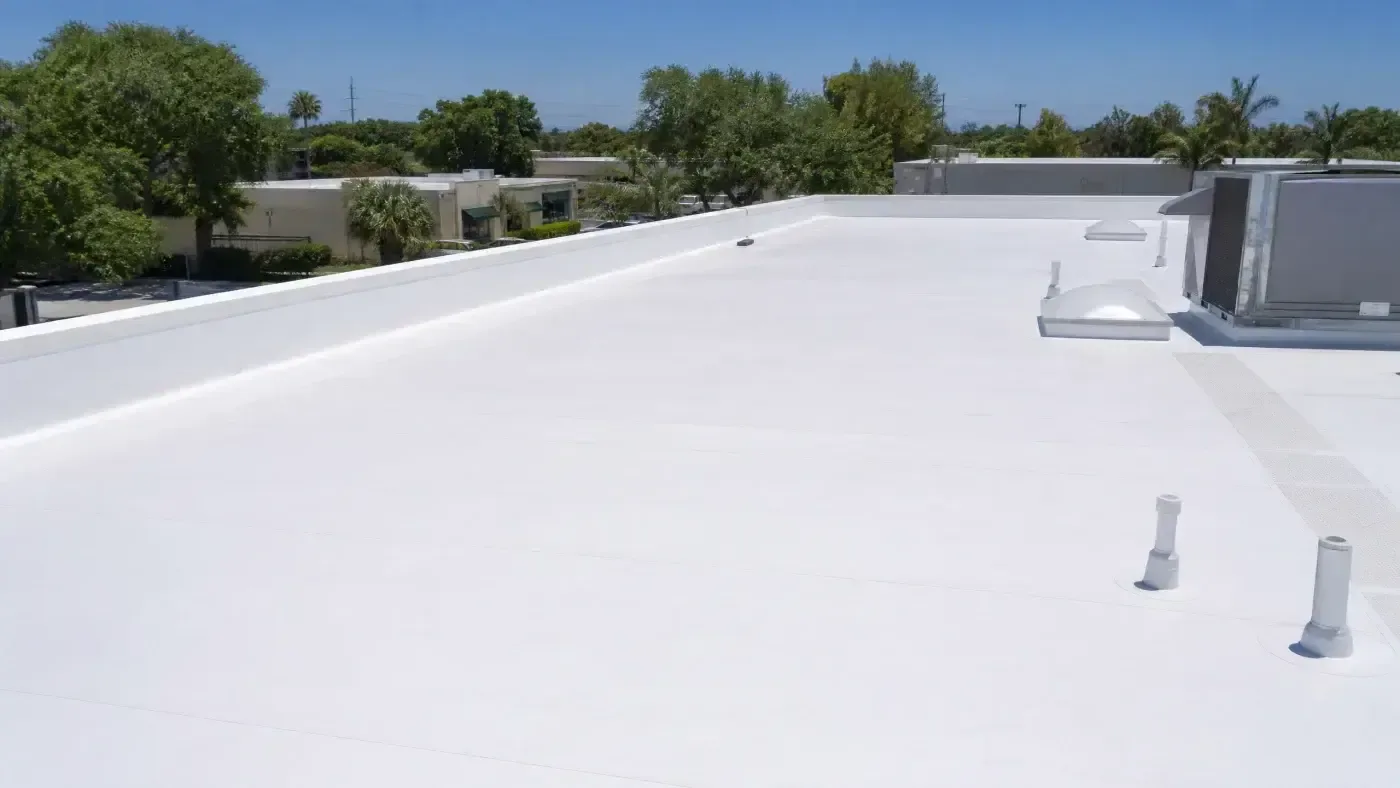
Commercial Roof Repair
Emergency Leak Calls
Call for a storm walk or budget review
Call in winter, before the bid calendar fills, or after a severe storm report. The visit pins down which roofs go first and what each phase costs. You get it in writing, ready for the board.