
Grocery Store Roofing
Grocery Store Roofing in Hoover, AL
A drip over a produce table is a food-safety call, not a roof call. The store pulls the product, the health inspector hears about it and the roof gets blamed. For a grocery store in Hoover, AL, one wet ceiling can cost a day of sales and a case of lost stock. Spring storms make it likelier in March, April and November.
So the plan starts early. The walk happens in winter, the price comes in February and the work finishes before storm season. You get a number, a date and a photo of every weak spot.
The issue: refrigeration on the roof
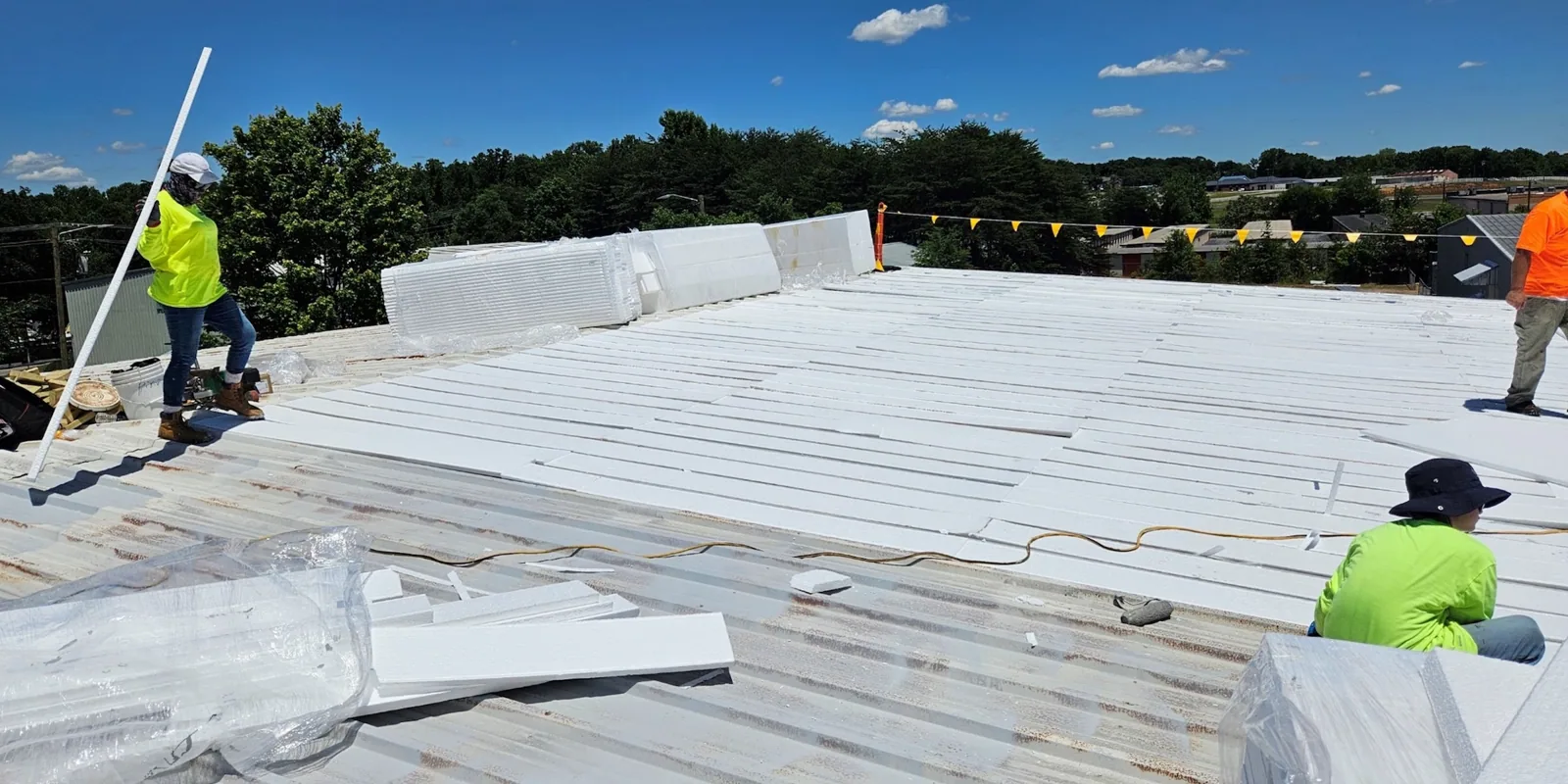
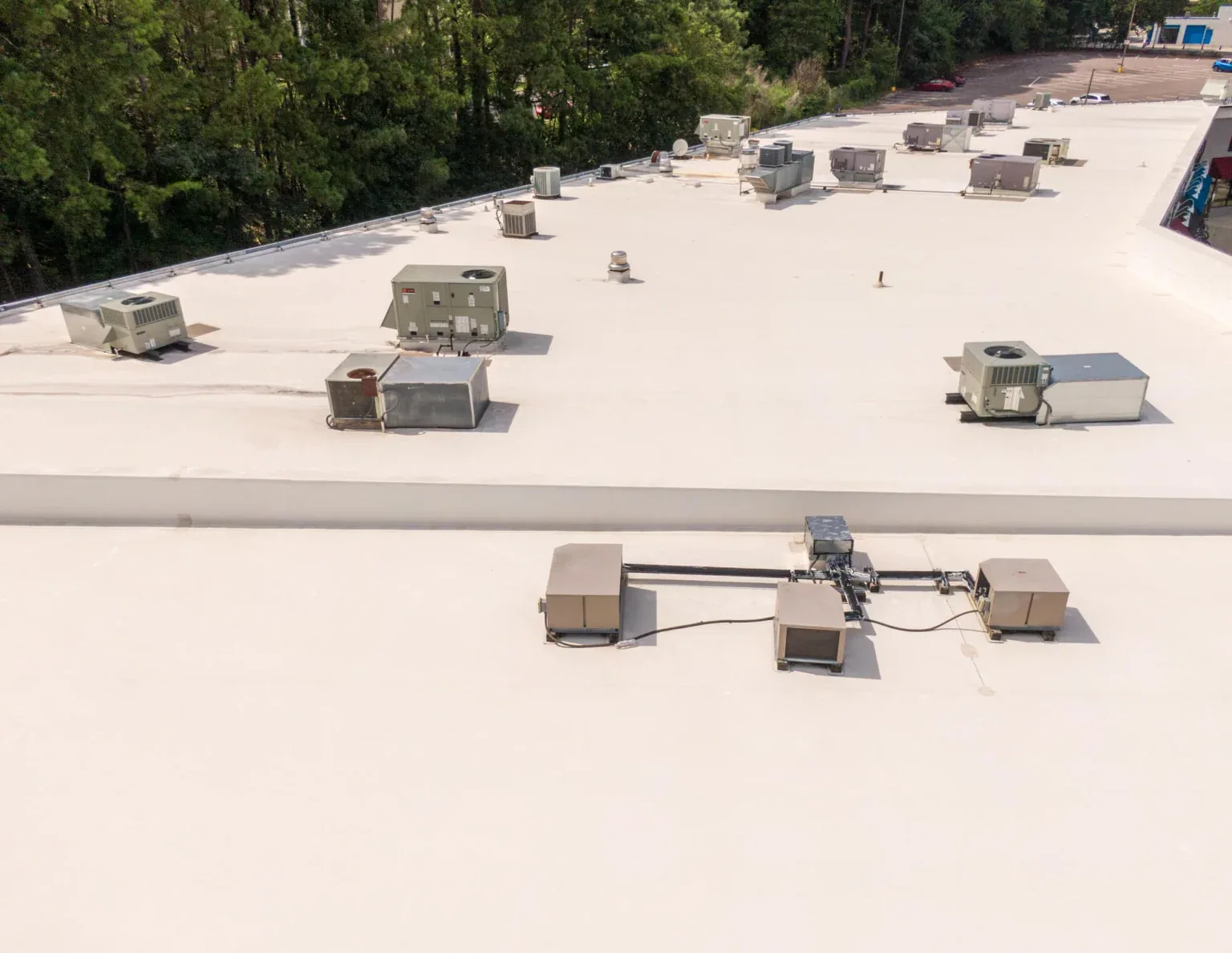
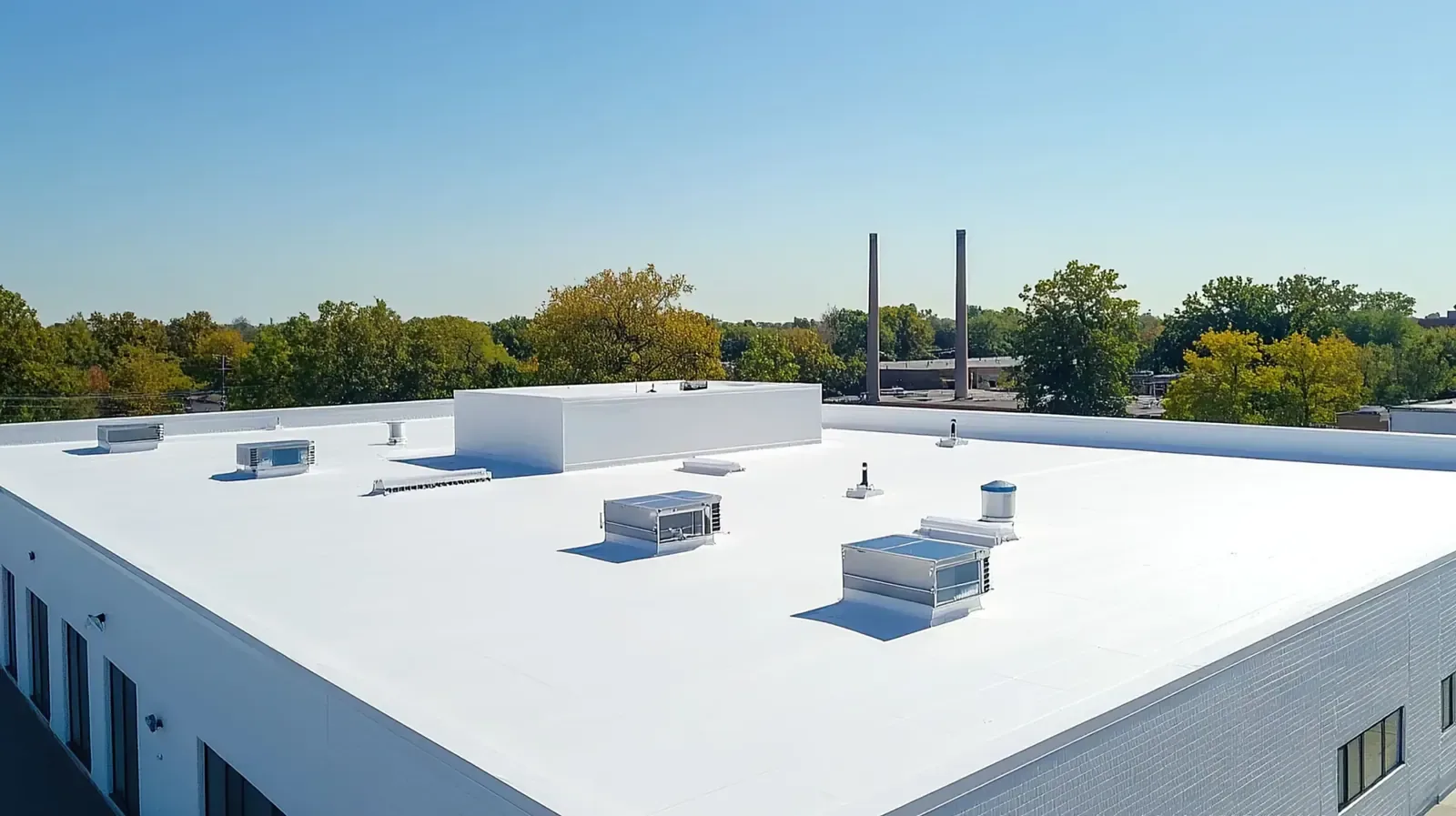
A grocery roof carries more equipment than most retail roofs. Condensers sit on rails. Refrigerant lines cross the surface. Exhaust fans serve the deli and bakery. Every unit and line is a place for flashing to fail. Heat from the condensers sits on the membrane all summer.
We start at the condensers. Look at the rails, the curb flashing and the lines. Look for soft, stained or cracked membrane near each unit. Technicians walk the same path to service them, so we check that path and add walk pads where wear shows. Refrigeration crews also leave tools, ties and cut line insulation behind, and those items puncture membrane when they get walked on. We clear them at every visit.
Leaks over the sales floor are bad. Leaks over the cooler boxes are worse, because the water gets into insulated panels that are hard to dry. A wet panel loses its R-value, forms ice and drives the power bill up for months before anyone traces it back to the roof.
What it costs: product, inspections and downtime
The roof repair is small. The cost of a closed aisle, lost product and a food-safety review is large. A leak over a freezer case also costs power, because ice builds and the compressors run longer.
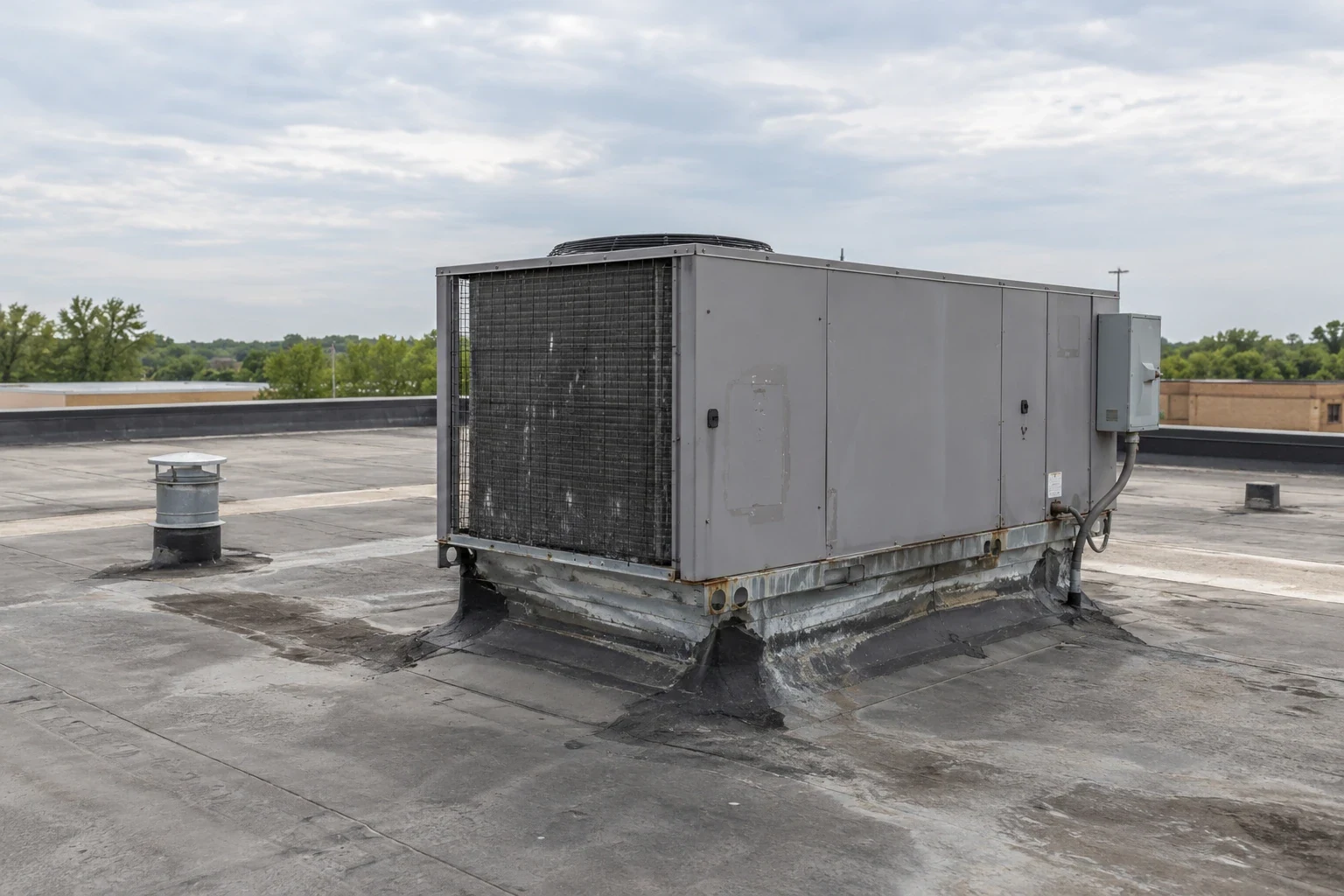
Roof cost follows area, layers, wet insulation, how many units must be lifted and how customers move around them. Grocery work adds night schedules and clean-site rules. We price each of those separately. A curb and equipment support repair at the condensers is often the fastest fix for a recurring drip.
Each store gets repair, restoration and replacement priced together, along with the cost of one more season of waiting.
Product protection adds a line of its own. Moving a refrigerated case, covering a produce display and running a tarp from the roof edge to the dock can take a crew an hour before any repair starts, and the estimate names that hour so the store manager sees what the protection costs.
Storm season: March, April and November
The Birmingham area sits in Dixie Alley. Birmingham's storm record includes three major tornadoes: 1977, 1998 and 2011. Thunderstorms run strongest in spring, then return in November and early December, and softball-size hail dropped on central Alabama on April 25, 2003.
Strong wind takes coping, edge metal and unit covers from grocery roofs, and hail bruises membrane and bends condenser fins. Our storm walk after a severe report covers edges, units and drains. Each item is photographed and dated. The store manager and the insurer see the same file. March, April and November bring the storm claims, so a roof with photos on file moves faster.
When to do it: night work and the Highway 31 corridor
US 31 runs through Pelham and is the main highway through Calera, with I-65 exits close by. US 280 runs through Inverness, where the corridor includes many restaurants and shopping centers. Grocery stores sit on those roads, and the roofs above them face the same weather.
Plan roof work for the quiet part of the year and the quiet part of the day. Avoid the week of Thanksgiving, the week before Christmas and any weekend with a major game, when traffic and deliveries both peak. Late winter and early summer give the most room. Many stores prefer night tear-off over sales areas. We dry in daily, keep fire lanes clear and protect the doors and cart corrals. An occupied building reroof plan lists the dates by section.
Budget year: roof next to refrigeration
Condenser replacements and roof work should share a budget year. A new condenser on an old curb repeats the leak. We go through your equipment plan and tie the roof schedule to it. Reflash the curb with the new unit, not before.
Hot, humid summers load the condensers and wear the seams around them. We add a spring and fall check to the plan, and we clear the drains each time. A short log of dates, findings and fixes goes in the store file, so the next manager can see what was done without calling anyone.
More on Grocery Store Roofing
Recommendation: condensers and drains first
Fix the curbs, lines and drains first. They cause most grocery leaks. After that the field gets cored and read for moisture: dry insulation is restored, wet insulation is replaced section by section, and the repair-or-replace line goes into the written scope.
A replacement is scoped to the adopted building code and to ASHRAE 90.1-2013 for insulation. Larger stores follow big box retail roofing, strip-center stores follow shopping center roofing, and a store with a prep kitchen shares details with restaurant roofing.
What to ask us: five questions for a store manager
Bring the store address and the last roof report to the call. Then ask these.
- Which condenser curbs and lines are open?
- Is the insulation over the coolers dry?
- Which section fails first, and what does waiting cost?
- How do you protect product and keep doors open at night?
- What goes in the closeout file?
Photos, readings and a price come back to you. Our side of the call asks for your delivery times, your sensitive departments and your night schedule. A store that takes deliveries at five in the morning needs the dock side finished early and the sales floor side worked later. Those facts decide the order.
If you rent the building, send our report to the landlord the same day. Dated photos move a repair along faster than a phone call about a drip.
Commercial Roofing Questions
Can a grocery roof be worked while the store is open?
Yes, with a plan. Work goes in sections, often at night, with entries and fire lanes kept clear and each section dried in the same day. We recommend a one-page schedule for your store manager, with the sensitive departments marked, so produce, dairy and the deli are covered first.
What do I do when a drip hits a product case?
Move the product, close the case and call us. A crew dries in the spot first, then follows the water to its source on the roof. We recommend photographing the stain with the aisle number in frame. That photo saves a trip to the wrong bay.
Why do condensers cause roof leaks?
They sit on rails with lines running across the roof. Vibration loosens flashing, and heat and service traffic wear the membrane. We recommend checking the curbs each spring and fall, and adding walk pads along the service path.
Is hail a concern for refrigeration units?
It is. Hail can bruise membrane and bend condenser fins. The April 25, 2003 hail in central Alabama reached softball size. We recommend a hail check inside two weeks of any severe report, with photos of the roof and of the units themselves.
Is a coating a good option for an older grocery roof?
It can be, if insulation is dry and seams are tight. A coating buys years for less than a tear-off, so long as moisture readings and cores come first. Coating over wet insulation seals the water in, which is why wet sections get replaced before anything is rolled on.
Related Roofing Work
Rooftop Equipment Curbs and Supports

Pelham
Calera
Occupied Building Reroofing
Emergency Leak Calls
Call for a storm walk or budget review
Call before spring, or after the next severe report. The visit pins down which curbs and drains go first and what the fix costs. You get it in writing, with a price on each item.