
Military Hangar and Maintenance Facility Roofing
Military Hangar and Maintenance Facility Roofing in Hoover, AL
Flight schedules do not move for a roof, so the roof has to move for the flight schedule. That is the timing fact behind every maintenance hangar job near Hoover, AL. Sumpter Smith Air National Guard Base in Birmingham, roughly 11 miles north-northeast of Hoover, is home to the 117th Air Refueling Wing, and its facilities show the kind of building a maintenance group runs. We repair, retrofit and replace low-slope and metal roofs on hangars and maintenance buildings, and we write the findings so a base civil engineer can use them.
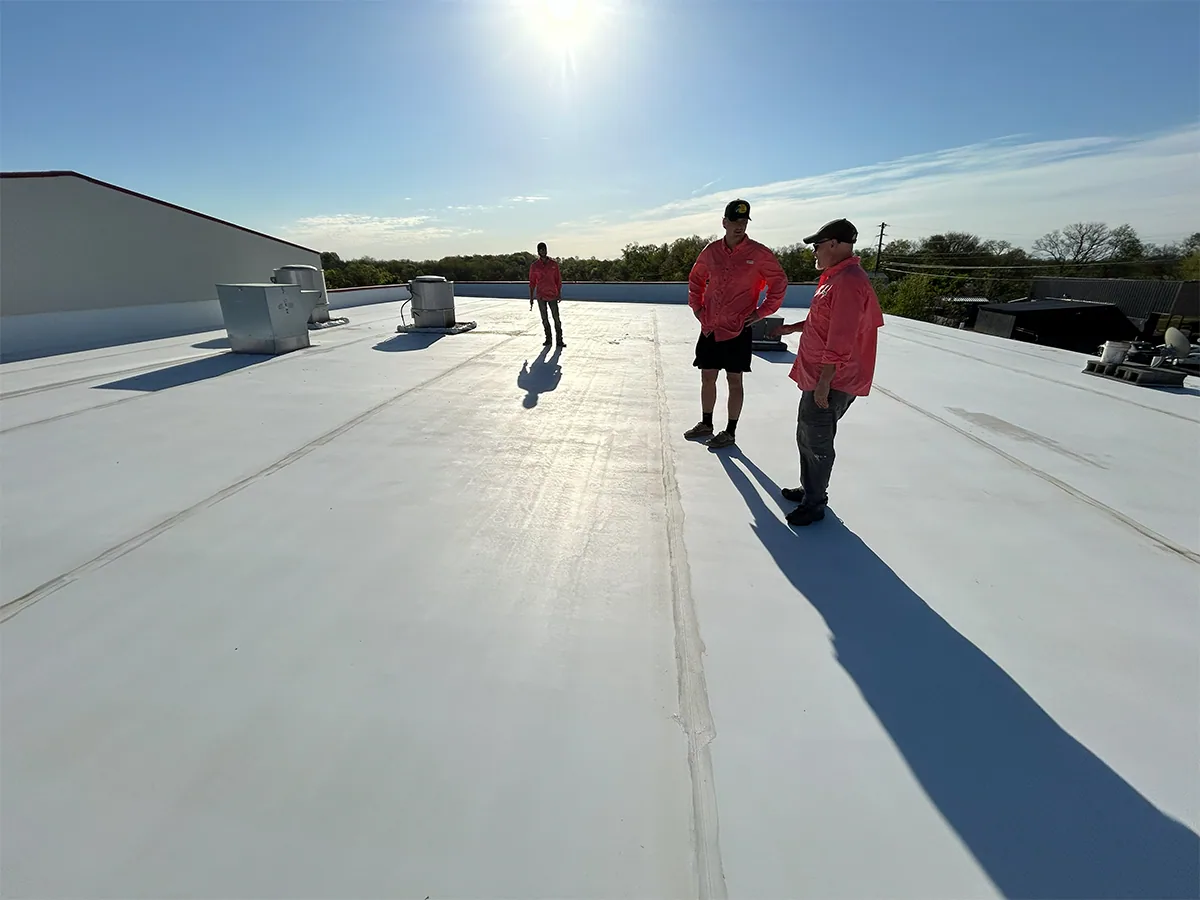
The issue: a maintenance hangar is a working shop
The 117th Air Refueling Wing flies the Boeing KC-135R Stratotanker. Its wing includes operations, maintenance, mission support and medical groups. A maintenance group needs hangars and shops, and those buildings share a few traits. Long spans. Big doors. Tall interior volumes. Fire suppression overhead. Tools and parts below.
A roof leak in a working shop is not a ceiling-tile problem. Water hits tools, test gear and parts. A wet floor is a safety issue. A drip over an aircraft is worse.
So we rank roof sections by what sits below. We write that ranking into the report. The civil engineer can use it to defend the order of work.
Fire suppression adds a layer. Foam or sprinkler lines hang from the roof structure over the aircraft. Work near them needs care. Before day one every pipe and head is located, marked on the plan and shielded. A crew member who clips a line can set off a discharge. That is a cost nobody wants.
What we find: laps, fasteners and trim
On metal hangars, the first findings are fasteners and laps. Rubber washers dry and split, screws work loose and panels shift with the temperature, which cracks the sealant. Ridge and eave trim loosens. We check by hand and mark each weak spot.
On low-slope shop and office sections, we probe seams, check flashing at every wall and clear drains. A moisture scan maps the wet insulation, and a core cut confirms it. Photos and numbers go on the plan.
Condensation fakes leaks in big metal buildings. Warm damp air meets cold metal and drips. We check the dew point below and the roof above to tell the two apart.
Rain totals about 56.6 inches a year, humidity sits near 70 percent and some 65 days reach 90 degrees or higher, so metal and sealant never rest.
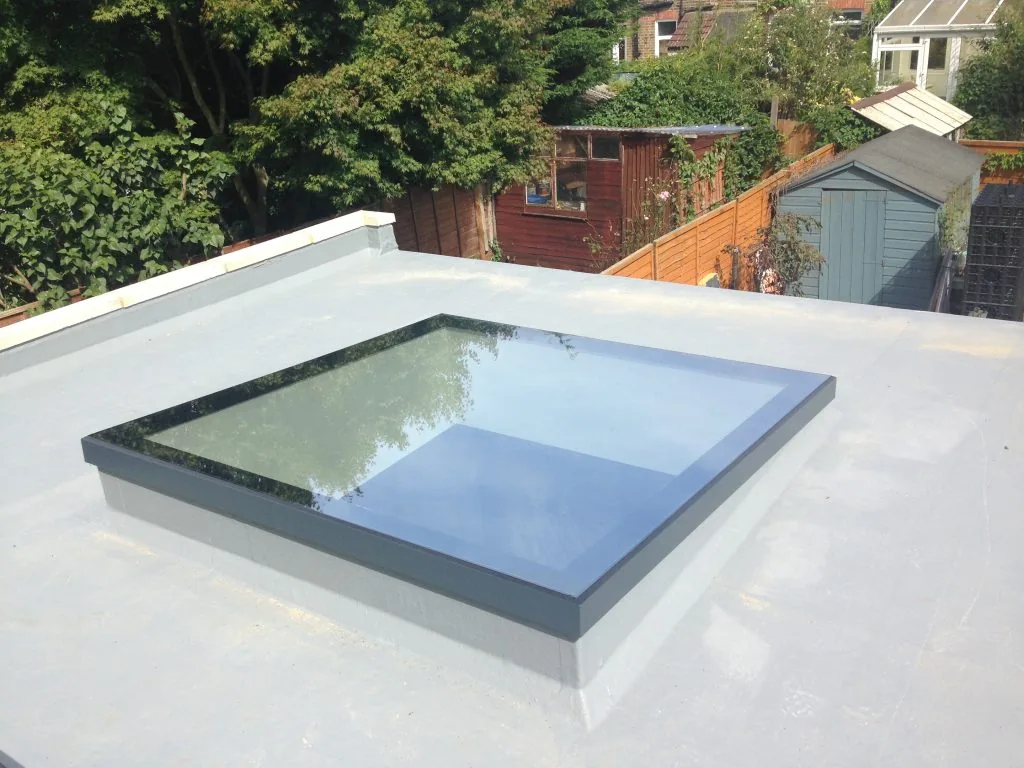
Skylights and daylight panels give the shop its light. They crack, yellow and leak at their curbs. A failed panel over a work bay is a water source and a drop hazard. Each panel and its flashing get checked, and a failed unit is swapped for a new one on a proper curb through skylight and penetration flashing work.
Storm season: a base in Dixie Alley
A base near Birmingham sits in Dixie Alley, where the 1977 and 1998 F5 tornadoes and the April 27, 2011 EF4 are the reference storms. The severe season crests in March and April and comes round again in November, and hail as large as softballs fell on central Alabama on April 25, 2003.
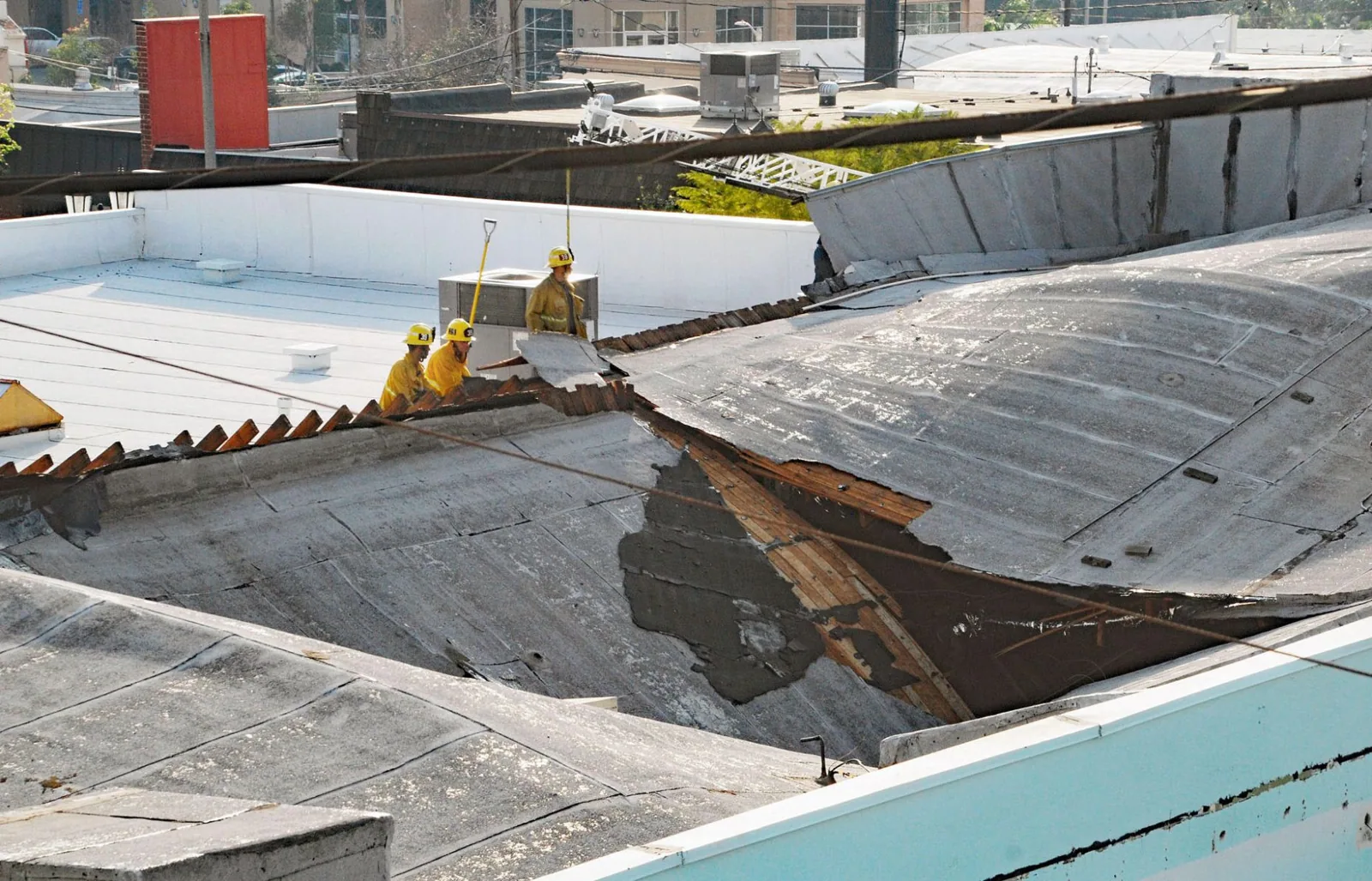
A wing that supports state contingencies when directed by the Governor of Alabama needs its buildings dry and standing after a storm. So walk the roof before the season. Take dated photos of every section. After a storm, walk again and compare. Wind damage repair uses that comparison to separate storm damage from older wear.
Closeout matters on any government roof. The closeout file for the engineer holds a punch list, a warranty walk and photos of every finished detail, so the next inspection finds repairs already documented.
When to do it: flight line rules and quiet windows
Roofing near a flight line follows strict rules. Foreign object debris is the big one. A loose screw, a scrap of membrane or a bag of fasteners on the ramp is a hazard to aircraft. So crews control debris tightly, tether tools, sweep often and cover loose material.
Access follows base procedure. That can mean escorts, badging, vehicle checks and set work hours. Roofing on military buildings often follows the Unified Facilities Criteria for roofing, and scopes are built with those details in mind. Hot work near fuel or fumes is restricted or banned.
We ask for the rules at the first visit and write them into the plan. Work waits for gaps in flying operations. Autumn and winter give the best window, with lower storm risk.
Long panels and special trim carry lead times, so orders placed in autumn support a winter install and a finish ahead of March, before storm repairs crowd the supply line.
What it costs: repair, retrofit or replace
The lowest first cost is a repair: fasteners reset, laps resealed, trim swapped out, all while the panels stay sound.
A retrofit puts new framing and panels over the old roof, and it avoids tear-off, which matters in a hangar that cannot be emptied. A metal roof retrofit is built for that. Replacement strips the old roof and costs the most, and it restarts the service life.
Cost follows roof area, panel gauge, fastener count, trim length, the fire system, access rules and phasing. Escort and gate time add hours, and we list them as their own line. We price all three paths on the same basis, so the engineer sees each side by side.
Timing drives price. After a big storm, waits grow and some materials cost more. A planned job booked in winter sits in a calmer market. Water keeps moving through insulation, which makes a March repair cheaper than the same repair after a May hail event.
Rework is the cost to guard against. A roof panel cut to the wrong profile or a trim run that misses a base requirement means a second delivery through the gate, a second escort and a second day of lost time on the schedule, so shop drawings are checked against the base's requirements before anything is ordered.
More on Military Hangar and Maintenance Facility Roofing
Local: military buildings in the metro
Aircrews train for air refueling and airlift with the 117th Air Refueling Wing at Sumpter Smith Air National Guard Base in Birmingham. Any hangar or shop that supports that kind of mission gets its own roof survey, since type and age differ by building.
The same survey logic applies to military-support buildings anywhere in Birmingham, whatever their age. A civilian aircraft hangar raises the same wind and door questions, and a National Guard armory runs on the same drill-weekend calendar. Escort, badge, set hours and tight debris control govern any military installation roofing job.
Commercial Roofing Questions
How does roofing work near an active flight line?
With tight debris control, tethered tools, escorts and set work hours. We follow the base's rules, ask for them at the first visit and write them into the plan.
Is hot work allowed on a maintenance hangar?
It is usually restricted or banned near fuel and fumes. We use cold-applied or mechanically attached systems where needed and keep a fire watch.
Can a hangar roof be retrofitted without emptying the hangar?
Often yes. A retrofit goes over the old roof, so there is no tear-off over the aircraft or the shop floor. We check the structure first and protect the fire suppression lines.
What does UFC mean for a roofing scope?
It refers to the Unified Facilities Criteria for roofing, which sets design and detail standards for military buildings. We build scopes with those details in mind and confirm which edition applies.
What if a roof opens during a storm?
Call right away, at any hour. The first visit is about stopping water and covering the floor.
Related Roofing Work
Skylight and Penetration Flashing
Wind Damage Roof Repair
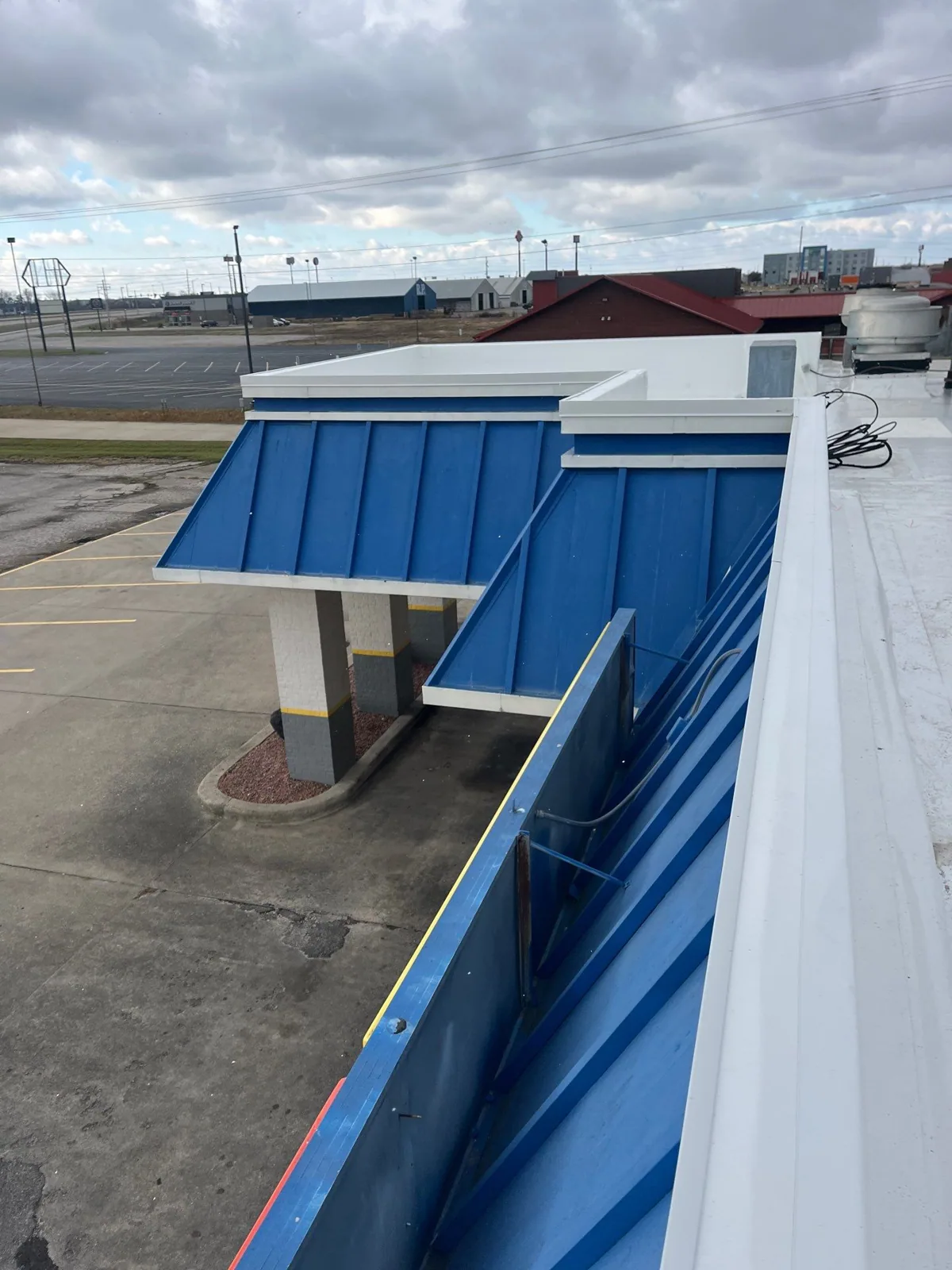
Metal Roof Retrofit

Downtown Birmingham
Emergency Leak Calls
Call for a storm walk or budget review
Call before storm season or ahead of the base budget cycle. The walk pins down which sections come first, what each fix costs and which budget year it belongs in.