
Fairfield
Commercial Roofing in Fairfield, AL
Fairfield, AL is steel and rail country. U.S. Steel's Fairfield Works continues to be a major employer, and smaller industries are reopening parts of the closed complex. I-20/I-59 runs through the city. CSX, Norfolk Southern and the Birmingham Southern Railroad serve the area. Retail is concentrated along Aronov Drive northwest of Western Hills Mall, where many strip malls have declined. That adds up to two kinds of roof work: industrial buildings coming back into use, and strip retail roofs where repairs may have waited. We handle both. The work opens with a storm walk, and it closes with a written note on what to repair and what to replace. The steps never change. Walk the roof, photograph it, write it down, price it. Then you choose.
Industrial reuse: roofs on buildings that sat idle
When a smaller industry reopens part of a closed complex, the roof is the first question. Idle buildings leak. Water gets in, insulation soaks, decking rusts. A roof that looks fine from the ground may be wet underneath.
We start with a moisture scan. We map the wet areas. Then we cut cores to confirm. We check the deck for rust and rot. We check the drains for debris and the flashing for cracks. A tenant who signs a lease on a reopened building deserves to know what is overhead.
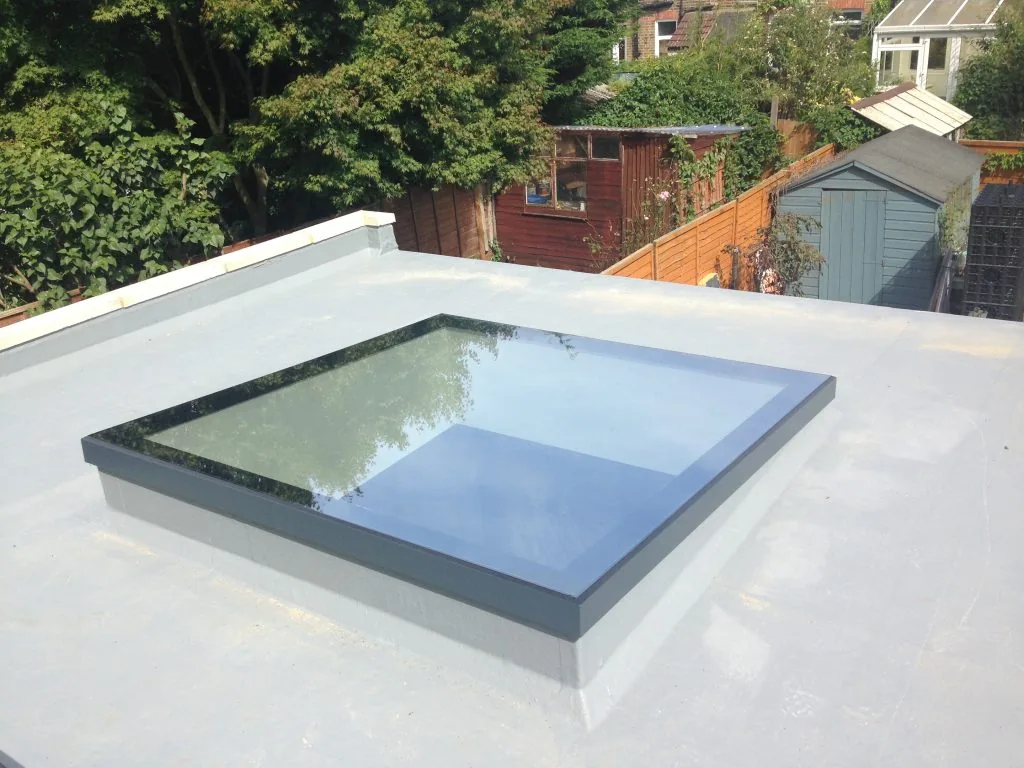
Then we give you the line in writing. Repair what is local. Replace what is wet. Price both sides. Older industrial buildings can carry many penetrations, skylights and old vents. Each one is a leak point. We count them, check the flashing at each and mark the ones that need work. Abandoned vents get capped and sealed. Dead skylights get a cover or a replacement. Those small items add up on a big roof. Fire and safety rules matter on reopened industrial property. Hot work needs a permit and a fire watch. We use cold-applied methods where the building calls for them, and we confirm the rules with the owner before the first day.
Strip retail: when decline hides leaks
Retail is concentrated along Aronov Drive, and many strip malls there have declined. Declining centers lose tenants. Fewer tenants mean fewer eyes on the roof. A leak over an empty unit can run for months before anyone sees it.
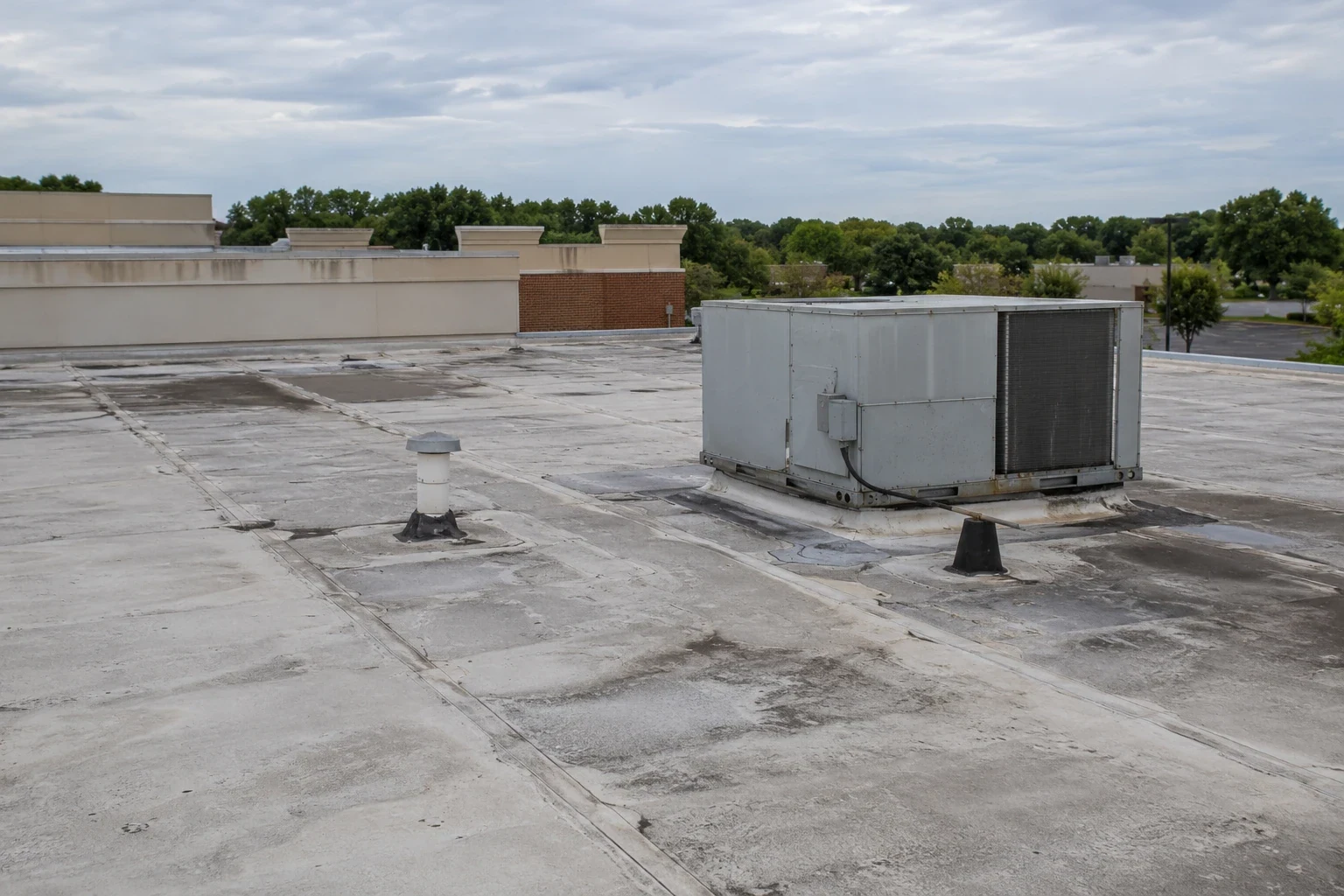
If you own or manage a strip center, walk the roof twice a year. Clear the drains. Photograph the seams. Check the rooftop units over empty bays. Water over a vacant unit soaks the deck and rots the ceiling, and mold follows.
A cheap visit now beats a gut job later. We tell you which units have a roof problem and which are only cosmetic. Shared roofs bring shared fights. A leak over one tenant can start at another. Check the lease on roof responsibility. Then call us. We trace the water to its source and put the cause in writing, so you know whose repair it is. For a declining center, we offer a plain option. Fix the roof sections over occupied units first. Hold the vacant bays with a temporary patch and a drain check until the money is there. We write that plan down and date it, so nothing is forgotten.
Rail and steel: grit, heat and drains
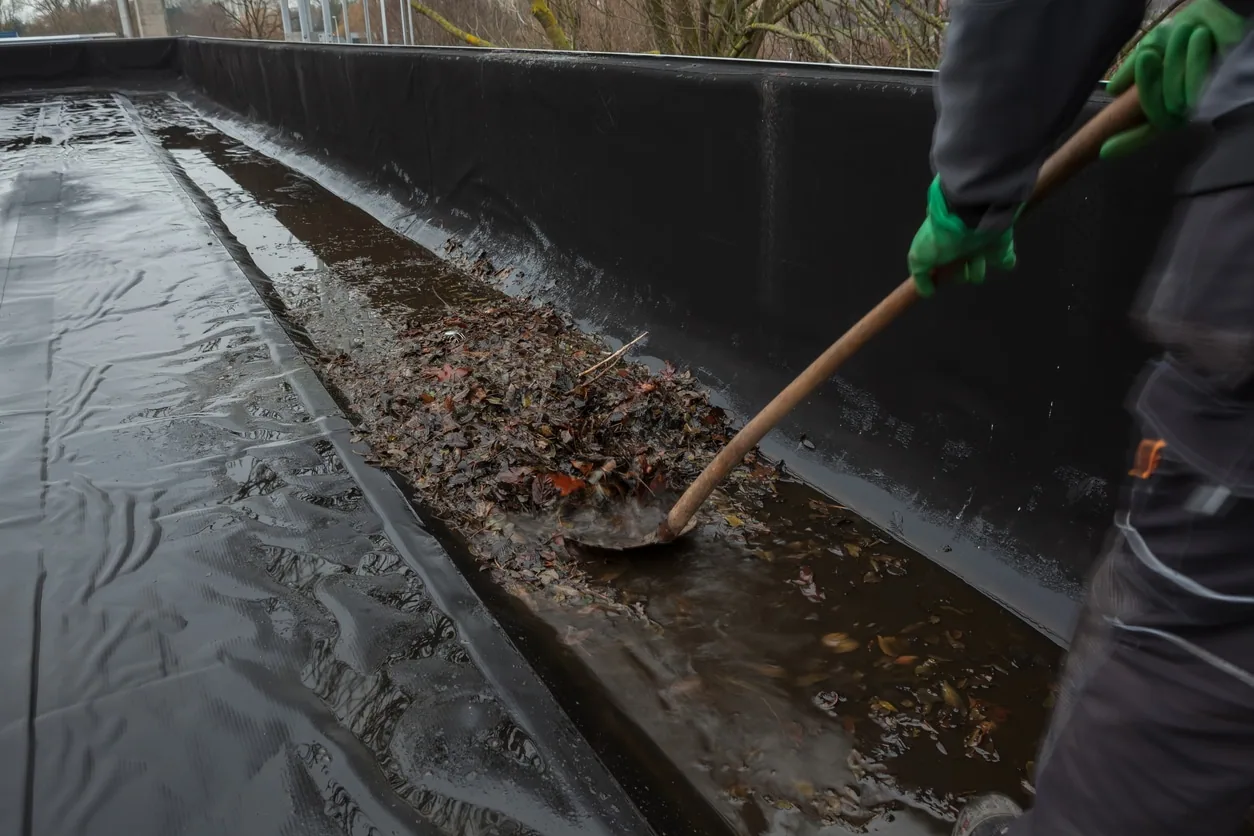
Buildings near rail lines and heavy industry collect grit. Grit clogs scuppers. Clogged scuppers hold water. Water ages the membrane. Drains get cleared, and each one is photographed before and after the work.
Heat is the other wear. Roofs near process equipment can see hot exhaust and residue. We check the surface for softening and blistering around vents. If a roof sees chemicals or hot air, we recommend a membrane that tolerates it, and we say why.
Find the ponding line after rain. Water that lingers past a day or two calls for more than a broom. On a distribution or service building, plan the work around dock traffic. We stage materials away from trucks and work in sections. Each section is dried in the same day. Walkways matter too. Technicians who service units wear a path in the membrane. We add walkway pads where traffic is heavy and flag any path that has worn through to the scrim.
Storm season: Dixie Alley and softball-size hail
In the Birmingham area, Dixie Alley has produced two F5 tornadoes, one in 1977 and one in 1998, plus an EF4 that struck on April 27, 2011. Storms peak in spring, then return in November and early December. Hail the size of softballs fell over central Alabama on April 25, 2003, and 2003 also brought 29 days when the National Weather Service logged hail bigger than three-quarters of an inch.
That record argues for a late-winter hail check on every Fairfield roof. Storm claims from March, April and November crowd the schedules of the best crews. When a storm passes, and conditions are safe, look over the edges, the drains and the ceilings. Any water gets a phone call. We cover the opening and dry the space, then quote the fix. Same-day photos help a claim.
Budget year: vacancy, code and what a replacement costs
The 2020 census counted 4,623 housing units in Fairfield, 16.9 percent of them vacant. Those are homes, not shops, but empty space raises a roof question anywhere. We keep the cost talk plain.
A Fairfield replacement is reviewed against the adopted building code and the ASHRAE/IES 90.1-2013 energy standard, and the insulation depth they require moves the price. The main cost drivers are roof size, access, the number of layers to remove, insulation that has taken on water and the condition of the deck. Each is itemized by section.
Timing helps too. Use fall for drains and minor repairs, and late winter for hail checks and replacement bids, since spring storms leave crews booked out. For a reopened industrial building, plan the roof before the move-in date, not after the first rain.
More on Fairfield
What to bring to the first call
Come to the first call with the street address, the roof age if known, invoices and any lease language on roof responsibility. Tell us where it leaks. We say what the walk will settle.
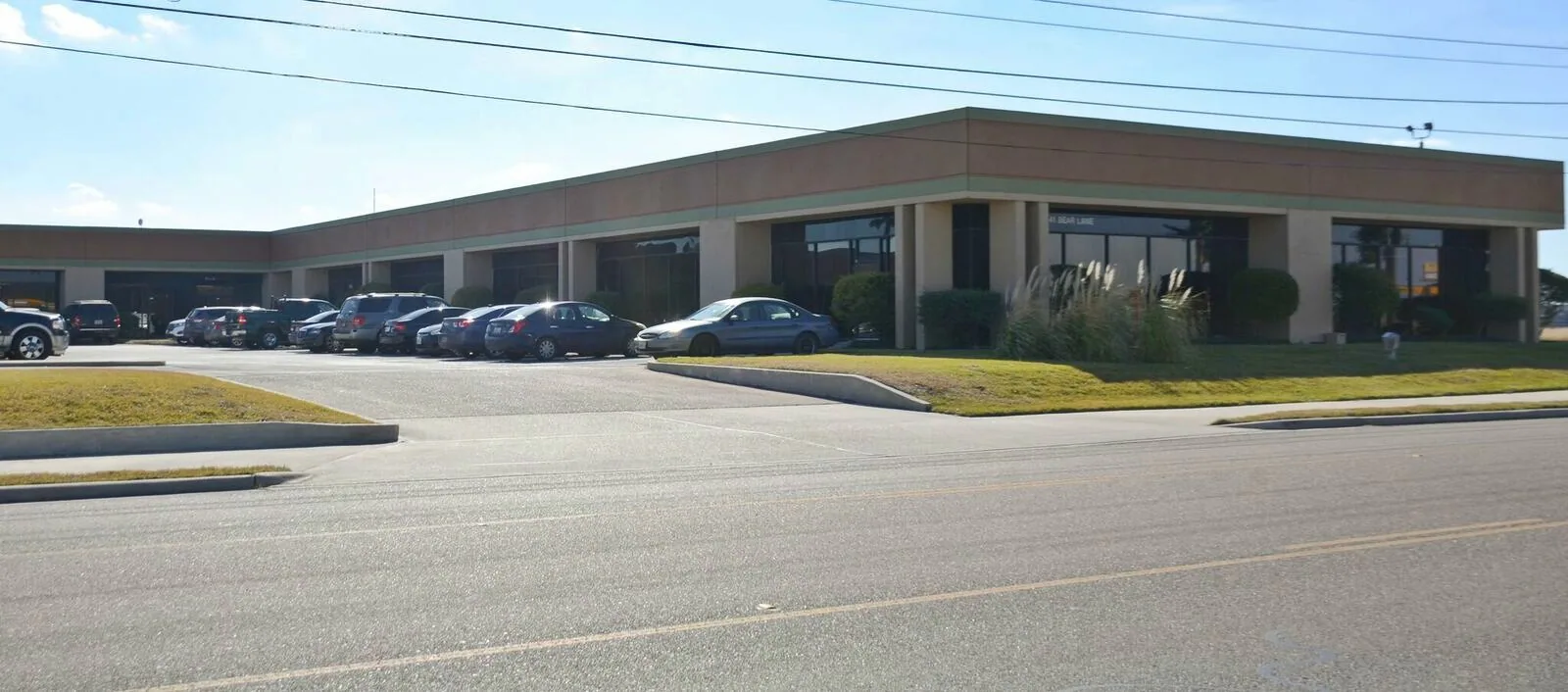
We handle flex industrial roofing, shopping center roofing and infrared moisture surveys. A reopened building often begins with a commercial roof inspection. We also serve Tarrant and Midfield. Owners of several buildings can send the whole list, and we rank the roofs by risk and return one budget view.
Commercial Roofing Questions
What should I check before leasing a reopened industrial building?
The roof. We recommend a moisture scan and a few cores before you sign. Idle buildings leak, and wet insulation is expensive. We give you a written list of what to fix and what it costs.
How often should a strip center roof be walked?
Twice a year at minimum, in fall and late winter. Walk it again after any big storm. Check the units over vacant bays, since leaks there go unseen.
Who pays for a roof repair on a leased unit?
The lease decides. Check it first. We trace the leak to its source and document it, which gives you what you need to assign the repair.
When should I replace instead of repair?
Replace once the insulation has soaked, the same spot leaks again and again, or a patch will not stay. Repair when the damage is local and the membrane is sound. The line gets drawn on the roof itself, with a price on both sides.
Can hot exhaust damage a membrane?
Yes. Hot exhaust and residue can soften a membrane near a vent. We check those zones and recommend a membrane that tolerates the exposure.
Related Roofing Work
Flex Industrial Roofing
Shopping Center Roofing
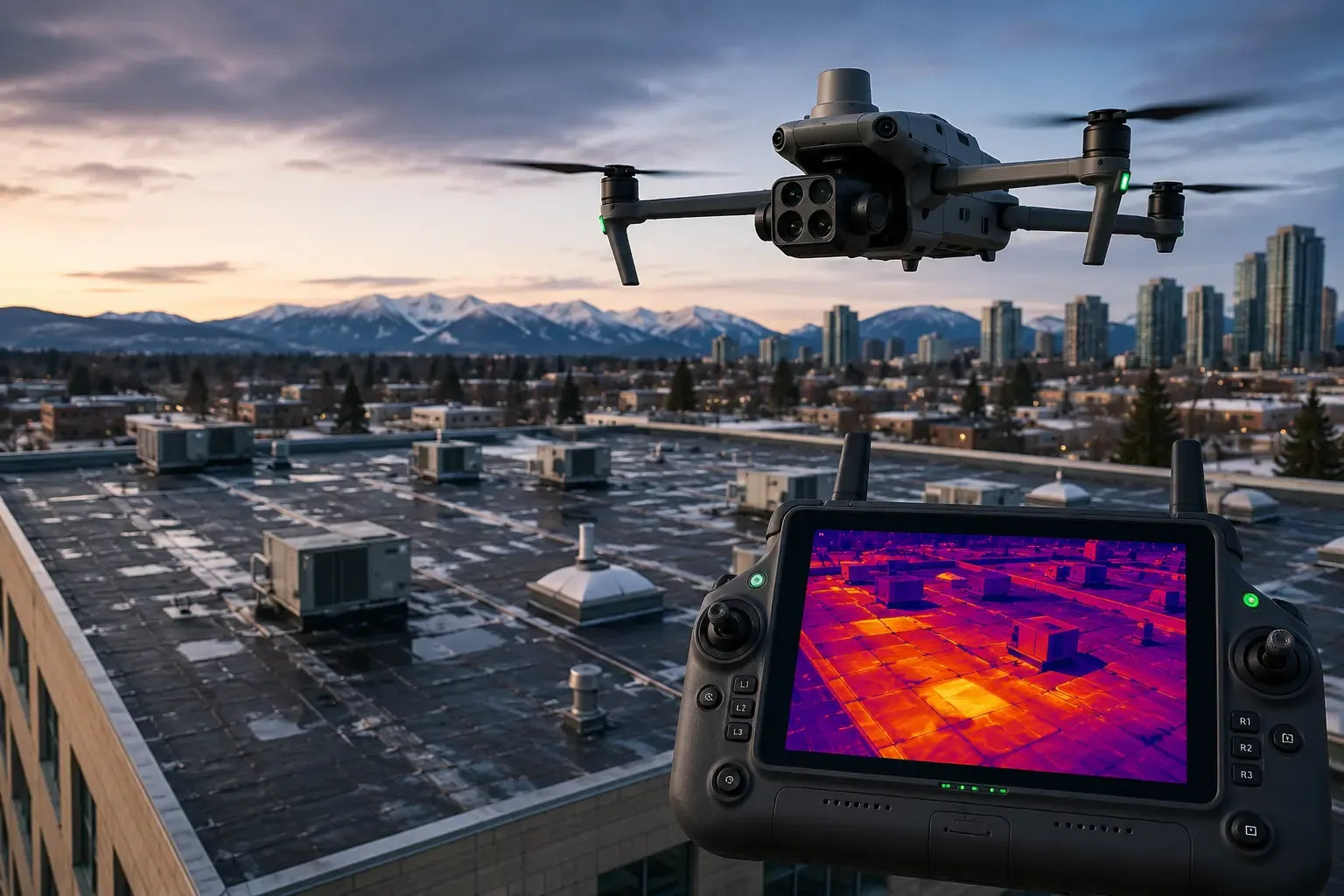
Infrared Moisture Survey
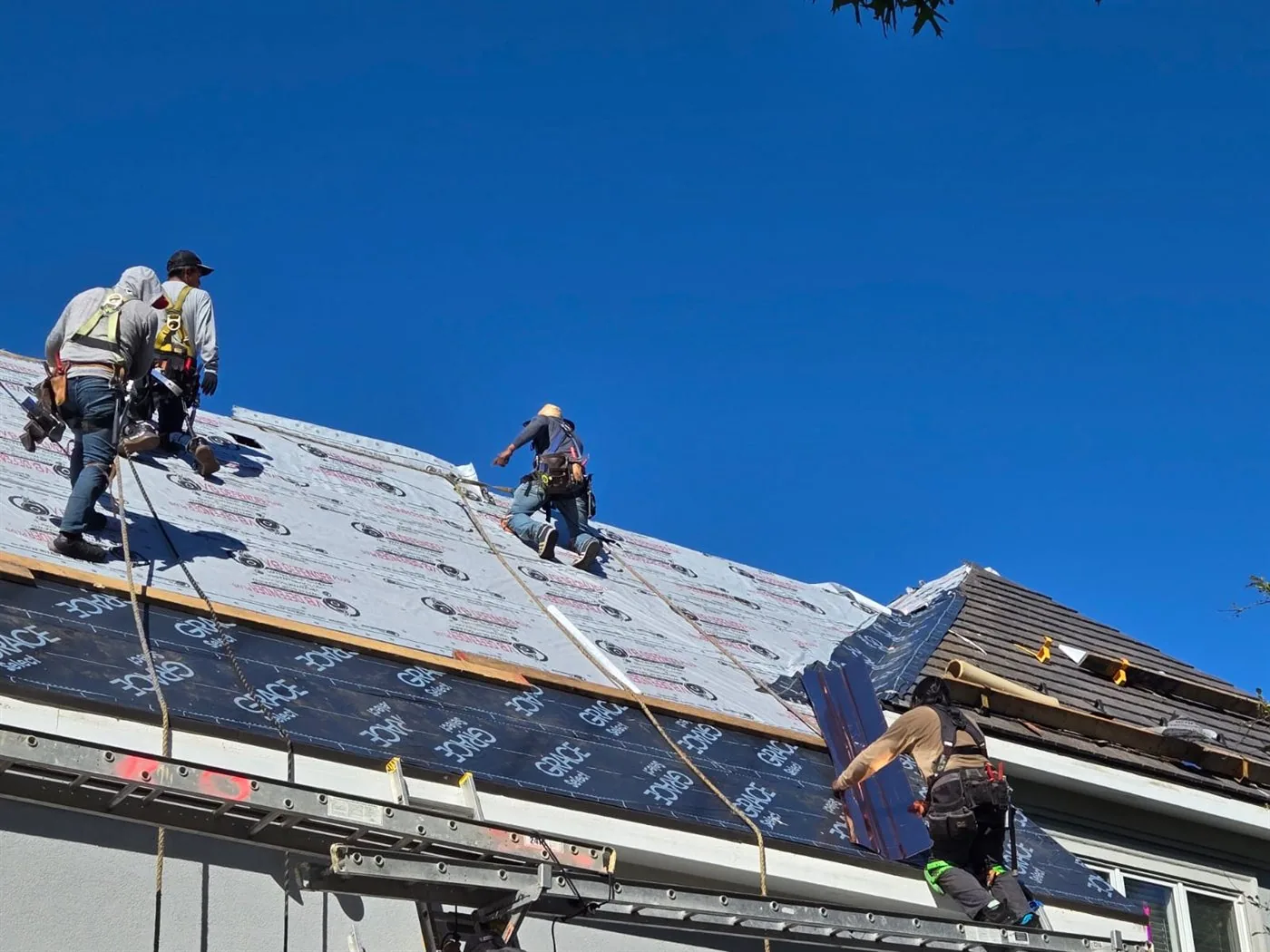
Commercial Roof Inspection
Emergency Leak Calls
Call for a storm walk or budget review
Call before spring storm season or before your budget year closes. The walk pins down ponding lines, tie-ins and your repair-or-replace line, in writing, with a price on each side.